
Iran is the second-largest refugee hosting country in the world, spooking leaders in Europe of any possible mass exodus, with the commission stepping up monitoring and cooperation with relevant UN agency and countries in the region.
 Nikolaj Nielsen



The war in Iran has not triggered any noticeable exodus of possible refugees, says the European Commission.
“For now, we do not have reason to believe that there are changes in the migratory flows,” a commission spokesperson told reporters in Brussels on Tuesday (3 March).
Iran is the second-largest refugee-hosting country in the world, spooking leaders in Europe of any possible mass exodus, with the commission stepping up monitoring and cooperation with relevant UN agencies and countries in the region.
Until the outbreak of the current war, Iranians ranked around 31st in terms of nationality of asylum seekers in Europe, filing only around 8,000 applications last year.
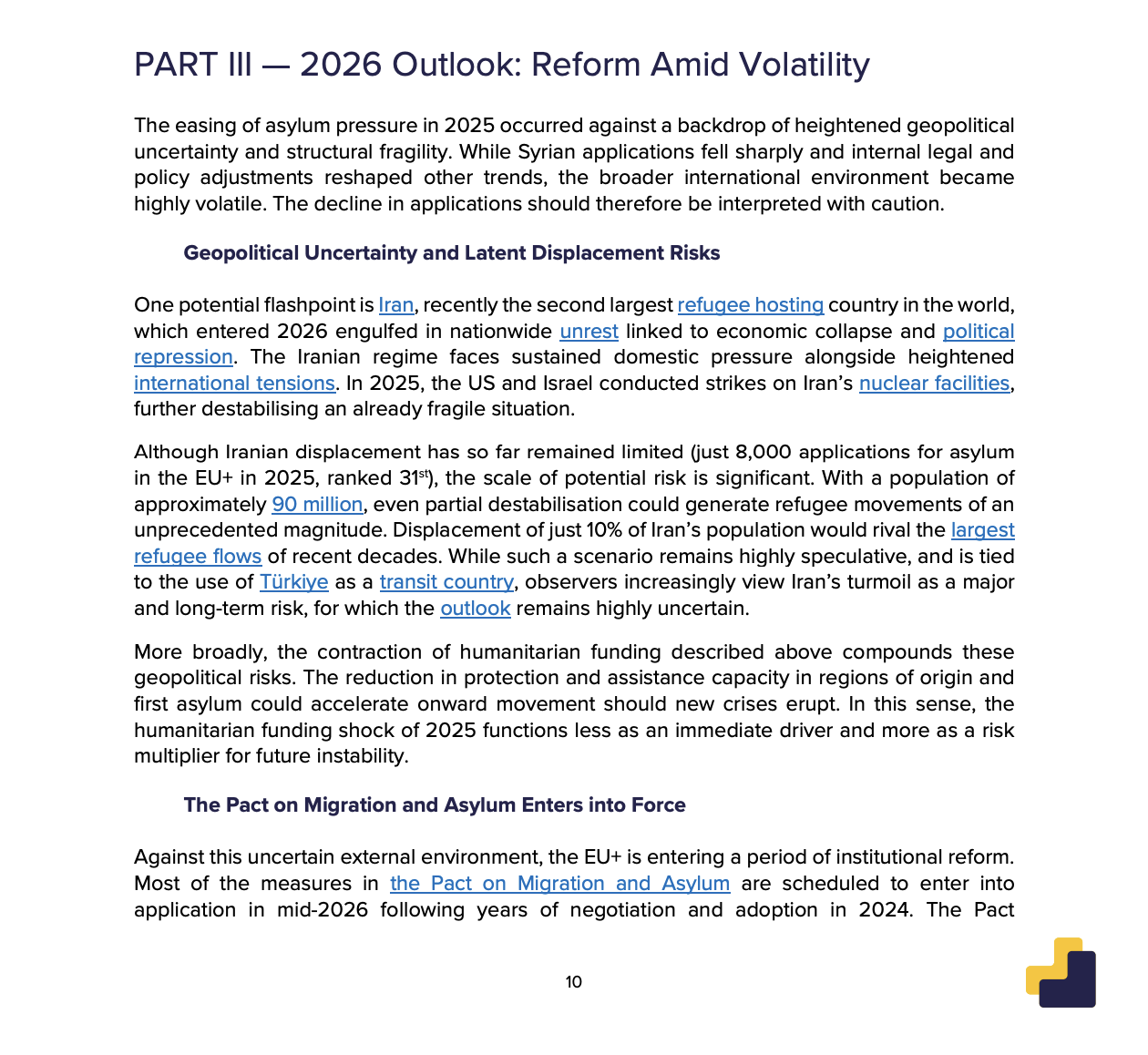
But the EU’s asylum agency in Malta says a “even a partial destabilisation” could generate refugee movements of an unprecedented magnitude.
“Displacement of just 10 percent of Iran’s population would rival the largest refugee flows of recent decades,” it has said, noting the country is home to some 90 million people.
The assessment was made in the agency’s annual report on asylum trends ahead of this weekend’s killing of Iran’s supreme leader, Al Khamenei.
Similar warnings came from Amy Pope who leads the International Organization for Migration (IOM), a UN offshoot.
She warned any military escalation would force more families from their homes and hit civilians hard.
“Millions are already displaced in the region,” she said, in a press statement, amid demands for restraint and urgent de-escalation to prevent further humanitarian consequences.
Hundreds of Iranians have so far crossed the border into Turkey, according to Reuters news agency.
For its part, the EU is hoping to maintain a downward trend of asylum applications, which fell by one-fifth compared to 2024, and as migrant arrival figures also drop to their lowest levels since 2021.
And although Iran has now been placed on the agenda of a meeting of EU interior ministers this Thursday (5 March), the discussion will be broadly focused on possible security issues.
“When discussing the internal security, migration is not part of this discussion, although let’s see,” said a senior EU diplomat.
The commission also says EU’s police agency Europol is operating with a high vigilance on any potential internal security risks over Iran.