
As World Bank and IMF chiefs gather in Washington the Iran war is driving up energy prices, fuelling inflation and making voters impatientThe world’s finance ministers and central bank governors gather in Washington this week for the half-yearly meetings of the International Monetary Fund and the World Bank, with the
 Richard Partington



The world’s finance ministers and central bank governors gather in Washington this week for the half-yearly meetings of the International Monetary Fund and the World Bank, with the global economy in a perilous spot.
Not since the foundation of the Bretton Woods institutions late in the second world war have global conflicts triggered this much economic turbulence. The volatile 1970s come close. But the US-Israeli war on Iran, coming so soon after the Covid pandemic and Russia’s invasion of Ukraine, take the prize.
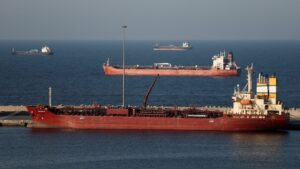
Even if a durable peace deal in the Middle East can be reached, there will still be permanent economic scars. Living standards across rich countries had hardly been racing ahead beforehand. Now, six weeks of US-Israeli bombing and Tehran’s retaliation, including the closing of the strait of Hormuz, are heaping further pressure on already struggling households. This is the biggest energy shock of the modern age. Oil and gas prices have surged, inflation is rising, borrowing costs are up, and a food security timebomb has been primed.
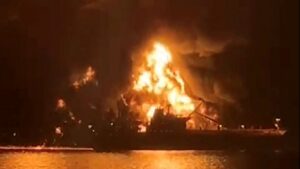
Unlike with Donald Trump’s favoured weapon, the tariff, the impact of a bombing campaign cannot be unwound by a US supreme court ruling or the stroke of a presidential pen. Alongside the human cost, airstrikes and drone attacks from both sides have caused damage to infrastructure that will take years to recover. Insurance premiums will remain elevated. Confidence has been shattered.
Amid fragile hopes for de-escalation as the US and Iran hold talks in Pakistan, global oil prices have fallen back. Brent crude is down from a peak close to $120 a barrel earlier in the conflict. But importantly, it remains higher than the $72 it stood at before the conflict.
Significant uncertainties remain. But most experts are issuing warnings to buckle up. Economic turbulence appears all but unavoidable; such is the mess in the Middle East, and its position as the linchpin region for global energy supplies. Trump may have threatened to destroy “a whole civilisation” but it is one on which the entire world relies.
As a result, the IMF has said it will cut its growth forecasts for 2026 when it publishes its flagship World Economic Outlook on Tuesday. In every scenario, growth is slower and inflation higher. Households worldwide will feel the pain. And, as always, the world’s poorest will bear the brunt.
More depressingly, had it not been for the war, the fund said it probably would have upgraded its forecasts.
True, other big threats to prosperity remain: the world is not short of geopolitical tension: inequality is rampant, and the costs of inaction on global heating are mounting. However, before the first US and Israeli airstrikes on Tehran, global growth had proven surprisingly resilient to Trump’s tariff war, helped by an AI-driven investment boom, cooling inflation and improving financial conditions.
At the IMF and World Bank meetings this week, the priority will be to limit the economic fallout.
The fund’s managing director, Kristalina Georgieva, has urged officials arriving in Washington to work together, warning that “go-it-alone actions” – such as protectionist subsidies, price caps, and export controls – might have appeal but would ultimately make matters worse.
“Don’t pour gasoline on the fire,” she said last week.
The problem is that the world is fracturing. After the economic shocks since the 2008 financial crisis, countries worldwide are awash with debt, leaving them with diminished capacity to respond. Meanwhile, the clamour to raise defence spending has left governments facing difficult trade-offs.
As a result, the IMF cautions that any energy support should be targeted and temporary. Such an approach would limit the costs of blanket support and avoid putting cash in the pockets of rich households, stoking inequality. Still, in this unfolding conflict, the boundaries will be tough to draw.
For central banks, the fund urges them to remain vigilant. Absent the war, interest rates would have been coming down this year. But financial markets are expecting rates to be kept on hold, or raised, to prevent high inflation from becoming entrenched.
On top of the economic problems, many of the finance ministers arriving in Washington face political ones. Progress on living standards has stalled across advanced economies over the past two decades.
Voters are impatient. Populism is on the march, peddling easy answers to the overlapping crises. Heeding these siren calls is a big part of the reason why the world is currently aflame.
For those gathering in Washington this week, there is a certain irony in the fact that they will be meeting in the halls of institutions founded to promote global cooperation, in the capital of the go-it-alone nation.
This is the economic Gordian knot of the modern age. The problems of economic and political instability are interlinked: stronger growth would help to melt away the problems of high debt and voter dissatisfaction. Yet governments worldwide are short on firepower to grease the wheels.
Eight decades ago, the founding purpose of the IMF, World Bank and other international institutions was to prevent a repeat of the dire economic conditions that led to the second world war. They now face one of their toughest challenges yet.