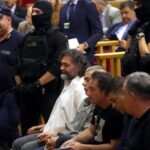

The upcoming verdict in the war crimes trial of former Kosovo President Hashim Thaci and his co-accused will have enormous consequences for the defendants themselves, for the court, for Kosovo and for the future of transitional justice.
 Dean B. Pineles



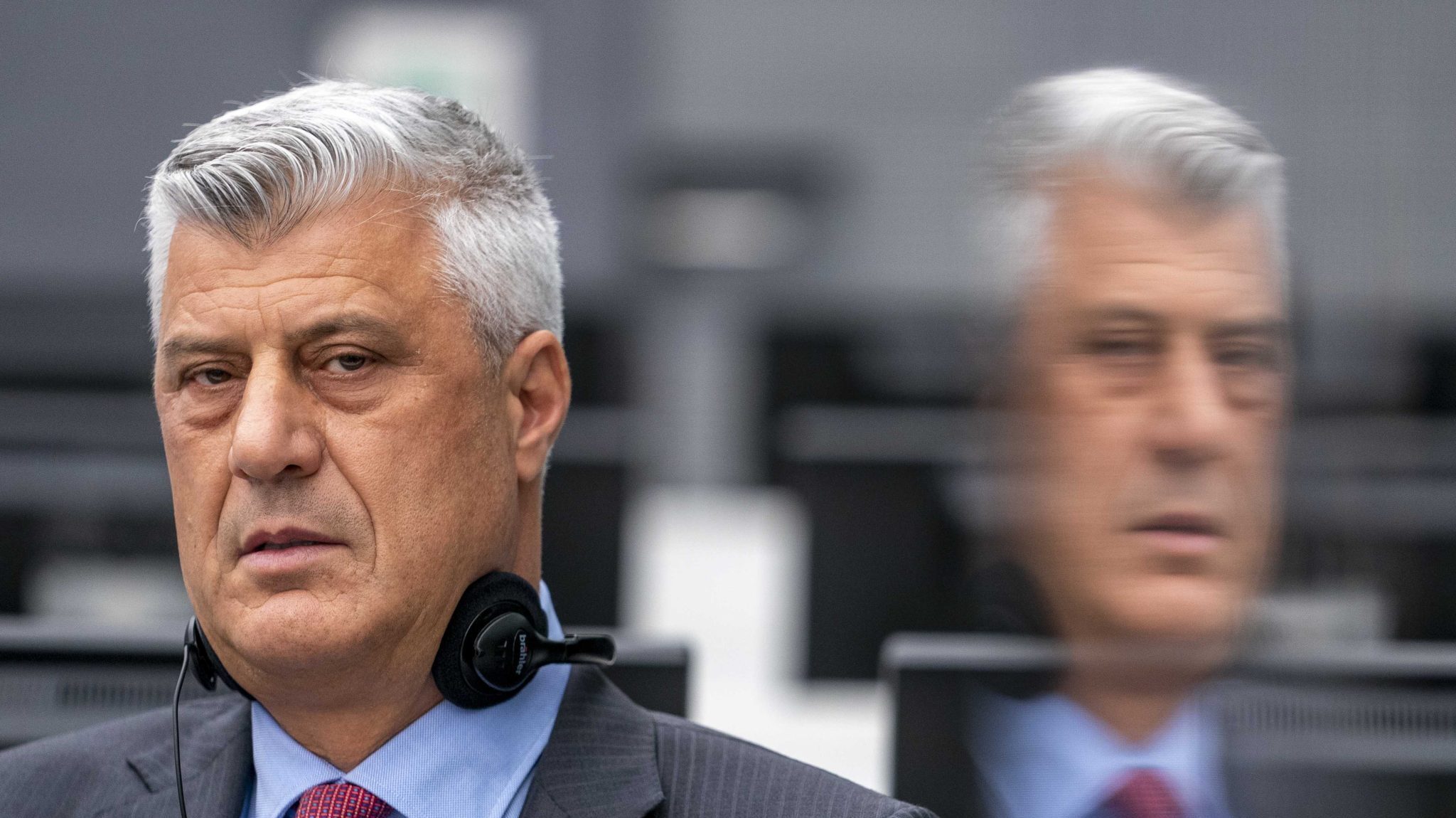
Thaci and his fellow defendants are accused of individual as well as command responsibility, and for participating in a joint criminal enterprise, for crimes perpetrated against persons who opposed the methods of the KLA and its political ambitions.
The offences allegedly occurred at 50 KLA detention sites throughout Kosovo and northern Albania between March 1998 to September 1999, during and shortly after the war.
They included war crimes and crimes against humanity, including illegal detention, cruel treatment, persecution, enforced disappearances, torture, and as many as 102 murders. The victims, many of whom were civilians, included Serbians, Albanian alleged collaborators, and members of various minority groups.
Because the defendants have all pleaded not guilty, prosecutors are required to prove any charge beyond a reasonable doubt, the highest standard of proof within the criminal justice system.
Beginning in April 2023, the prosecution called 125 witnesses to testify in court, plus others who testified under measures to protect their identities. The court also accepted into evidence thousands of documentary exhibits, including controversial records from various Serbian officials.
The defence case lasted all of several days in September last year, when seven high-level US and international officials took the stand.
One was US General Wesley Clark, who commanded the 11-week NATO air campaign that drove Serbian forces from Kosovo by June 1999.
Another was James Rubin, a former assistant US Secretary of State under Madeleine Albright, one of the chief architects, along with then US President Bill Clinton, of the NATO campaign. Former US ambassador Christopher Hill was another.
All seven witnesses supported the defence’s assertion that the KLA, which became NATO’s ally on the ground, was not well structured, but rather was a loose assemblage of guerilla freedom fighters built from the ground up; that there was no command responsibility and no Joint Criminal Enterprise; and that the defendants were not responsible, either individually or otherwise, for crimes that may have been committed by KLA soldiers in the field. Krasniqi’s lawyers presented two witnesses, the others none, but the testimony of Thaci’s witnesses applies to all.
Closing arguments concluded on February 18, after which the trial was declared closed, and the panel took the case under advisement. It is now up to the court to review all the evidence; to make findings of fact and conclusions of law; to carefully explain its reasoning; to issue a verdict, guilty or not guilty, or some combination; and to impose a sentence for any crimes that have been proven beyond a reasonable doubt.
Controversial from the outset