
THIS WEEK offers a weekly snapshot of the key developments in Brussels and across Europe over the next seven days, published every Monday morning.
 Elena Sánchez Nicolás



THIS WEEK offers a weekly snapshot of the key developments in Brussels and across Europe over the next seven days, published every Monday morning.
European Commission president Ursula von der Leyen is convening an emergency meeting on Monday (2 March) due to the situation in Iran.
Over the weekend, she backed regime change in Iran, saying a “credible transition is urgently needed” after the US and Israel strikes killing its supreme leader ayatollah Ali Khamenei.
No EU or Nato leaders backed the US strike, except far-right allies of Donald Trump.
US president Donald Trump said the objective was to destroy Iran’s missile industry and navy, eliminating “imminent threats” and preventing it from destabilising the world. He accused Iran of financing “terrorist” groups and militias “from Lebanon to Yemen, Syria to Iraq, and described Hamas as an Iranian proxy.
An informal meeting of European affairs ministers, taking place in Lefkosia on Monday and Tuesday (3 March), will go ahead after Cypriot officials denied any threat to the country.
German chancellor Friedrich Merz is expected to travel to the US to meet with Trump in Washington on Tuesday — in his second visit since taking office, and just a few days after his trip to China.
Merz is expected to seek clarity on US tariffs hitting EU sectors such as Germany’s domestic car industry, after Trump slap 10-percent global import duties on top of existing rates, in the wake of the US Supreme Court ruling limiting some tariff powers.
Trump’s new tariffs will affect around €4.2bn worth of goods that the European Union exports to the US, according to Bloomberg.
“I want to try to make clear to the US administration that tariffs harm everyone,” Merz said. “Above all, they harm the country that imposes them, because it is the consumers there who pay the tariffs.”
The European Commission and the German government want Trump to stick to the deal reached in July last year, which limited tariffs to 15 percent.
Talks come at a moment when Germany’s automotive sector is facing one of the worst crises in years, with US tariffs, high competition from China, high production costs, and weak demand causing massive losses for giants like Volkswagen, BMW, and Mercedes-Benz.
Beyond tariffs, bilateral relations and security issues like Iran, the Ukraine war and Nato will also be part of Merz’s agenda in the US.
Ongoing trade and regulatory uncertainty is weighing on European industry, slowing investment and postponing growth.
The European Parliament has halted the vote on the EU-US trade deal until further clarification.
And lead MEPs on this file are expected to meet on Wednesday (4 March) to discuss the state of play, but the vote will likely be postponed again.
Hungary-Slovakia-Ukraine row
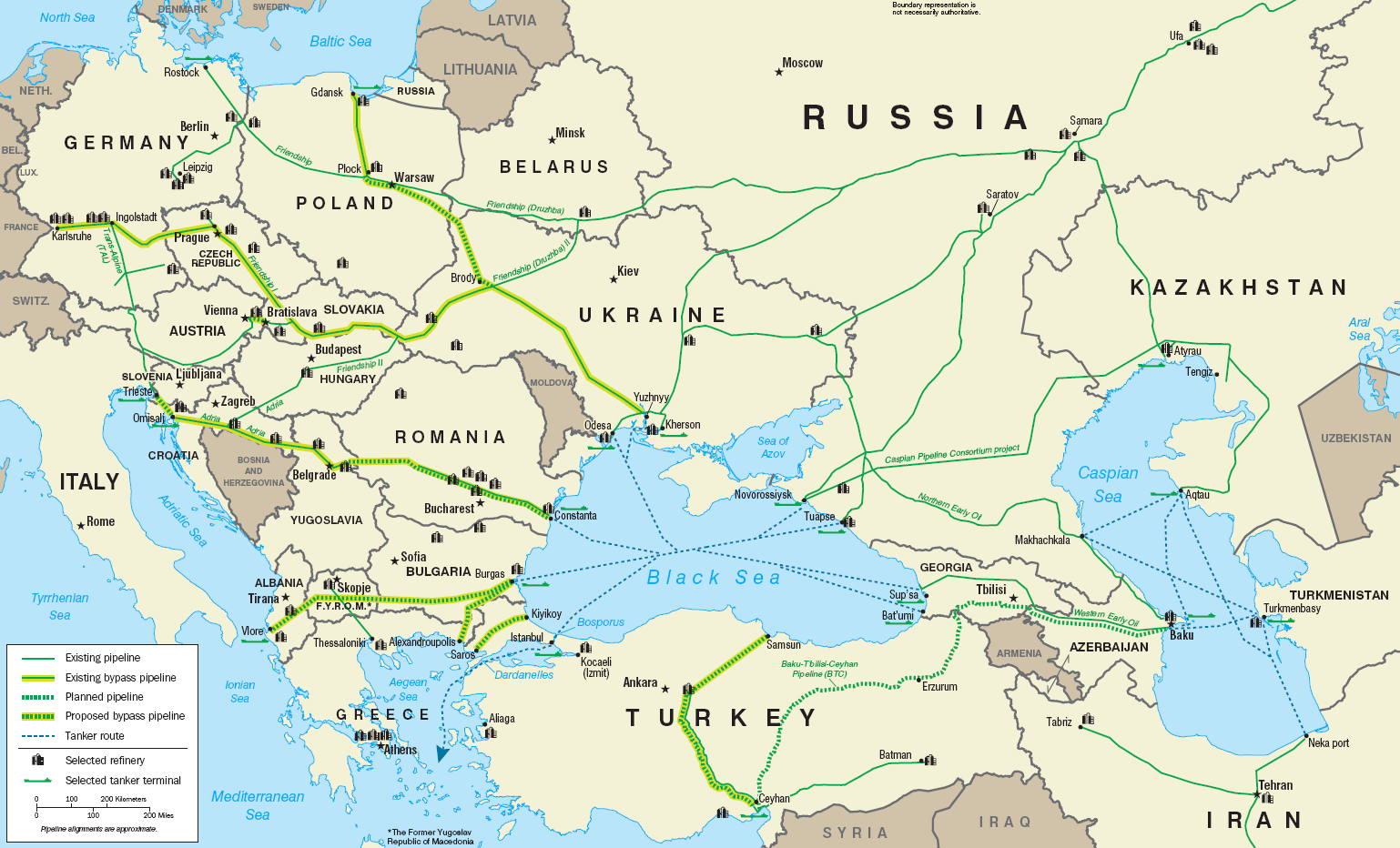
Meanwhile, EU ambassadors continue talks this week on the 20th package of Russian sanctions, as Hungary and Slovakia vowed to block progress unless Russian oil deliveries through the Druzhba pipeline are restored.
Hungarian prime minister Viktor Orbán and Slovak counterpart Robert Fico have accused Kyiv of arbitrarily blocking energy flows, calling for a fact-finding mission into damage to the Soviet-era pipeline.
“We know that there is no technical reason oil cannot flow to Hungary through the Friendship pipeline. They refuse inspections and hide the truth,” said Orbán last Friday.
Will the Industrial Accelerator Act finally be out?
After several delays, the European Commission is expected to present on Wednesday the Industrial Accelerator Act (IAA), a proposal aimed at strengthening Europe’s industrial sector.
EU commission president Ursula von der Leyen promised to publish the proposal before the EU leaders’ summit on 19 March.
The IAA’s draft, seen by EUobserver, promotes a “Made in Europe” approach for certain sectors and goods, alongside requirements for the use of public funds to give a preference to EU products.
The act is also expected to tighten rules for large foreign investments in “emerging strategic sectors” like batteries, EVs, solar and critical raw materials. And it includes the creation of go-to areas, for example, with accelerated permitting.
In a recent statement, the Czech Republic, Estonia, Finland, Ireland, Latvia, Malta, Portugal, Sweden and Slovakia urged “extreme caution” on broad “Made in Europe” rules, warning they risk higher prices, less innovation, supply chain disruptions and reduced competitiveness.
These highlight divisions between France’s push for protectionism, the German-style compromise, and the open-market concerns of smaller and northern states.
Women’s Day
On the same day, the Brussels-executive is also set to unveil its new gender equality strategy 2026-2030, coinciding with International Women’s Day on Sunday (8 March).
Despite years of policies and initiatives, the EU’s gender pay gap was still 12 percent in 2023, the employment gap 10 percent in 2024, and fewer than one-in-10 top company CEOs are women, according to data from the commission.
The European Parliament will also host several events on combatting stereotypes, disinformation and gender violence in the digital age, with a special seminar for journalists
Budget discussion will take place in several committees throughout the week.
On Monday, MEPs will vote on whether to extend a temporary exception to EU online privacy rules, allowing companies voluntarily scan for child sexual abuse material, which is set to expire on 2 April 2026.
Migration talks
EU migration ministers will meet in Brussels on Thursday (5 March) to prepare for the full rollout of the new migration and asylum laws, which will become fully applicable in June. Ministers will review timelines, mandatory solidarity on relocations, Eurodac upgrades, and stricter “safe third country” rules for faster deportation.
Talks will also address the situation in post-Assad Syria, Lebanon’s economic collapse and Libya’s militias and trafficking networks and the potential impact on driving migrant flows to Europe.
On Friday (6 March), justice ministers will discuss lawyers’ independence in Europe, Russian war crimes, and a regulation on the protection of adults, for example, in the case of Alzheimer disorders in cross-border lawsuits such as property sales.
During a press conference on Wednesday, a cross-party group of MEPs is expected to raise the alarm about the situation in Palestine, especially Israel’s settlement expansion in the West Bank and the lack of debates and response from European institutions.
Last week, foreign ministers of Brazil, France, Spain, Turkey and other states condemned Israel’s attempt to annex the West Bank.
“Such actions are a deliberate and direct attack on the viability of the Palestinian state and the implementation of the two-state solution,” they said.
Meanwhile, students in Germany are expected to take to the streets on Thursday to protest against voluntary military service.