
The opposition victory sets Hungary on course to rebuild ties with the EU and restore democracy and rule of law.
 Szilárd Sánta



Just over two years ago, he was an unknown figure in Hungarian public life. Out of nothing, he built the largest opposition party, which, after 16 years, defeated Viktor Orbán’s Fidesz, long considered unbeatable.
Magyar had always aspired to wield significant influence, but it took a long time before he found space in high politics. The 45-year-old politician comes from a Budapest family of lawyers, and he too obtained a law degree in the capital in 2004.
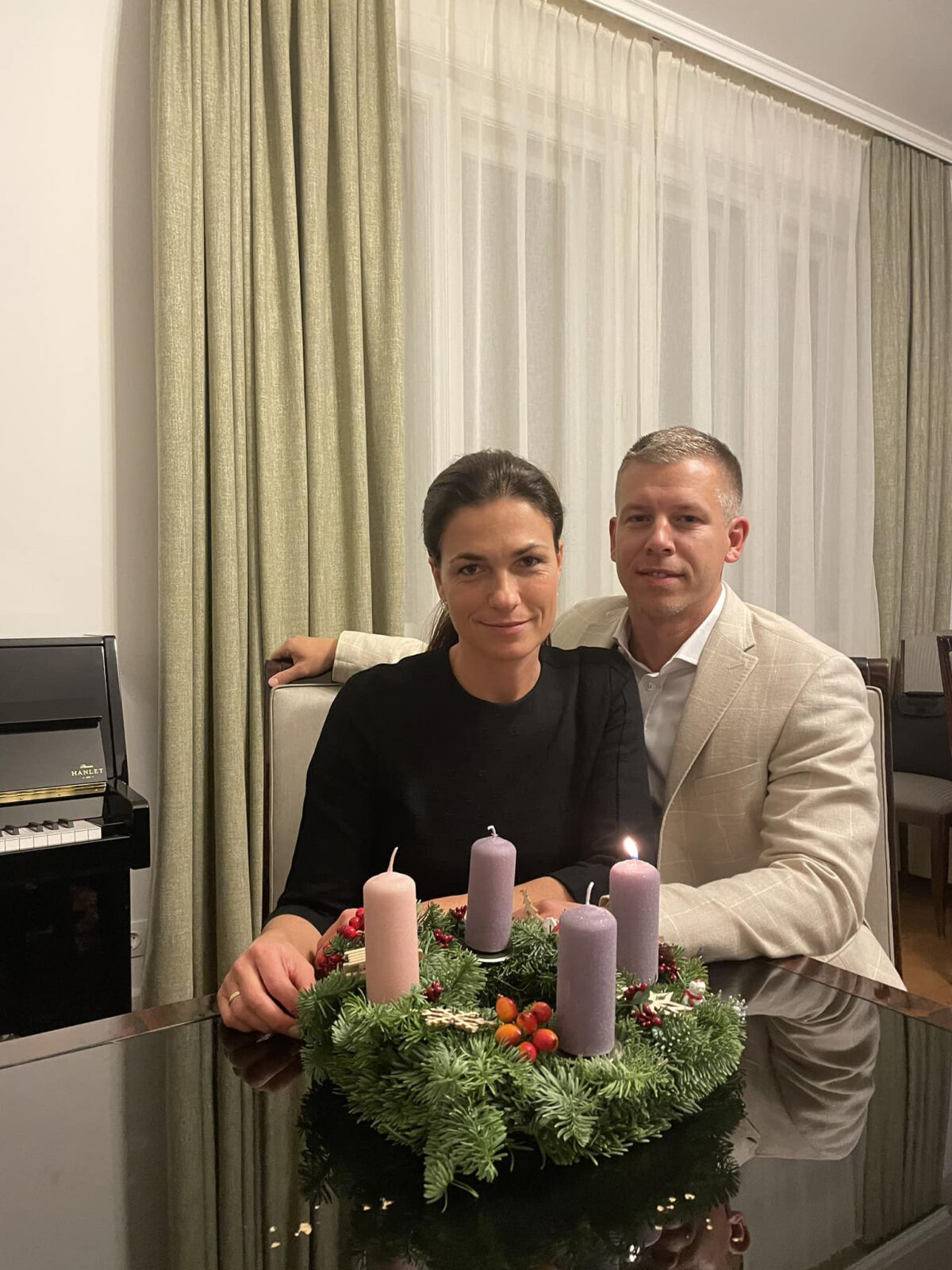
Two years later, another important moment came in his life – he married lawyer Judit Varga, who gradually built a highly successful career. From assistant to a member of the European Parliament, she rose to become Hungary’s minister of justice in prime minister Orbán’s government. She took up the post in 2019.
Magyar lived with her and their children in Brussels, then worked for years as a diplomat at the foreign ministry. After returning home, he worked as a manager; for several years he was director-general of the Student Loan Centre and obtained posts in state-owned companies. He also served as head of the legal department of the Hungarian Development Bank. He could not rise any higher, however.
Many sources portray the current leader of the Tisza party as a sharp-tongued man who did not respect authority, and was excessively independent and ambitious.
Magyar’s family belonged to the post-communist, Christian-democratic elite, with distant family ties linking them, for example, to the lawyer Ferenc Mádl, who served as president of Hungary from 2000 to 2005.
This background shaped his ambitions for a public role, and so Magyar later, naturally, joined Fidesz under the leadership of Orbán. He maintained close relations with such important figures in the Orbán camp as Gergely Gulyás, who is currently head of the prime minister’s office.
In 2006 they jointly organised protests against the left-liberal government, and at the same time Magyar provided legal representation to victims of police violence.
 Magyar (second from left) at Fidesz’s summer festival in 2022, between agriculture minister István Nagy and Judit Varga. Source: FB page of Judit Varga
He and Gulyás became close during their student years in Hamburg, Germany, and it was at one of Gulyás’s parties that Magyar met his future wife.
The couple, who were raising three sons, finally divorced in March 2023; according to Magyar, the split happened partly because of political disagreements.
Varga, however, accused him of physically and verbally abusing her, allegedly locking her in a room on one occasion. Magyar described her claims as “propaganda” orchestrated by people around Orbán. The court has not yet ruled in the case.
The pardon scandal
The disagreements with his wife, who at the time held the post of minister of justice, only escalated. In January 2023, two months before their divorce, Magyar secretly recorded one of their conversations, during which Varga spoke about how government officials interfered in a corruption case.
It was a case in which a state secretary from her ministry accepted bribes to influence the appointment of court bailiffs. The state secretary was warned about the ongoing investigation, and Antal Rogán, the minister responsible for the secret services and government communications, could be deleted from the case files.
Magyar later justified his actions by saying he needed an insurance policy in case he came into conflict with Orbán’s regime.
For almost a year nothing happened, until February 2024, when president Katalin Novák and Judit Varga were both forced to resign over the pardon scandal.
The immediate reason was that Novák – with the countersignature of then minister of justice Varga – granted a pardon to a convicted official who had acted in the interests of a paedophile perpetrator.
Varga had previously resigned from her ministerial post in order, as leader of Fidesz’s electoral list, to focus on the European Parliament campaign – but because of the scandal she gave up that role as well.
At that moment, Magyar stepped onto the scene. He began criticising the government on Facebook and was then given a platform as a guest on the independent channel Partizán. His credibility lay in the fact that he came as an insider from Fidesz and had an overview of corruption processes.
He thus became the first person from Orbán’s camp to attack the regime from within, and he immediately spoke to tens of thousands of frustrated voters amid high inflation and a cost-of-living crisis.
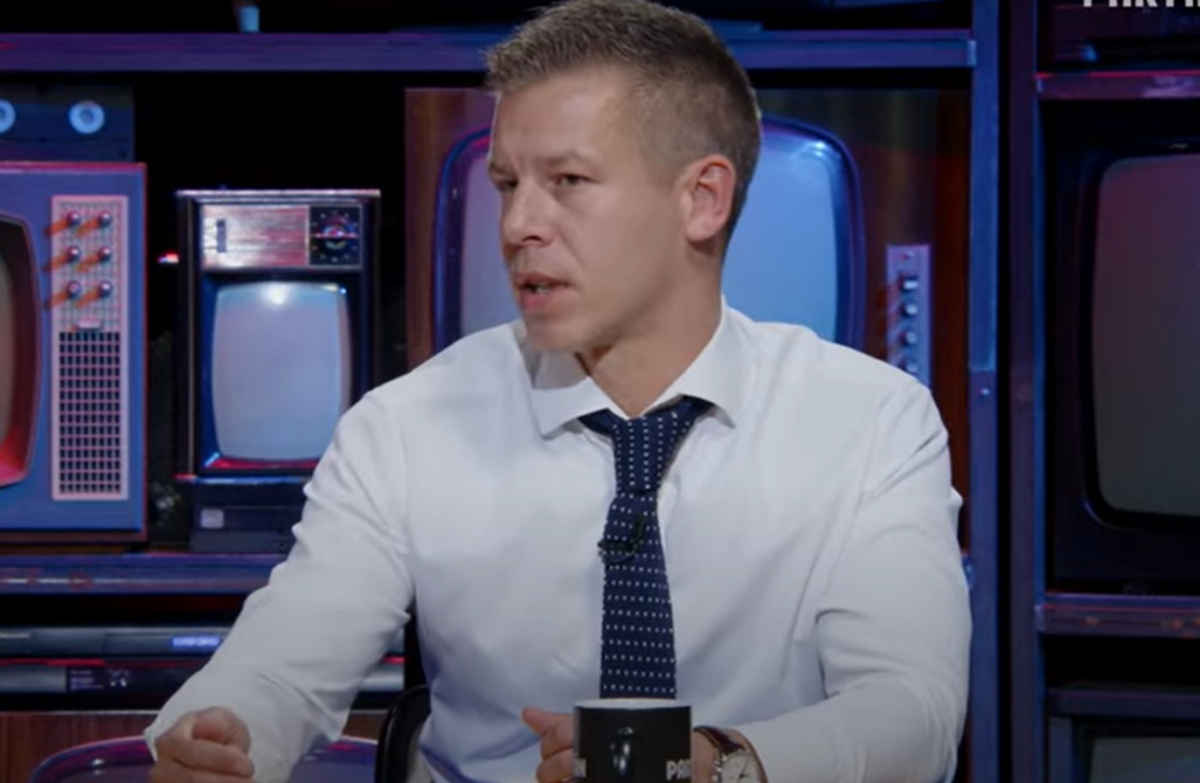 Péter Magyar’s first interview on Partizán. Source: Partizán
That year, on the national holiday of 15 March, more people (about 50,000) gathered at Magyar’s rally than at the central commemoration organised by Orbán’s supporters. At that point, Magyar was already speaking about a new party and a new government, signalling that he intended to take part in the elections.
The birth of Tisza
The number of public events then grew – after a demonstration at the end of March, they organised a so-called National March on 6 April 2024, with an exceptionally high turnout of more than one 100,000 people.
At the same time, a team of businesspeople and public figures set about founding the new party. Magyar announced that he was setting off on a tour of the country and wanted, together with his team, to visit every municipality before the European Parliament elections (June 2024).
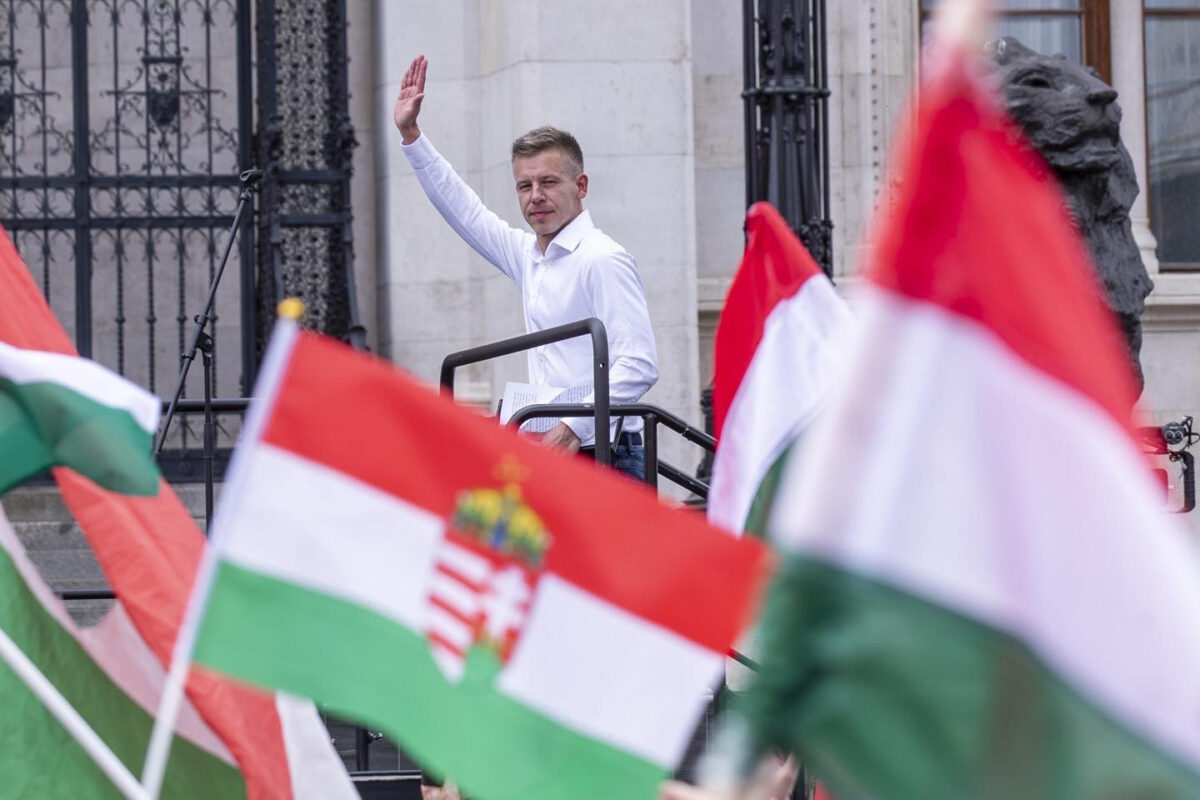 Péter Magyar at the demonstration on 6 April 2024. Source: M. P./FB
For the nascent movement it was essential to attach itself to an already existing political party so that it could take part in the upcoming European Parliament elections.
Eventually, they founded the Tisza party, registered in 2020 (its full name is the Party of Respect and Freedom – Tisztelet és Szabadság Pártja), and they searched for candidates for the European elections through a public call. At that time, Tisza was still operating mainly as a one-man party, with Magyar at the centre of its communications and organisation.
They had only three months until the elections, and even without a nationwide organisational structure the party won 29.6 percent, attracting 1.3 million voters.
Out of 21 possible mandates, it gained seven and entered the centre-right European People’s Party group in the European Parliament, which Orbán’s allies had left shortly before.
Magyar also became one of the party’s seven MEPs. Although Fidesz then still had nearly 45 percent, it was already clear that Tisza would be the main challenger to the ruling party in the parliamentary elections.
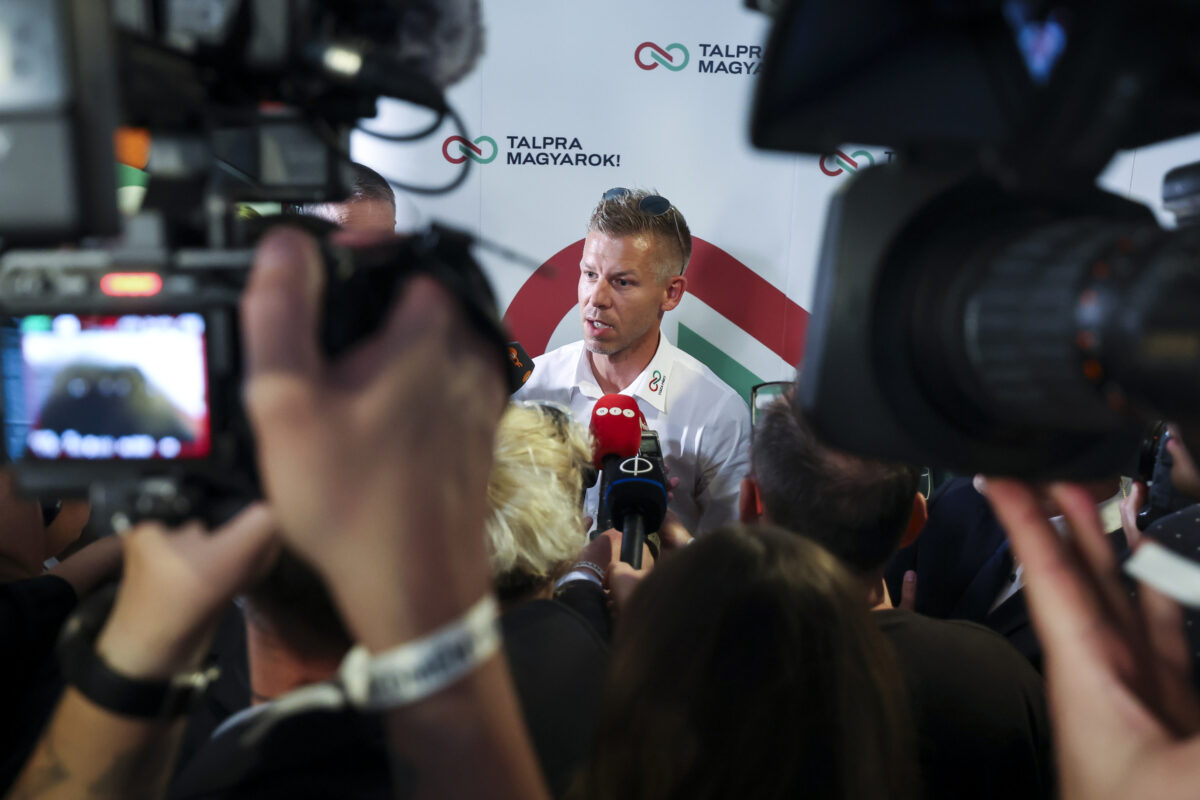 Péter Magyar na demonštrácii 6. apríla 2024. Foto – M. P./FB
A nationwide party
At the beginning, the party was put together ‘on the fly’ – its media strategy was shaped by theatre director Márk Radnai, the crowds were mobilised by actor and influencer Ervin Nagy, and Magyar stood behind it all. In parallel, they built a donor network and an IT system for reaching supporters, and recruited thousands of volunteers.
After the European Parliament elections, however, Tisza also professionalised in this area: Under the name ‘Tisza Szigetek’ (Tisza Islands), they created a community network that extended to every corner of the country.
Meanwhile, Magyar intensified his campaigning activity. In addition to making active use of social media, he tried to undermine the influence of pro-government media and Fidesz by travelling around the country – with shorter or longer breaks, he essentially continued doing so up to the parliamentary elections.
Symbolic gestures also fit into this framework, such as when, in May 2025, he walked 250 km from Budapest to the Romanian city of Oradea to win the support of Hungarian minorities living in neighbouring countries, who had mostly voted for Fidesz.
During the parliamentary election campaign, Magyar visited 500 locations, sometimes as many as seven municipalities in a single day – an unprecedented pace in Hungarian politics.
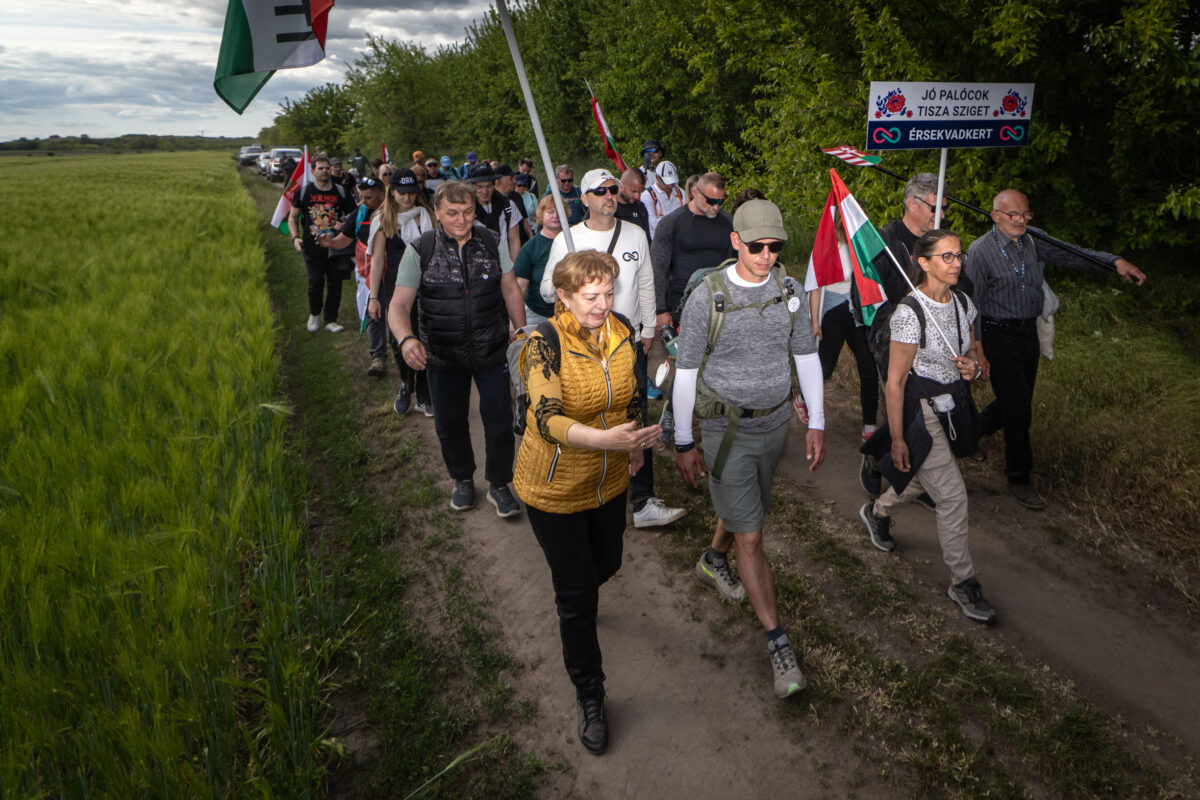 On the road to Romania. Source: Tomáš Benedikovič, Denník N
One-man show
Despite all this, the image of Magyar is not unambiguous in the eyes of Tisza’s supporters. Alongside many enthusiastic followers, many others saw him primarily as an opportunity to end Fidesz’s rule and cast their vote for him for pragmatic reasons.
Businessman Dezső Farkas, who was present at the birth of Tisza, left the party after the European Parliament elections because, as he said to the Politico news website, the early ‘start-up’ spirit in the party had, in his view, been replaced by an internal power struggle.
He later returned for a short time, then left again, as he considered the party’s internal life to be increasingly “toxic” and reminiscent of the Fidesz system, which Magyar himself had once served. It is a system based on loyalty rather than performance.
Magyar has ruled the party with a firm hand from the very beginning. Only he is allowed to give interviews to the media, and appearances by other party figures are allowed only occasionally and under strictly controlled conditions – something the newsroom of Napunk encountered in its day-to-day work. Communication between Tisza and the media is further complicated by Magyar’s attacks on independent outlets.
The fact remains that Magyar has proved resilient to discrediting campaigns and is able to draw well on his experience of when to speak out during such processes and when not to.
In his favour, too, is the fact that over the past two years he has managed to surround himself with respected experts (such as former Shell vice-president István Kapitány and Anita Orbán, former deputy CEO of Vodafone), who may become important figures in the party in future.
What can be expected from a Tisza government?
In an interview he gave to the weekly HVG, Magyar said that for those who had never lived in a real democracy, a change of government would be an enormous relief. One of his promises is to restore the functioning of a democratic rule-of-law state.
The Tisza party leader stated that until the extent of the mandate from voters is known, they will not distribute political posts; he did reveal, however, that they would scrap the current structure of ministries, under which, for example, there is no separate ministry of health, education or the environment.
“The Office for the Protection of the Constitution [Alkotmányvédelmi Hivatal] would probably be placed under the interior ministry, which would once again become a cleansed portfolio without education and health. The intelligence service [Információs Hivatal], meanwhile, would probably be moved under the foreign ministry,” Magyar said of his plans concerning the secret services.
If a Tisza government is formed, there will be zero tolerance for corruption, according to Magyar. They will apply to join the European Public Prosecutor’s Office and set up a National Office for Asset Recovery and Protection. They will order asset checks going back 20 years, covering all MPs, ministers, and the prime minister. They will also publish records of government meetings held after 2010 – those which do not endanger Hungary’s economic and security interests.
One of the often-repeated and surprising claims by Magyar and his team is that they will suspend the news programmes of propagandistic public-service media until the public media have been transformed. They are preparing to adopt a new media law.
If they come to power, the Tisza leader identified as the most urgent tasks the adoption of anti-corruption measures, securing the release of frozen EU funds and passing a new state budget. Subsequent steps will include introducing a wealth tax for billionaires and stopping large investment projects that were considered a waste of public resources.
The new health minister will have to reduce waiting times within a year and a half. In education, their goal is to adopt a new national curriculum.
After an election victory, they would remove political appointees from their posts, such as the prosecutor-general and the president of the republic. They already have the legal tools for this, but, according to Magyar, other options are also possible.
Another major commitment is to limit the term of office of the prime minister to eight years and enshrine this in the constitution. Interestingly, this measure would apply retroactively to Orbán, who would no longer be able to run for the post.
A change of course can also be expected in foreign policy, as follows from Tisza’s programme: they would restore the system of international relations with traditional allies, such as the Visegrád countries, the European Union, and Nato. At the same time, they would stop the process of gradually pushing Hungary out of the EU.
Hungary’s role in the EU would thus change: there would be fewer conflicts between Budapest and Brussels. The new Hungarian government would build relations with Moscow in a more restrained, pragmatic way.
Magyar has recently adopted a hard line towards Slovakia, primarily over an amendment to the law concerning the Beneš decrees, which expropriated the Hungarian minority. The Tisza leader took part in a January demonstration in Budapest against this law and promised that if Bratislava did not change its position, a Tisza government would expel the Slovak ambassador from Hungary.