
In the third instalment of BIRN’s series about war-displaced refugees’ continuing links to the Balkans, three former journalists from Kosovo explain how they organised a literature festival to bring people back to a small village.
 Azem Kurtic



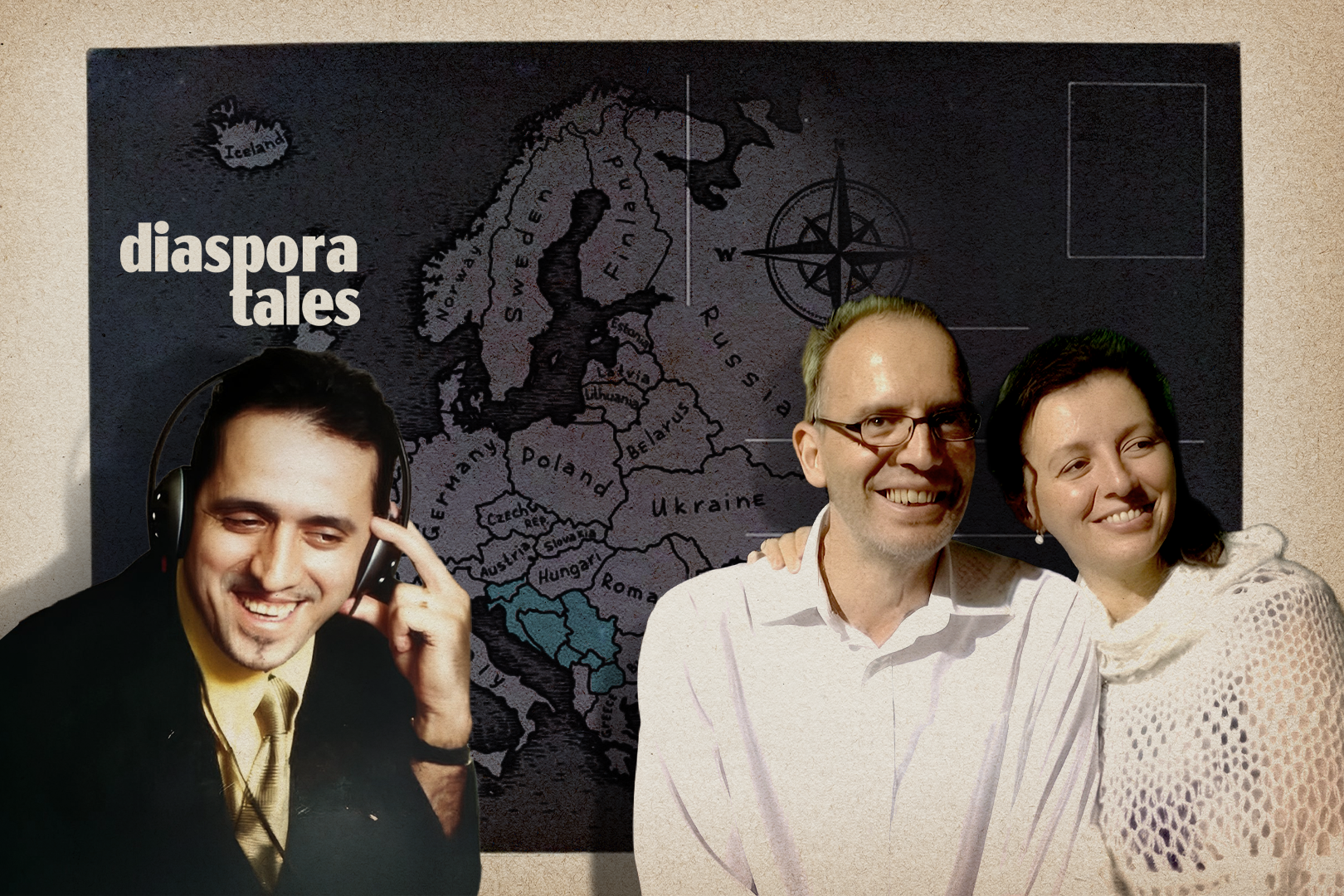
Brothers Faik and Ragip Luta, born in 1961 and 1964, were already journalists before leaving Kosovo. Faik had worked for Rilindja, the leading Albanian-language daily newspaper in Kosovo, while Ragip and Valbona had studied languages and literature. Valbona began her career in the 1980s with a student newspaper in Pristina.
In 1993, when the BBC World Service relaunched its Albanian Service, all three applied. Faik was already in London, improving his English, while Valbona and Ragip applied from Pristina. When Faik and Ragip were accepted, the move felt both inevitable and frightening. Later on, Valbona found a job in the Albanian newsroom with Radio France International.
“The situation in Kosovo was getting worse and worse,” Ragip recalled. “But even if it had been peaceful, we would not have refused the chance to work for the BBC.”
By 1999, when war broke out, Faik and Ragip were broadcasting daily from Bush House in London. Their reports relied on a fragile network of stringers and correspondents still inside Kosovo.
“Almost no foreign journalists were there at the time,” Ragip said. “Even local journalists were disappearing. We were trying to piece together what was happening from phone calls and short reports.”
They also became informal sources of information for other BBC departments and foreign-language services, helping to explain the political and humanitarian catastrophe unfolding in Kosovo.
But while trying to inform the world about what is happening back home, they feared silently for their loved ones.
Their families were scattered across the region. One sister fled to Albania, another to North Macedonia. For days, they had no information about relatives living near Pristina airport, which was under the control of Yugoslav troops before the NATO bombing started.
“It was traumatic,” Valbona said. “You are telling the world what is happening, but you don’t know where your own people are.”
As BBC journalists, they were bound by rules of impartiality. Yet the war forced them into moral and personal dilemmas.
In 1999, when a number of British writers associated with the English PEN club published a letter in The Times criticising NATO’s intervention, Ragip felt compelled to respond with a letter defending the need for action to stop atrocities in Kosovo.
It was published. Soon after, he began receiving death threats.
“They were believed to come from a Serbian extremist group called the White Wolves,” Ragip said. The UK Police offered protection. Years later, the case was reopened after new links emerged between the threats and organised extremist networks.
“It was a moment when journalism and personal life collided completely,” he said.
Living in London shaped their experience of exile. Unlike Albanians in smaller towns or rural areas, they found the city largely tolerant and cosmopolitan.
“I was never insulted because of where I came from,” Faik said. “When people asked, I said I was from Kosovo. That made a difference.”
Still, stereotypes followed Albanians from Albania, especially as organised crime stories began dominating tabloids in the 2000s and 2010s.
Working later as court interpreters, Faik and Ragip saw the scale of the problem first-hand. “In some courts, two or three rooms out of seven would have Albanians on trial,” Faik said.
The stigma was difficult to escape, even for those with long professional careers in British media.
Valbona described another isolation as another struggle. “I didn’t speak English at first. I felt very alone,” she said. “You never fully feel at home again.”
Putting Orllan on the map