

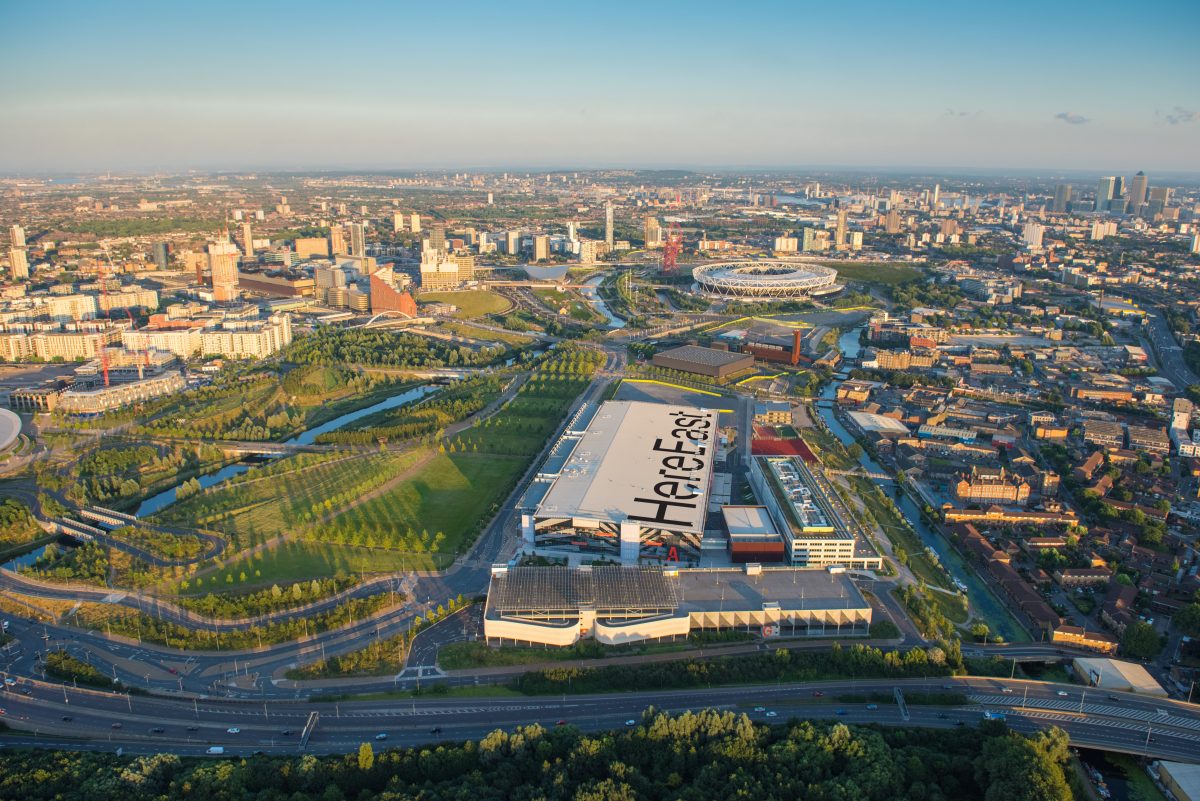
The UK’s push to build a more joined-up innovation economy is increasingly being anchored in east London, where Here East has turned into one of the country’s largest multi-sector tech campuses. Set within the former Olympic press and broadcast centre in Stratford, the 1.2m sq ft site aims to bring
 Saskia Koopman



Sunday 19 April 2026 2:41 pm
The UK’s push to build a more joined-up innovation economy is increasingly being anchored in east London, where Here East has turned into one of the country’s largest multi-sector tech campuses.
Set within the former Olympic press and broadcast centre in Stratford, the 1.2m sq ft site aims to bring various universities, startups, corporates and creative industries under one roof.
More than 6,500 people now work and study on site across over 30 organisations, with Oxford Economics estimating the campus supports more than 10,000 jobs nationwide.
Chief executive Gavin Poole said the model is built around enabling companies to scale within a single ecosystem rather than relocating as they grow.
“Companies basically look for growth, and we give them the opportunity to grow,” he told City AM.
#mc_embed_signup { background: #fff; clear: left; font: 14px Helvetica, Arial,sans-serif; width: 100%; max-width: 600px; margin: 20px 0; } #mc-embedded-subscribe-form { margin: 20px 0 !important; } .newsletter-form-flex { display: flex; gap: 0; align-items: center; margin-top: -10px; } .newsletter-form-flex input[type=”email”] { flex: 1; padding: 2px 10px; border: 1px solid rgb(18, 22, 23) !important; border-radius: 12px 0 0 12px !important; } .newsletter-form-flex input[type=”submit”] { padding: 4px 10px !important; margin: 0 !important; background-color: rgb(18, 22, 23) !important; color: rgb(255, 255, 255) !important; border: 1px solid rgb(18, 22, 23) !important; border-radius: 0 12px 12px 0 !important; } .newsletter-banner-content { margin-bottom: 15px; } .newsletter-banner-content h2 { margin: 0 0 10px 0; font-size: 18px; font-weight: 600; } .newsletter-banner-content p { margin: 0 0 10px 0; line-height: 1.5; } .newsletter-banner-content ul, .newsletter-banner-content ol { margin: 0 0 10px 20px; } .newsletter-banner-content a { color: #0073aa; text-decoration: none; } .newsletter-banner-content a:hover { text-decoration: underline; } .newsletter-banner-content img { max-width: 100%; height: auto; margin: 10px 0; } #mc_embed_signup #mce-success-response { color: #0356a5; display: none; margin: 0 0 10px; width: 100%; } #mc_embed_signup div#mce-responses { float: left; top: -1.4em; padding: 0; overflow: hidden; width: 100%; margin: 0; clear: both; }
Demand for space is also accelerating as activity in the wider tech and property markets picks up.
“We’re struggling since March to keep the numbers down,” Poole said. “Since February things have started to speed up.”
Startups and industry in the same space
The campus reflects a broader shift in UK innovation policy towards clustering, placing research institutions, universities, early-stage companies and large firms in close proximity in a plea to drive collaboration.
At Here East, that plays out across a mix of academic labs, production studios and commercial offices, as well as more creative spaces.
University facilities from UCL and Loughborough focus on areas like robotics or advanced manufacturing, while nearby, startups are working on everything from medical devices to film technology.
One founder developing surgical robotics on site told City AM: “We’re pre-clinical at the moment, we’ve done animals, but this summer we’ll be doing humans.”
Read more “MoN Takanawa: The Museum of Narratives” Opens in Tokyo
Alongside research-led ventures, creative and media businesses are also expanding on the campus.
Hawk, the video production startup behind films like The Running Man, began with a small team, but has scaled its operations at Here East as demand for production infrastructure has grown.
“It’s a startup. It’s the same with every startup, you sit there going: where do we put the money?” the founder told City AM.
Here East’s aim has been to lower barriers to that growth, including offering ready-to-use space and flexibility on expansion.
“What we’ve done is we’ve given a startup 12,000 square feet of workspace, hoping that they’ll hit the jackpot,” Poole said. “If it goes wrong, it’s not a massive deal… we’ll just take it back and lease it to someone else.”
At the centre of the campus is Plexal, the innovation hub that connects startups with corporates and government-backed programmes.
“It’s a hub for member organisations, everything from small startups to some much larger corporate partners,” Poole said. “Banks like Barclays have space here for their innovation teams to get in touch with what’s happening in the space.”
The site is also expanding its education and creative footprint. NABA, Italy’s largest Academy of Fine Arts, is opening its first campus outside Italy at Here East, joining five universities already based there.
Poole said: “London has long been a global point of reference for fashion design, artistic and creative education, and East London is a key driver of the sector’s growth”.
With further initiatives planned around immersive technology and the experience economy, Here East is becoming as a central node in the UK’s attempt to build a more integrated innovation system.
Read more Dubai’s economic dynamism will help it withstand Iran conflict
Similarly tagged content: Sections Categories People & Organisations