
Council of Europe body advises changes following controversial legal changes that critics say could undermine prosecutors’ work in high-profile cases involving Serbian officials.
 Katarina Baletic



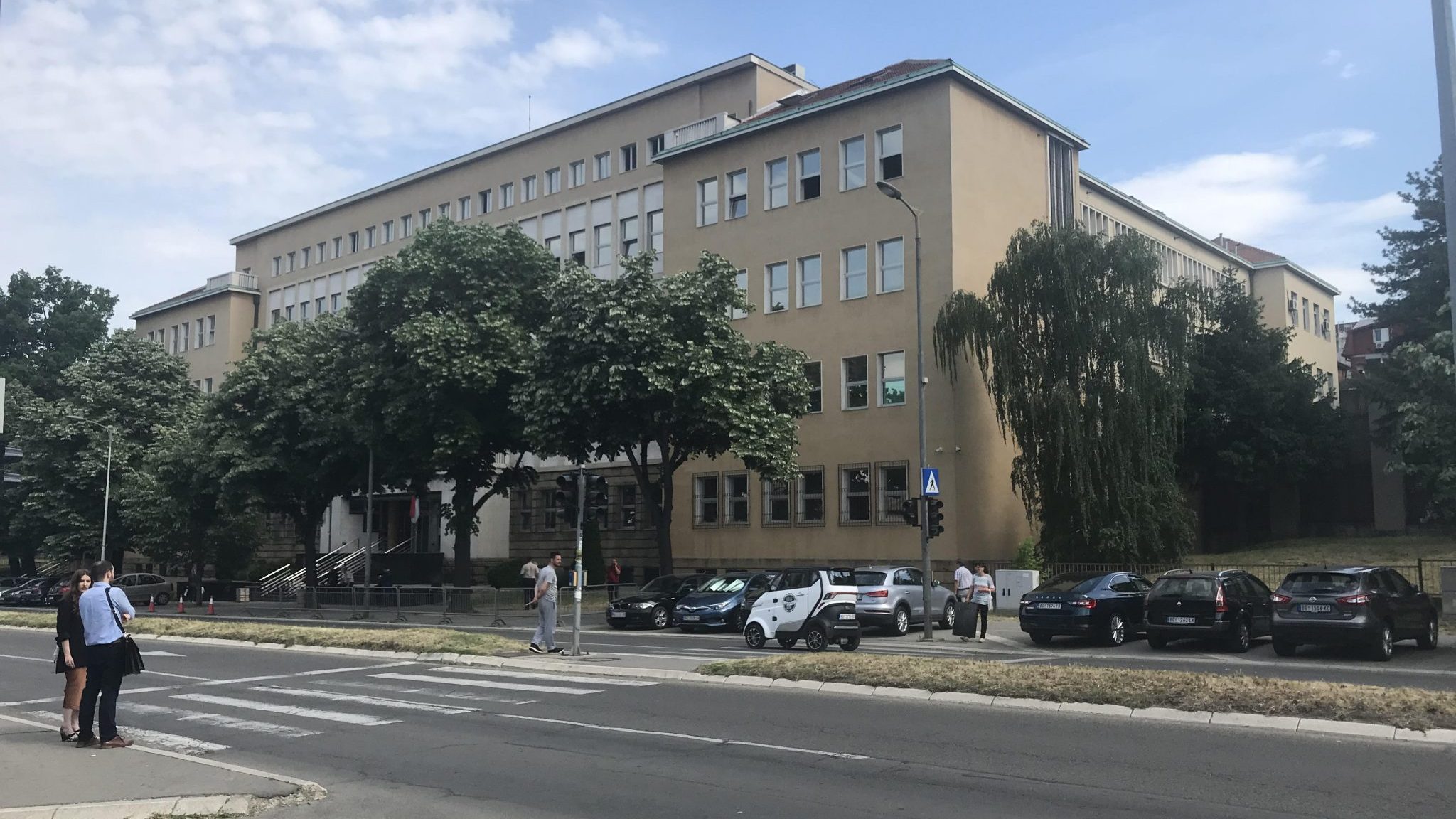
The Serbian Prosecutor’s Office for Organised Crime in Belgrade. Photo: BIRN.
The Venice Commission, a Council of Europe advisory body on constitutional law, said in an “urgent opinion” published on Friday that it has identified several “concerning shortcomings” in recent changes to Serbia’s laws governing the judiciary and prosecution.
One key recommendation is the reinstatement of prosecutors whose mandates were ended due to the legal changes, which were approved by the Serbian parliament on January 28.
“The public prosecutors whose temporary assignments were prematurely terminated should be reinstated and a mechanism should be introduced to ensure that the positions occupied by temporarily assigned prosecutors in the TOK [Public Prosecutor’s Office for Organised Crime] can be gradually filled by means of regular appointments,” said the body in its urgent opinion.
TOK warned on January 19, before the adoption of the legal amendments, that the changes would leave it without a significant number of public prosecutors.
“This would directly reduce [TOK’s] efficiency and effectiveness,” the office said, adding that this would “in practice, ultimately lead to a complete blockage of proceedings in the most complex and most sensitive criminal cases”.
TOK is in charge of one of the most high-profile ongoing legal cases in Serbia, concerning the Novi Sad railway station disaster. Sixteen people were killed in November 2024 when a canopy collapsed on them, sparking a wave of anti-government protests.
It is also responsible for the case against Minister of Culture Nikola Selakovic, who was indicted in December for abuse of official position after removing the cultural heritage status of the bombed Yugoslav Army headquarters in Belgrade.
Anti-graft watchdog Transparency Serbia said in a press release that the amendments would reduce TOK’s capacity to investigate corruption involving high-ranking public officials.
Before January’s legal changes, prosecutors who received a mandatory instruction from a superior that they believed was against the law could complain to the High Prosecutorial Council Commission. Under the new changes, objections instead have to be lodged to the head of the Prosecutor’s Office.
The Venice Commission called on Serbia to revert to a non-hierarchical system for objections to mandatory instructions.
January’s legal amendments also abolished the independence of the Special Department for Cybercrime, as it became part of the Higher Public Prosecutor’s Office in Belgrade, which is widely seen as being under the influence of the ruling Serbian Progressive Party.
A key Venice Commission recommendation calls for greater structural and operational autonomy for the Special Department for Cybercrime, “in line with the technical complexity of its mandate and the national character of its jurisdiction”.
EU Commissioner for Enlargement Marta Kos said on April 20 that the European Commission is “currently assessing whether the country still fulfils the conditions for payments under the EU’s financial instruments” and mentioned that one of their main expectations is that the “authorities would fully align its judicial laws with the Venice Commission’s recommendations”.
Speaker of the Serbian parliament, Ana Brnabic, requested the Venice Commission’s opinion on January’s legal amendments after they had been adopted, following concerns raised by civil society experts.