

In this edition of our weekly round-up of politics in Hungary: the unclear future of outgoing PM Viktor Orbán plus his plans to revitalise the Fidesz party, an unusual correction from the pro-Fidesz state media, and a deep dive into the new Tisza cabinet.
 Zoltan Szalay



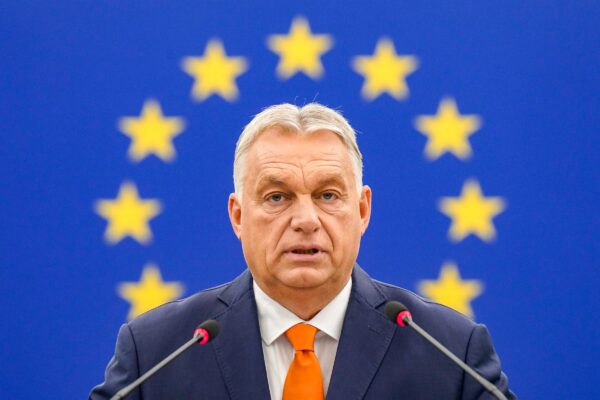
In his first appearances after 12 April election, Viktor Orbán stressed that he wanted to renew the Fidesz party. He spoke of this as a task also facing the entire “national party”. Since then, several people have criticised him for calling Fidesz a “national party”, as if this excluded other voters from the country.
The outgoing foreign minister, Péter Szijjártó, responded in an interview for Telex by saying it was merely a politological term, which was not exclusionary.
Orbán began his renewal by giving up his parliamentary mandate. This means that after the inaugural session of the National Assembly (Országgyűlés) on 9 May, he will no longer be an MP.
This truly marks the beginning of a new era in Hungarian politics: for the first time since 1990, Orbán will not be sitting in parliament. He will also lose his immunity, which in any case would not provide real protection against Tisza, which has a constitutional majority and has promised to seek out those responsible for the country’s poor state of affairs.
According to media reports, Orbán offered his resignation to the Fidesz presidency, which did not accept it. The congress at which new leadership will be elected is scheduled for 13 June.
Orbán announced in advance that a major restructuring also awaited the Fidesz parliamentary group. Of the 42 MPs who obtained a mandate from the party list, 25 will not take up their seats.
Officially, they will voluntarily give up their mandates, but this expected development had already been signalled by the outgoing prime minister. He said to the pro-government channel Patrióta that “those who have now entered parliament are not the people we will need there”.
Only those who entered parliament from the national list can give up their mandate. The 10 MPs who won seats in single-member constituencies will definitely remain in parliament, because, as Telex pointed out, if they resigned, by-elections would have to be held in their constituencies.
What is clear is that his parliamentary group will be led by Gergely Gulyás, who has so far served as head of the Prime Minister’s Office. He is also a long-standing friend of Péter Magyar. The future prime minister met his ex-wife Judit Varga, who rose to the post of minister of justice in Orbán’s government, through Gulyás.
However, since Magyar left Fidesz, he and Gulyás have sharply attacked each other. It will therefore not be comfortable for the former minister that it is Gulyás who will lead Fidesz’s MPs in parliament.
Two other main faces of the campaign at Orbán’s side will also remain MPs for Fidesz: foreign minister Szijjártó and transport minister János Lázár.
But many of Fidesz’s old politicians are leaving parliament. The speaker of parliament László Kövér will no longer be there, nor will Fidesz’s strongman in Debrecen Lajos Kósa, propaganda and intelligence chief Antal Rogán, party director Gábor Kubatov, deputy prime minister Zsolt Semjén or spokesman Tamás Menczer.
Campaign chief Balázs Orbán will take up his mandate, but in the summer he will leave for the European Parliament, where he already won a seat two years ago. Apart from some ministers, this means that in the next parliamentary term opportunities will mainly go to lesser-known politicians with lower voter support.
New diverse Tisza government labelled ‘Fidesz-Light‘
In recent days, Magyar has announced several future members of his government, which is beginning to sketch out the contours of the incoming Tisza cabinet. Political scientist Gábor Török said it would be a cabinet that could also be described as “Fidesz-Light”. Although other experts criticised him for this remark, it is indisputable that several members of the Tisza government came from Fidesz and had previously held senior positions in Orbán’s system.
Let us look at the specifics:
Romulusz Ruszin-Szendi: the future defence minister, he was commander of the armed forces until 2023 and then chief of the general staff. András Kármán: the future finance minister, he was a state secretary in Orbán’s government in 2010–2011. Anita Orbán: the future foreign minister, she was a Fidesz parliamentary candidate in 2010 (she later withdrew). Dávid Vitézy: the future transport minister, he was a state secretary in Orbán’s government in 2020–2022.
Magyar is building more of a technocratic cabinet than a party-based government. Several members of the cabinet have not previously been tied to a party, but have achieved significant results in their respective fields. One such figure is Judit Lannert, an education expert, who will head the education ministry, and political analyst Bálint Ruff, who will lead the Prime Minister’s Office responsible for strategic planning.
Dávid Vitézy also fits into this framework; he is one of the most respected Hungarian transport experts. However, he stands out in that he also has significant political backing: in 2024 he lost the race for mayor of Budapest to Gergely Karácsony by only 293 votes.
An important post will also go to Zoltán Tanács, Tisza’s programme-shaping expert, who will head the ministry of science and technology.
In the Tisza government, Péter Magyar is trying, alongside expertise, to place emphasis on inclusiveness. A striking example is that the minister for social affairs and family will be Vilmos Kátai-Németh, a blind lawyer and aikido practitioner.
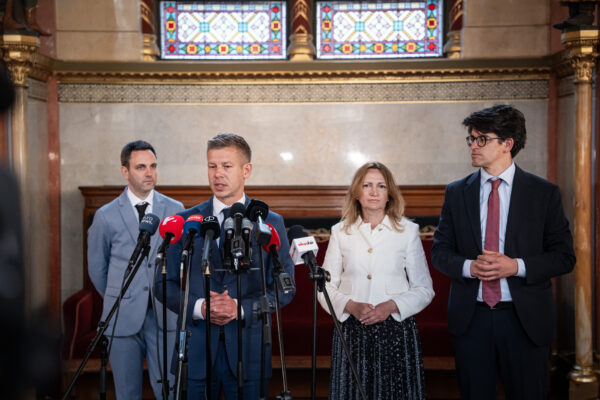
From the perspective of Hungarians living in Slovakia, it is particularly important that the minister for social relations and culture will be Zoltán Tarr, who, as an MEP, devoted considerable attention to the issue of the Beneš Decrees. Tarr will also be in charge of the agenda relating to Hungarians abroad.
It is also clear that the future prime minister is trying to satisfy all segments of Tisza’s ideologically-diverse electorate. Alongside ministers and senior officials with a rightwing conservative profile, politicians with explicitly leftwing values have also obtained important positions: among them are Bálint Ruff, Judit Lannert and government commissioner Kriszta Bódis, who has achieved outstanding results in integrating marginalised communities.
The battle over EU funds has begun