
Hungary is waking up to a new leader this morning — one who is almost 20 years younger than Viktor Orbán, but not an outsider (nor someone entirely politically opposed to the previous leadership.)
 Léa Marchal




Production: By Europod, in co-production with Sphera Network.
EUobserver is proud to have an editorial partnership with Europod to co-publish the podcast series “Briefed” hosted by Léa Marchal. The podcast is available on all major platforms.
Hungary is waking up to a new leader this morning — one who is almost 20 years younger than Viktor Orbán, but not an outsider, nor someone entirely politically-opposed to the previous leadership.
As we discussed in a previous episode of Briefed, Péter Magyar was, until just two years ago, a major figure in the Fidesz party, led by Orbán.
He took advantage of a corruption scandal within the party to step away, and then built his entire campaign on attacks against old-style corrupt politicians.
And it worked.
But does this mean that reforms will be implemented in Hungary, that corruption will be halted, and that EU money will start flowing again?
Magyar has promised to unblock the EU funds frozen by the European Commission over concerns about democracy.
Several types of funding are currently blocked: a €17bn loan for defence spending; another €10bn in recovery funds agreed after the Coivd crisis; and a few more billions under the cohesion policy.
Unblocking all of this will not happen overnight. Hungary needs to provide evidence of reforms.
A first deadline is already approaching regarding the COVID recovery funds.
This leaves little time for the new Tisza governing party to change the system put in place by Orbán, especially if constitutional reforms are required.
At the same time, the European Commission would prefer to release the money and establish a positive relationship for the months and years ahead.
A senior EU official, quoted by Politico, expressed confidence that the new Hungarian government could achieve the necessary reforms very quickly — provided there is sufficient political will.
As for other frozen EU funds, such as cohesion funds, they can be released later, with goodwill from both sides.
If dialogue is reopened with Hungary, it could open the door for Budapest to lift its veto on the €9bn loan for Ukraine and, more broadly, other types of vetoes.
However, these discussions are likely to be difficult. Magyar shares Orbán’s stance on Ukraine: he strongly opposes Ukraine joining the EU and does not want to contribute to supporting Ukraine’s defence efforts.
As for democracy concerns, as Eric Maurice from the European Policy Centre highlights, the example of Poland shows that rebuilding the rule of law is not so straightforward.
While a pro-European party won the 2023 elections in Poland after eight years of far-right party “law and justice” at the government, efforts to restore the rule of law have not always been successful.
Furthermore, the votes of Magyar’s Tisza party in the European Parliament show regular alignment with those of Fidesz members, whether on rule-of-law issues or foreign affairs.
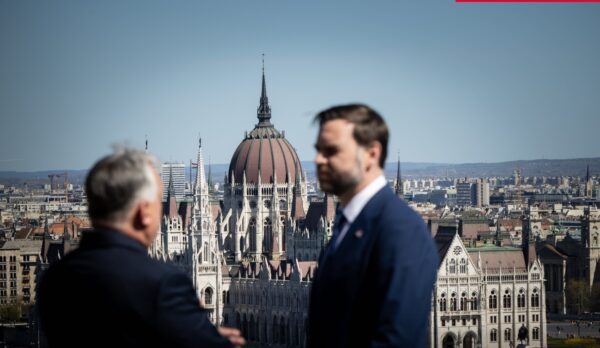
All in all, Hungary is unlikely to undergo a complete shift in the months ahead. It will be interesting to see what changes occur—if any—as voters have removed Orbán from power.
The election result nevertheless shows that illiberal democracies can be overturned, and that populist tactics, even when backed by Donald Trump, do not always pay off.