



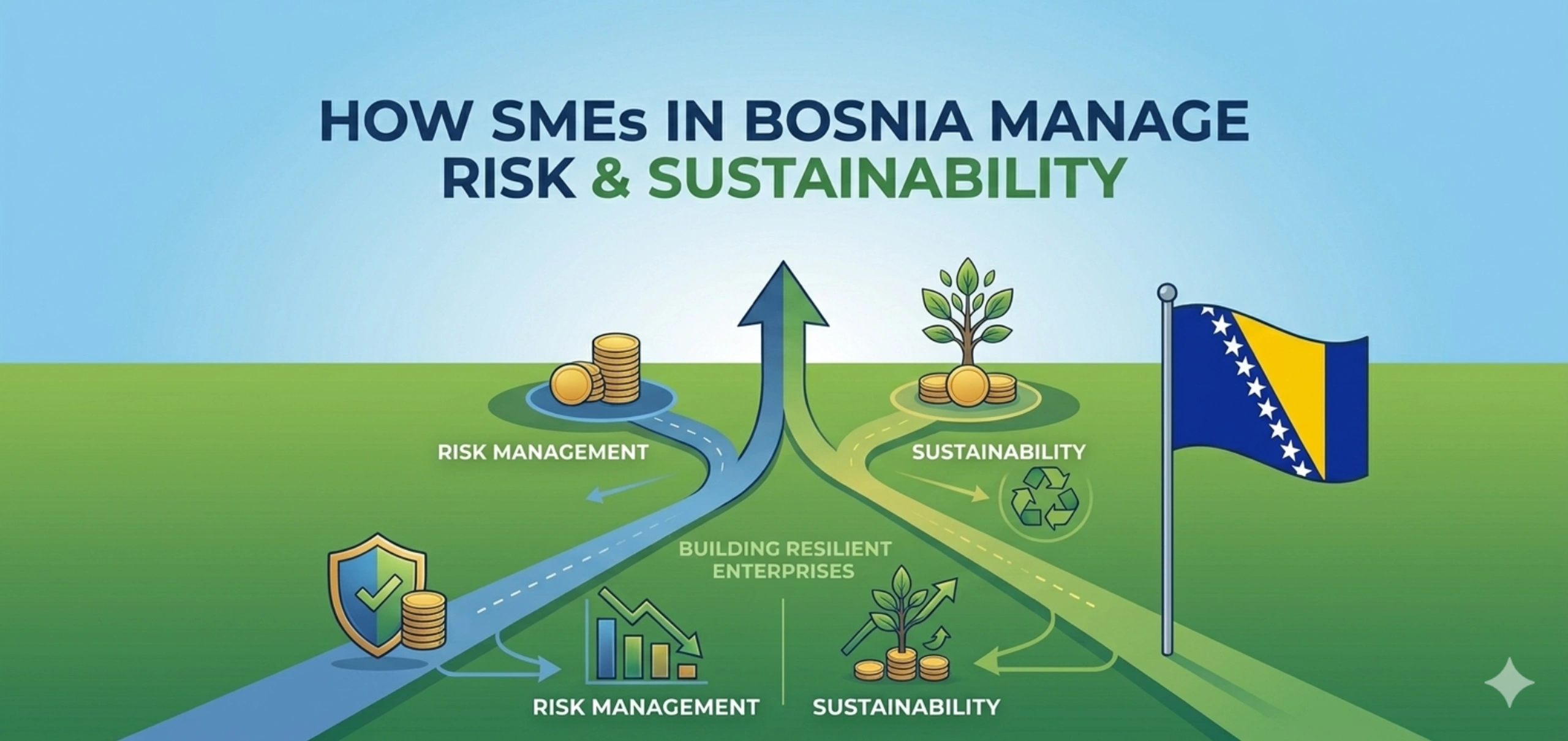
Running a small business in Bosnia and Herzegovina isn’t for the faint of heart. Whether you’re running a café in Banja Luka, a carpentry shop in Tuzla, or a boutique in Mostar, you know the drill. You’ve got to have your wits about you to survive. The economy here doesn’t work the same way it does in Germany or the US. It’s a smaller pool, and honestly, sometimes it feels like you’re swimming upstream.
SME finance in Bosnia isn’t just about numbers on a spreadsheet; it’s about survival for SMEs Bosnia and Herzegovina. It’s about making sure there’s enough cash in the drawer at the end of the day. So, how do small businesses in BiH actually keep the lights on when things get tough? Let’s have a real talk about it.
Why It’s Tougher Here
Let’s be honest for a second. Doing business in Bosnia and Herzegovina comes with headaches SMEs Bosnia and Herzegovina don’t face everywhere else. You’ve got two entities—the Federation and Republika Srpska—and they both have their own rules. For a small business owner just trying to expand, that political setup can be a nightmare.
Then there are the banks. They can be incredibly tough. If you walk in looking for a loan, they usually want collateral. And we aren’t talking about a handshake promise; they want property or something very valuable to secure the loan. For a small shop owner who is renting their space, that’s a huge barrier.
On top of that, even though the Convertible Mark (KM) is pegged to the Euro, the prices for goods are creeping up. That squeezes your profit margins until there’s almost nothing left. This is why risk planning for small businesses is so crucial here. You can’t just fly by the seat of your pants. You have to think three steps ahead because the bank probably isn’t going to swoop in and save you.
Cash Still Rules
If you go to Paris or London, everyone pays with a card. In Bosnia and Herzegovina? Cash is still king. Walk into a butcher shop or the local market, and you’ll see people handing over bills. It might seem old-fashioned to an outsider, but for business owners here, it’s actually a smart defense mechanism.
Here is why it works: the money flows instantly. You don’t have to wait three days for a bank transfer to clear. You have the cash in your hand right now.
But there is a trade-off. It limits how fast you can grow. You can only expand as fast as the cash in your register allows. You can’t just take out a massive loan to open five new locations. You have to grow slowly. The upside? You sleep better at night knowing you don’t owe the bank a fortune. This cautious approach is a huge part of Balkan SME survival strategies. It might look slow from the outside, but it keeps businesses out of the debt traps that sink others.
The Do-It-Yourself Approach to Planning
Since getting a loan from a bank is such a pain (and often expensive), successful SMEs in BiH have become experts at self-financing. This is a massive part of long-term finance planning here.
Instead of borrowing money to buy a new delivery van or a piece of machinery, a business owner will often just save up for two years. It takes longer, sure, but it keeps them free. When you don’t have a bank breathing down your neck every month for a payment, you have the freedom to run your business exactly how you want.
This slow-and-steady method acts as a shield against risk. If the market takes a dip, you don’t have a bank threatening to shut you down. You own your equipment, and you own your future.
Don’t Put All Your Eggs in One Basket
Relying on just one thing is dangerous. If you own a hotel in Mostar, you might make a killing in the summer. But what happens in the winter? It gets quiet. The tourists leave, and they don’t spend money the way locals do.
The smart businesses adapt. A restaurant in Sarajevo might completely change its menu and vibe in the winter compared to the summer to attract locals. This kind of pivot helps balance the books. It ensures that there is money coming in year-round, not just during the busy tourist seasons.
SME finance in Bosnia is often about just managing these seasonal flows. It’s about being creative with what you offer so you can keep the cash flowing 12 months a year.
The “Gray” Side of Things
We have to talk about the elephant in the room. A lot of small businesses in BiH operate partly off the books. It helps them manage the heavy tax burden and navigate the sea of red tape.
Now, doing things “under the table” isn’t great if you want to grow big. You can’t really sell a business that doesn’t exist on paper. But for now, it is a reality. It’s a Balkan SME survival strategy that helps people get by in a tough regulatory environment.
However, things are changing as the country moves closer to European standards. The government is getting stricter. This brings a new risk: having to become compliant. If you want that big EU grant or a legitimate bank loan, you have to show your face. You have to come out of the shadows. It’s a risk, but it also opens doors for bigger opportunities down the road.
Family is the Safety Net
One of the biggest advantages small businesses in Bosnia have is the community. This isn’t just about business; it’s personal.
When you hire someone, you often don’t just hire an employee; you hire a cousin or a nephew. It keeps the money in the family. And if a shop owner falls on hard times, neighbors and family might help them out with a loan or just by buying goods in bulk to help them out.
This informal safety net acts as a buffer. It’s a form of financial support that you rarely see in the West. It makes the business owner feel safer, knowing they aren’t alone in the struggle.
The Bottom Line
So, how do small businesses in Bosnia and Herzegovina handle the pressure? They do it with grit and caution. They don’t take unnecessary risks. They value cash over credit, and they rely on their community. They might not have the fancy financial tools or consultants that Western corporations have, but they have something else: resilience.
They sail away from risky shores. They value cash more than credit, and they trust their community religiously. They don’t have big consultancies or fancy budgets, but they have resilience that is unmatched.
Whether it is saving up to buy a machine, adapting to the seasons, or leaning on family for support, SMEs in Bosnia and Herzegovina have their own way of doing things. It works for them, and it ensures that despite the risks, they keep their doors open year after year.
Frequently Asked Questions
1. Is it hard to get a loan for a small business in Bosnia?
Yes, it can be. Banks in BiH are very cautious. They usually ask for collateral (like property) that is worth more than the loan itself. This makes it tough for small shop owners to borrow money to grow.
2. Is the convertible mark stable?
Yes, it is pegged to the Euro. This makes it predictable. You don’t have to worry about the money losing value suddenly. However, the price of things you buy is going up, so your money buys a little less every year.
3. How do businesses deal with inflation in Bosnia?
They have to raise prices. Since they often operate on cash flow and don’t have a lot of credit card debt, they have to pass the cost on to the customer quickly. Sometimes they eat the cost to keep the customer, but that hurts profits. It is a balancing act.
4. Can foreigners own businesses in Bosnia and Herzegovina?
Yes, foreigners can own businesses. However, they have to deal with the complex legal system. It is often easier to form a company in Republika Srpska as a foreigner than in the Federation, though both are possible. You just need a good local lawyer.
5. What is the “informal” economy?
This refers to businesses that operate partly off the books to avoid taxes or regulations. While it helps with taxes in the short term, it is risky. The government is trying to crack down on it as the country seeks EU membership. It is a risky strategy that is slowly disappearing.