

Germany reintroduced systematic military registration in January 2026. The controversial law mandates medical exams for young men and requires those aged 17–45 to seek permission for long-term stays abroad. Amidst public confusion and youth protests, the government is now working to amend the controversial travel approval process.
 Soňa Weissová



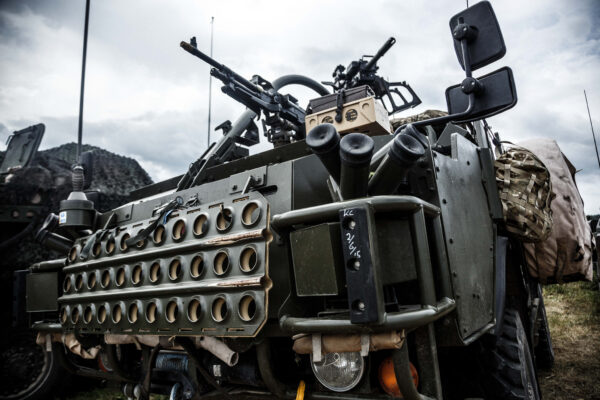
Since Russian president Vladimir Putin attacked Ukraine four years ago and US president Donald Trump returned to the White House, several European states have understood that they must take greater care of their own security.
German chancellor Friedrich Merz promised that his country’s army would once again become the strongest in Europe. In addition to investing in defence, his government decided to strengthen the Bundeswehr with new soldiers.
Since the New Year, a conscription law has been in force that introduces several new elements — voluntary military service and mandatory medical examinations for part of the population.
The amendment triggered a wide‑ranging debate in the country about the army’s combat readiness — and about how interested young people were in joining the armed forces.
However, almost nobody talked about one particular detail, which only entered the public debate at the beginning of April.
The German website Frankfurter Rundschau pointed out that, together with the legislation, an obligation had come into force affecting several million men aged between 17 and 45.
Germans in this age group should not only notify the armed forces of the Federal Republic (Bundeswehr) of their plans to stay abroad for longer than three months before they travel, but also have them approved in advance by the army.
This applies, for example, to those who want to go abroad for a semester, to travel for a longer period, or to take a so‑called sabbatical abroad.
The ministry, under public pressure, was looking for a way to explain the legislation and, at the same time, amend it so that it required as little bureaucracy as possible.
Nobody noticed it
The conscription law came into force on 1 January 2026. Among other things, it regulates the scope and duration of military service.
As the daily Süddeutsche Zeitung noted, nobody was hiding paragraph 3. In fact, anyone who wanted could simply read it.
Section 1 dealt with mandatory military service, even though Germany had not reintroduced it after more than 15 years.
Section 2 is about travel abroad.
“Male persons who have reached the age of 17 must obtain the consent of the competent Bundeswehr career centre if they intend to leave the Federal Republic of Germany for longer than three months,” the law stated.
According to the law, this obligation ended at the age of 45 and applied even when no state of emergency had been declared in the country.
Although the law was clear, it only sparked extensive debate in Germany in April.
According to Süddeutsche Zeitung, the essence of the problem lay in the fact that nobody considered it necessary to communicate the issue proactively, even though the law had already been the subject of emotional discussions before it was adopted.
Germany’s defence ministry now came under public pressure and had to explain the provision.
Confusion over details
During the Easter holidays, the ministry tried to explain the issue by saying that, in an emergency, it needed to know who was staying abroad for a long period.
At the same time, it insisted that it would not prevent anyone from travelling – as long as Germany had voluntary and not compulsory military service, and as long as the country was not at war.
It stressed that, at this stage, it was purely a formality.
When asked by German media how, and indeed whether, the men concerned actually had to obtain permission in practice, and how many times any of the country’s 15 Bundeswehr career centres had actually issued it, the ministry did not respond and provided no details.
The ministry also did not clarify how it detected breaches of the obligation or how it punished them.
“This rule already applied during the Cold War and had no practical significance — and, above all, it was not subject to any sanctions,” the ministry said.
The obligation to approve longer stays abroad has been in the legislation for some time; according to the weekly Spiegel, it was introduced in 1965, but only four years later, it was amended so that the applicant had to receive approval as long as there was no risk of being called up for military service.
In 2011, Germany suspended conscription, so these paragraphs became irrelevant.
However, when the amended law came into force, the rule on travel became applicable again.
The opposition Greens, but also the governing Christian Democratic Union (CDU/CSU), criticised the approach of the ministry led by Boris Pistorius of the Social Democrats (SPD), saying it had not explained the issue sufficiently.
Pistorius promised on Tuesday (7 April) that the government would amend the law later this week. At the same time, he insisted that nothing was changing for men.
“Currently, nothing changes for men: whether 17 or 45 years old, or somewhere in between — everyone is of course allowed to travel and currently does not need a permit to do so,” the defence minister said in response on Tuesday.
Army sending out questionnaires
Süddeutsche Zeitung said that for the defence minister, it was not only important to strengthen the army through the law, as he also wanted to restore the systematic registration of conscripts.
In the event that conscription was reintroduced, there would immediately be a comprehensive database of who could be called up and where potential conscripts were located.
For this reason, all young men — even if they refused voluntary service — now had to fill in a questionnaire around the time of their 18th birthday, stating whether they were interested in joining the armed forces, how they envisioned their future, and answering questions about their state of health and physical fitness.
“Are you basically interested in becoming a voluntary soldier?” the Bundeswehr asked in the questionnaire. Answers were given on a scale from zero to ten. Zero meant “no interest”. Other questions concerned physical fitness and educational attainment.

Source: Bundesregierung/Instagram
One of the Bundeswehr’s career centres has published several videos since the beginning of 2026 featuring young people who voluntarily signed up for training. In a video posted on Facebook, they explain why they decided to join the army.