

A widespread defeat for Labour in Thursday’s regional elections could trigger a “swing to the left politically” investors have warned, putting further pressure on government borrowing costs that are already at their highest levels since the financial crisis. Polling has suggested Labour is set to lose over 1,000 seats to
 Maisie Grice




Monday 04 May 2026 12:02 pm
 Bond traders are fearing the outcome of the 7 May elections
 A widespread defeat for Labour in Thursday’s regional elections could trigger a “swing to the left politically” investors have warned, putting further pressure on government borrowing costs that are already at their highest levels since the financial crisis.
Polling has suggested Labour is set to lose over 1,000 seats to other parties, including leftwing Green and right-wing Reform across the country on 7 May, as the ruling party continues to deal with the fallout of the Peter Mandelson scandal.
Bond traders fear that a bruising defeat could pile pressure on Chancellor Rachel Reeves to loosen her self-imposed borrowing limits and increase the risk of a leadership challenge to prime minister Keir Starmer from the left-fringes.
Former deputy prime minister Angela Rayner and Greater Manchester mayor Andy Burnham both have said the government should not be “in hock to the bond markets”, and are viewed as potential challengers for the top job.
Iain Buckle, head of UK fixed income at Aegon asset management, told the Financial Times: “The bond market will be incredibly vigilant about what kind of political change comes out of [the regional elections].
#mc_embed_signup { background: #fff; clear: left; font: 14px Helvetica, Arial,sans-serif; width: 100%; max-width: 600px; margin: 20px 0; } #mc-embedded-subscribe-form { margin: 20px 0 !important; } .newsletter-form-flex { display: flex; gap: 0; align-items: center; margin-top: -10px; } .newsletter-form-flex input[type=”email”] { flex: 1; padding: 2px 10px; border: 1px solid rgb(18, 22, 23) !important; border-radius: 12px 0 0 12px !important; } .newsletter-form-flex input[type=”submit”] { padding: 4px 10px !important; margin: 0 !important; background-color: rgb(18, 22, 23) !important; color: rgb(255, 255, 255) !important; border: 1px solid rgb(18, 22, 23) !important; border-radius: 0 12px 12px 0 !important; } .newsletter-banner-content { margin-bottom: 15px; } .newsletter-banner-content h2 { margin: 0 0 10px 0; font-size: 18px; font-weight: 600; } .newsletter-banner-content p { margin: 0 0 10px 0; line-height: 1.5; } .newsletter-banner-content ul, .newsletter-banner-content ol { margin: 0 0 10px 20px; } .newsletter-banner-content a { color: #0073aa; text-decoration: none; } .newsletter-banner-content a:hover { text-decoration: underline; } .newsletter-banner-content img { max-width: 100%; height: auto; margin: 10px 0; } #mc_embed_signup #mce-success-response { color: #0356a5; display: none; margin: 0 0 10px; width: 100%; } #mc_embed_signup div#mce-responses { float: left; top: -1.4em; padding: 0; overflow: hidden; width: 100%; margin: 0; clear: both; }
“It wouldn’t take a lot more news to get yields back up to levels that wouldn’t be sustainable over the long term.”
Aegon has a lower than benchmark allocation to long-term gilts, while Allspring Global Investments also confirmed it had recently “flipped to underweight” in the face of ongoing economic and political pressures.
Driving higher
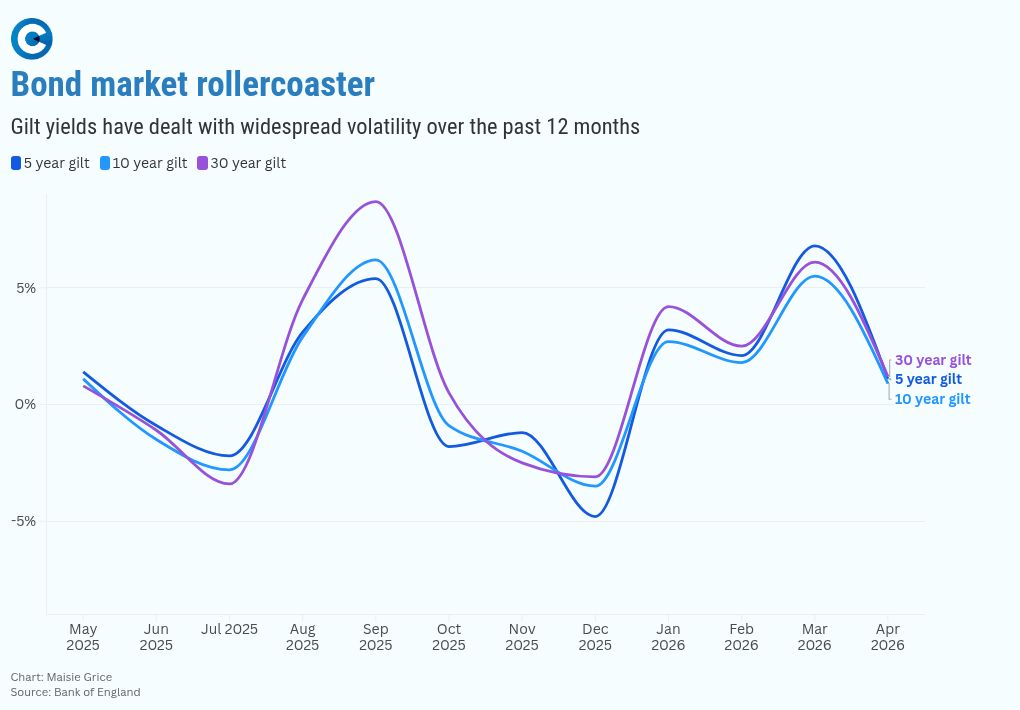
Gilt yields, which move inversely to prices, have been driven higher over the past two months by fears the Iran war will push up UK inflation and speculation over Starmer’s future.
The 30-year yield is at nearly 5.7 per cent, close to its highest level so far this century, while the government also conducted a 10-year debt sale last month at a yield just above 4.9 per cent, the highest since 2008.
Read more Badenoch claims Reeves will be ousted as traders warn on Labour’s turn to left
Significant gains on both the left or right could make it harder for the UK, like other European countries, to keep a handle on spending and debt down, with the country also having the highest borrowing costs in the G7.
Surges by the Green party, which has promised a huge increase in tax and public spending, would be “disastrous” for the bond market, according to the head of fixed income at Premier Milton, Lloyd Harris.
Investors and analysts said the most immediate concern would be the position of the Labour leadership, with both gilts and the pound suffering from major sell-offs whenever Starmer or Reeves’ jobs have appeared under threat.
Traders are also running short-term bets on the pound falling against the euro and this, along with the elevated yield on gilts, means a better than expected election for the ruling party could trigger a relief rally both in the UK bond market and sterling.
But others are cautious, as a potential swing to the left could deteriorate the financial position of sterling.
Potential candidates
Bond investors view leftwing candidates such as Burnham and Rayner as more likely to presider over higher borrowing than perceived centrists such as ministers Wes Streeting and Yvetter Cooper.
In March, Rayner sought to reassure investors of her commitment to the party’s manifesto, which enshrined its fiscal rules, including a promise for debt to fall as a share of GDP by the end of Parliament.
Burnham has said people “deliberately misinterpreted” his position on the bond markets, but in a Bloomberg TV interview he said the government should consider exempting an uplift in defence spending from the fiscal rules.
Read more Rachel Reeves plots ‘growth push’ as Labour set for bruising elections
Similarly tagged content: Sections Categories People & Organisations Related Topics