

After taking office in May 2025, following a snap election, Friedrich Merz has steered Germany through a period of significant geopolitical and economic transition. One year in, Merz faces record unpopularity — so what can we make of his record so far?
 Léa Marchal



Production: By Europod, in co-production with Sphera Network.
EUobserver is proud to have an editorial partnership with Europod to co-publish the podcast series “Briefed” hosted by Léa Marchal. The podcast is available on all major platforms.
Find the full transcript below:
There are still more than three years left in Friedrich Merz’s term, but he’s already looking weakened.
So, one year in — what can we make of his record so far?
If Angela Merkel hadn’t been at the helm of the Christian Democratic Union, the CDU, in the 2000s, Friedrich Merz might well have come to power much earlier.
Elected to the European Parliament in 1989 and then to the Bundestag in 1994, he already saw himself as chancellor back then.
But Merkel rose to the top — and in 2002, she even pushed him out as leader of the CDU/CSU parliamentary group in the Bundestag.
20 years later, he made a comeback after a stint in the private sector, where he built up a personal fortune.
After two failed attempts, he was finally elected leader of the CDU in 2022. A clear break from the Merkel years: he’s taken a firmly conservative line, strongly opposed to migration and even critical of Merkel’s decision to phase out nuclear power.
Following the snap elections of 2025, he formed a coalition government between the CDU and the Social Democratic Party (SDP) of Germany, and was elected chancellor by the Bundestag on 6 May.
One year on, what can we say about his start in office?
Friedrich Merz inherited not only the complexities of a CDU-SPD coalition, but also a tough geopolitical environment — with the war in Ukraine, the return of Donald Trump to power in the United States, and then the conflict in the Middle East.
But he has a compass: defending German economic interests. So when president Trump rolled out new tariffs hitting German exporters hard, Merz did everything he could to ease tensions.
He pushed his fellow German and president of the European Commission, Ursula von der Leyen, to quickly reach a deal with the United States.
He avoided taking a confrontational stance with Trump, even as other EU member states showed growing frustration with the US administration.
It’s also worth noting that it was under his leadership that the EU-Mercosur trade deal was finally signed by the EU member states, and entered into force on 1 May.
He likely played a role in convincing Italian prime minister Giorgia Meloni to lift her veto. Because that’s what allowed the agreement to go through.
Speaking of Giorgia Meloni, the German chancellor was among the first to take her seriously and engage openly with her, while other leaders were more hesitant to work with a far-right figure.
The two leaders share similar priorities: cutting red tape and taking a tougher stance on migration.
And unlike Angela Merkel and Olaf Scholz before him, Friedrich Merz isn’t entirely opposed to working with the far right. He’s said it himself: for him, substance matters more than alliances or where support comes from.
Case in point — last year, he passed a migration resolution with backing from the AFD, the German far-right party.
What else did Merz bring to Germany since May last year?
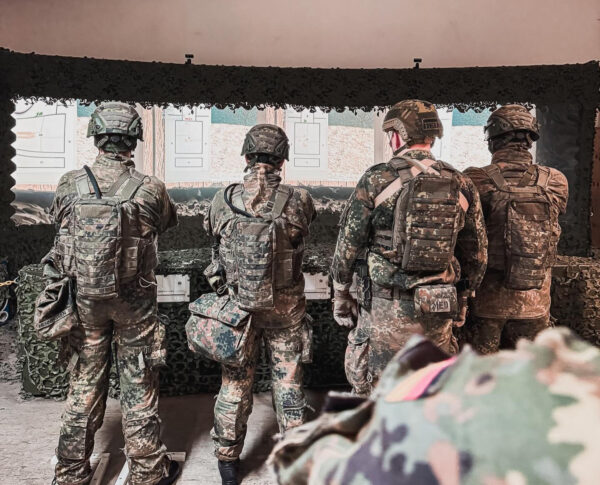
Probably a focus on the military.
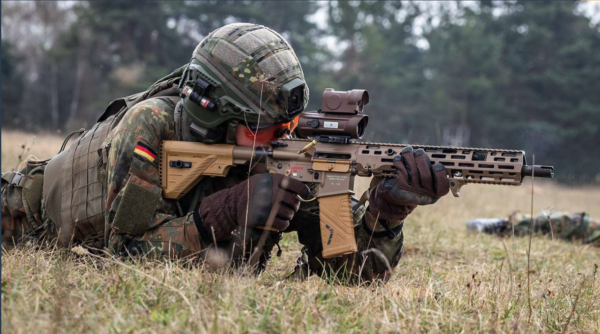
Merz believes in fiscal discipline, but sees higher defense spending as unavoidable. As a result, Germany is now investing in defense at record levels.
According to the Stockholm International Peace Research Institute, Germany increased its military spending by around 24 percent in 2025.
That even pushed the country into the top five global defense spenders — just behind the United States, China, and Russia.
But Germany also faces budget issues, and like many other European nations, needs to cut some spending.
The coalition Merz is leading just announced plans to cut 16 billion euros in healthcare spending, and will table a pension reform later this year.
Now, could Merz stay in power beyond 2029?
It’s still too early to say. For now, he doesn’t enjoy strong popularity at home — more than 80 percent of Germans surveyed say they’re dissatisfied with his chancellorship. Critics often point to inconsistencies in his positions.
But with the AfD currently leading in the polls — just ahead of the CDU— and the SPD trailing far behind, Merz and his conservative line could still have staying power.