
Sierra Leone, Senegal, Zambia and Qatar have better press freedoms when compared to both Greece and Cyprus.
 Nikolaj Nielsen



Greece ranks as the worst offender in the EU on media freedoms, followed closely by Cyrus — which currently holds the bloc’s six-month rotating EU presidency.
The findings, published on Thursday (30 April) by the Paris-based Reporters Without Borders, point to an unprecedented global decline in press freedom over the organisation’s 25 years of record-keeping.
Sierra Leone, Senegal, Zambia and Qatar have better press freedoms compared to both Greece and Cyprus.
Unresolved wiretapping of journalists by the Greek National Intelligence Service, as well as the influence of Orthodox Church over media in Cyprus, are among the culprits for their poor rankings in the index.
Hungary comes a close third, for having created a so-called Sovereignty Protection Office that targets independent media under the stewardship of the outgoing prime minister Viktor Orbán.
Hungary’s ranking could improve should prime minister-elect Peter Magyar dismantle the office. Magyar had also promised to shut down Hungarian state TV MTVA, which he had accused of “North Korean-style” propaganda.
European governments using spyware to target journalists is not unique to Greece, however.
Revelations in 2021 that Israel’s NSO group Pegasus spyware had been used by several EU states against journalists, politicians, lawyers and others created alarm.
Another spyware found in Israel, called Paragon Solutions, which is now owned by US investors, has also been used.
In Italy, journalist Francesco Cancellato was targeted, as were activists including Mediterranea Saving Humans founder Luca Casarini and co-founder Dr Giuseppe “Beppe” Caccia.
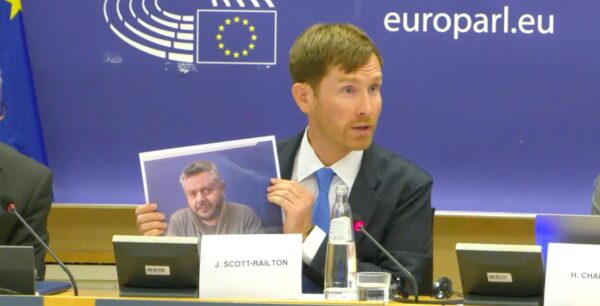
In a hearing last year at the European Parliament, Helen Charles, who is director of public policy for products in Europe at Meta, said they had found at least eight surveillance-for-hire companies.
She said many were based in the European Union and that WhatsApp had identified and mitigated an exploit vector that was used by Paragon Solutions to target around 90 WhatsApp users in an attempt to deliver spyware to their device.
“Despite the EU having one of the world’s most comprehensive data privacy regimes, mercenary spyware companies access, store, transmit, and process EU user data, largely disregarding EU’s data protection laws and standards,” she said at the time.
The European Commission said its Media Freedom Act, launched last August, includes an article that protects media against spyware.
But even so, Reporters Without Borders says the many EU states are in breach of the act — including Germany where national security laws do not protect journalists and their sources.
And provisions under the act, which are supposed to protect the independence of public service media outlets, are also being eroded in Bulgaria, the Czech Republic, Estonia, France, Italy, Lithuania, Malta and Slovakia, says the report.
Pressed on what thresholds must be met before the European Commission holds member states accountable over spyware use, a spokesperson said it is up to national authorities to conduct investigations.
“This is something law enforcement authorities in the member states have to address,” Markus Lammert, a commission spokesperson, told reporters in Brussels on Thursday.