
In the wake of the execution of Swedish citizen Koroush Kivani last month, Sweden announced visa restrictions on Iranian embassy staff and pushed for new EU sanctions, but these actions offer no meaningful impact. These performative responses are no substitute for strategic deterrence work and demonstrate Sweden’s inadequate protocols and
 Irwin Cotler



During World War II, Swedish diplomat Raoul Wallenberg saved lives by not following the standard rules of diplomacy.
Through ingenuity and sheer courage, he saved tens of thousands of Hungarian Jews from the fate suffered by so many during the Holocaust.
When he was taken into the Soviet Gulag after the war and accused of being an American spy, Sweden pursued quiet diplomacy to secure his release. It did not work.
Sweden, regrettably, did not actively engage in Wallenberg’s case even after international commissions determined that the evidence was incontrovertible that Wallenberg had not died in 1947, as the Soviets claimed, and compelling that he was alive thereafter.
Today, that unresolved case remains emblematic of the dangers of passivity in the face of injustice – dangers that continue.
When Swedish national Koroush Kivani was arrested in Iran in June 2025 on allegations of spying for Israel, Sweden called for a fair trial and pursued the case through quiet diplomacy.
Again, these efforts did not succeed, and Kivani was executed last month (18 March).
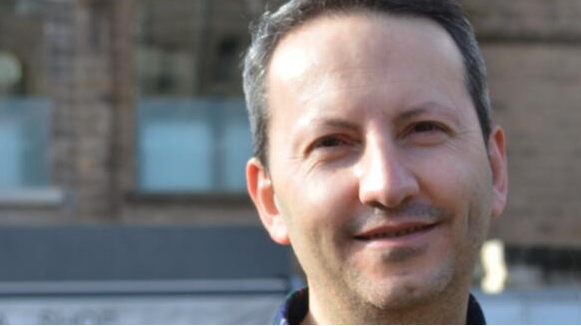
Sweden has an opportunity to demonstrate that it has learned from past failures and the limits of quiet diplomacy in the case of Swedish-Iranian citizen, Ahmadreza Djalali, who this month marks 10 years in Iran’s Evin prison.
Dr Djalali, a physician and academic, was arrested in April 2016 on espionage charges and sentenced to death in October 2017.
His conviction was based on confessions extracted under torture and other ill-treatment, and he was held in prolonged solitary confinement with limited access to legal counsel and medical care.
Dr Djalali remains at grave risk of execution and stands as one of a series of emblematic cases of arbitrary detention involving Swedish dual nationals, including Dawit Isaak and Gui Minhai.
The case of Isaak – a Swedish-Eritrean journalist recognized, along with his colleagues, as among the longest-detained journalists in the world – highlights the systemic nature of this abuse and the urgent need for a more assertive, coordinated response.
‘Hostage-taking’, effectively
The human cost of these cases makes clear the growing threat of hostage-taking, and exposes the limitations and failures of quiet diplomacy, which Sweden has attempted to pursue in all of these instances.
It reinforces the need for Sweden to ground its response in established international frameworks, including the Declaration on Arbitrary Detention in State-to-State Relations, which defines such detentions as a violation of international law and commits states to work collectively to end their use as tools of diplomatic coercion.
It also underscores that Sweden’s consular responsibilities toward its detained nationals are not matters of political discretion – they are legal obligations grounded in international law and the duty to protect its citizens abroad.
For all these reasons, this lays bare the urgent need for Sweden to change course in responding to arbitrary detentions and, in particular, cases of hostage diplomacy.
After having left the Wallenberg case unresolved for decades, and after 10 years of unsuccessful efforts to secure Dr Djalali’s release, followed by the failure to save Kivani’s life, the Swedish government must now take a clear-eyed view and recognise the need to do more to confront the systematic use of arbitrary detention.
First, Sweden must develop stronger unilateral measures to protect its citizens abroad from arbitrary detention and to forcefully deter malign actors.
In the wake of Kivani’s execution, Sweden announced visa restrictions on Iranian embassy staff and pushed for new EU sanctions, but these actions offer no meaningful impact.
These performative responses are no substitute for strategic deterrence work and demonstrate Sweden’s inadequate protocols and resources to deal with hostage situations.
Sweden can draw important lessons from other countries that have established hostage response and recovery systems to address these cases more directly, such as the Office of the Special Presidential Envoy for Hostage Affairs in the United States and the Hostage Affairs Division within Global Affairs Canada.
These offices have formulated effective ways to not only respond to state-sponsored hostage-taking – including successfully bringing their citizens home – but have also begun the critically needed work of implementing deterrence strategies.
The RIGHT (Resisting Illegal Government detentions & Hostage Taking) Coalition, made up of more than 70 civil society organisations and individuals dedicated to working against hostage-taking and arbitrary detention, recently released a set of recommendations that can help guide countries like Sweden to create robust, centralised hostage response systems with a dedicated senior official leading this work.
The coalition encourages governments to engage directly with it, as civil society plays a pivotal role in advocating for hostages and assisting with their re-entry.
Needs EU cooperation
Second, Sweden must work with its European allies to better leverage the collective power and influence of the European Union.
Europe lacks a focal point dedicated to coordinating on this issue as well as common standards for evaluating detention cases and minimum standards in family and victim support. With Sweden’s leadership, Europe can address these gaps and create policies and structures that expedite the release of hostages while advancing powerful deterrence measures.
Arbitrary detentions are no longer a marginal human rights issue but a form of coercive statecraft. A longstanding defender of human rights, Sweden must acknowledge the limits of quiet diplomacy and commit to meaningful internal reform.
This is not only a moral imperative today, but also a responsibility shaped by its history.
On this latter point, Sweden should assertively lead a consortium of countries to call on Russia to finally “open up the blank spots of history” and make full disclosure about what happened to Raoul Wallenberg.
Dr Djalali must not share the fate of Wallenberg or Kivani.
Sweden can choose now to set itself on a path to an effective, coordinated response to hostage-taking – one that serves as an example for its European counterparts. Civil society partners stand ready to assist in this effort.