
Afrim Krasniqi’s new book highlights the US radio station’s crucial role in bringing about change in Albania in 1990 – then ‘the most closed society in Europe’.
 Fjori Sinoruka



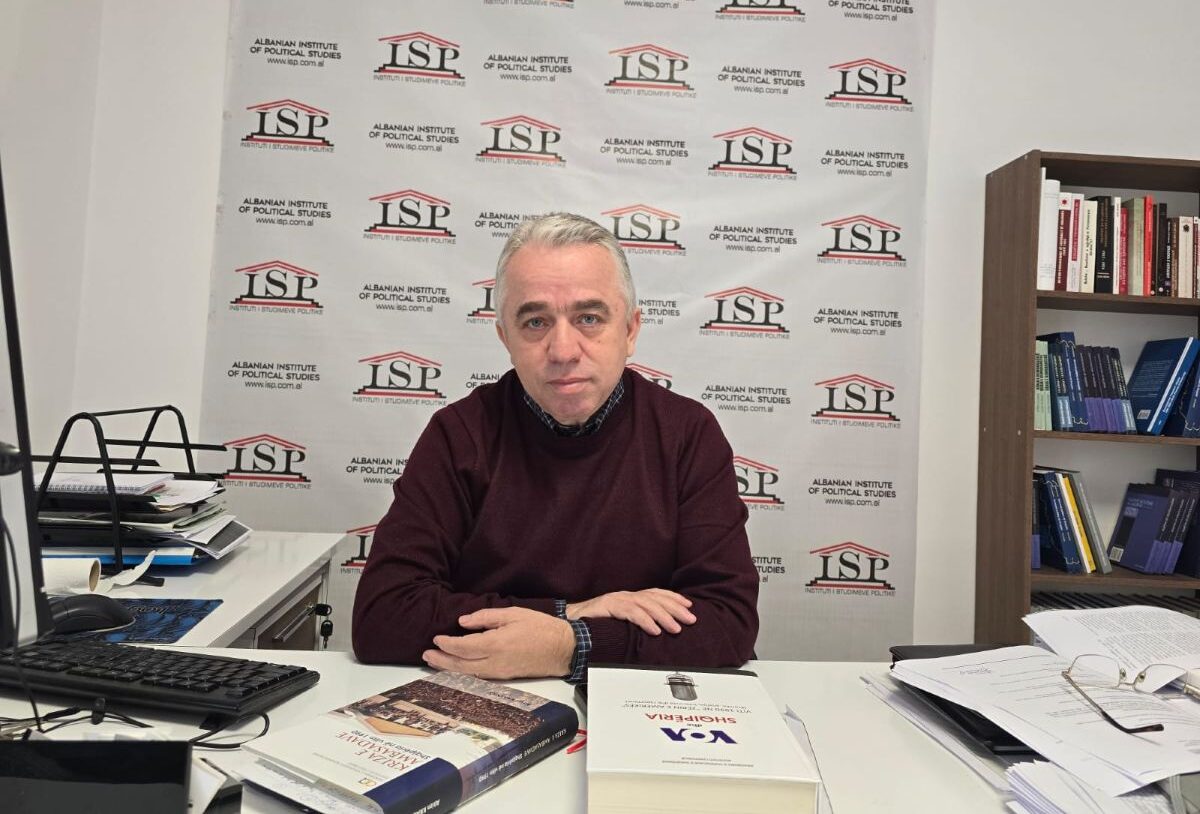
Krasniqi says that he has had difficulties in finding complete documents to study the last years of communist rule, mainly because the majority of the official files from the time remain closed.
“Even today, the period of political change from 1986 to 1990 is almost excluded from the agenda of state and academic institutions in Albania,” he notes.
The lack of domestic dissidents was crucial, he believes.
“Being a small country, without a revolution but with a displacement of elites, where to be part of the elite you needed a career based more on loyalty to the communist state and official promotion than on personal merit, we do not have dissident figures like Vaclav Havel or other figures who could become not only sources of information but inspirational figures for younger generations,” he explains.
“We had a group of individuals [politicians] who in 1990 joined the students who were protesting and supported democratic changes – but most of them came from the same school, the same formation and most were members of the Labour Party. And all of these, including the old guard of the Labour Party, reject the full opening of the documentation of that period,” he says.
Asked what strikes him must after looking back on the events of 1990, Krasniqi says it is his “disappointment in the intellectual elite of the time.”
“Overall, there was a lack of an elite prepared to transform Albania; it is not about parties but about the capacity of a society to reform itself, something you found in Poland, Czechoslovakia, Hungary, etc.,” he explains.
“There were people we thought were inspiring figures for change, from the original 1990 VOA documents, who had knowledge of democracy and rule of law – but their personal wish was to improve the regime, not change it,” he adds.
What was also unknown to ordinary Albanians at the time was that the economy was on the brink of collapse. Krasniqi continues: “That police state, based on rhetoric and propaganda and mechanisms of violence, was rotten from the inside.”
VOA broadcast constantly in Albanian from 1951 until last year. In April 2025, an executive order signed by the US President Donald Trump gutted the broadcaster. Eight-five per cent of its staff, over 1,000 employees, were laid off, and its news services in nearly 50 languages were slashed.
In March this year, a US judge ruled that the effective closure of VOA was illegal and that hundreds of its journalists should be reinstated. However, at the time of publication, VOA’s Albanian Service website remains inactive.
For Krasniqi, the station had its greatest impact during Albania’s transition from authoritarian rule to democracy. “VOA during the transition remained a reference source because of their professionalism and ethical standards, and their contribution in the 1990s to Albania is extraordinary and deserves all possible recognition,” he says.
He believes the shutdown is a loss to the Albanian media scene.
“I am an Albanian author who was fortunate, in bad circumstances, to be one of the last people interviewed before the Albanian-language programme was closed down. I feel sad that today Albania lacks an independent, international, referential source regarding the situation in Albania,” he concludes.