

The first instalment in a new BIRN series examines how World War II memorials in Bosnia and Herzegovina were built to foster unity between Yugoslavia’s peoples, but have become instruments of manipulation, historical revisionism and political propaganda.
 Ajdin Kamber



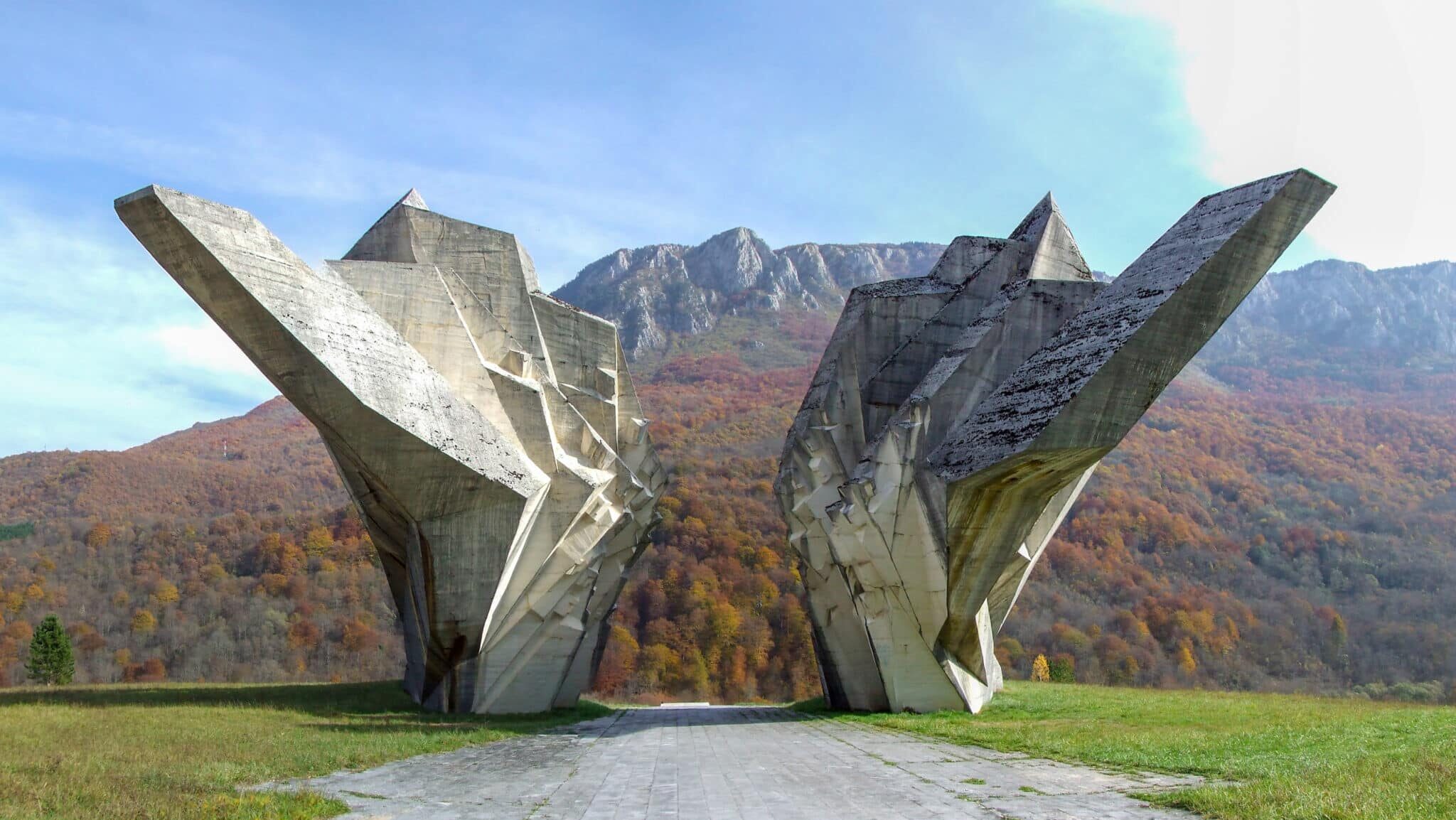
The 1990s are littered with examples of political manipulation of historical memory.
In the buildup to war and during the fighting, for example, Serbian media and politicians persistently portrayed the Ustasha-run concentration camp Jasenovac during WWII as a symbol of an ongoing, not merely historical, threat, said Popovic.
Croatian leaders, on the other hand, turned to commemorations of Bleiburg – the 1945 massacre by Yugoslav partisans of tens of thousands of Ustasha soldiers and Croat and Bosniak civilians, either sympathisers, families of Ustasha officials, of just civilians fleeing feared Partisan reprisals – and reinterpretations of the Ustasha-Partisan conflict to legitimise its own territorial ambitions and burnish a narrative of ‘defence against the Serbian aggressor’.
“In the Bosniak context, references to the suffering of Muslims in eastern Bosnia during the 1940s were used to portray the conflicts of the 1990s as a repetition of historical patterns and to reinforce the narrative of eternal victimhood,” said Popovic.
Different interpretations, revisions, and reckonings with memorials and figures from WWII were not limited to words – they were carried out in practice.
In the run-up to Yugoslavia’s bloody collapse and more intensively during the fighting, monuments dedicated to WWII disappeared from public spaces across Bosnia or were destroyed, losing their social significance.
“Almost no city escaped the removal or vandalism of such monuments as a memory of a shared past,” said Custo. “This was an act of reckoning not only with previous memory but also with the Yugoslav state and society.”
Illinois-based writer and researcher Donald Niebyl founded the Spomenik Database to examine the history and legacy of monuments, public art, and architecture of the former Yugoslavia, facilitating learning and better understanding of historical artifacts that are often misunderstood.
“Slovenia, for instance, has been quite excellent in their preservation of NOB memorial sites, while places like Bosnia or Croatia have experienced the removal, destruction or replacement of many of such monuments,” said Niebyl.
“In these regions, such impacts have been a consequence of a great many factors, such as fallout from the Yugoslav Wars, anger towards the Yugoslav Army, disillusionment with communism, as well as changes in ideology, identity, nationalism, religion, etc.”
There are numerous examples of busts of ‘undesirable’ Partisans and participants in the National Liberation Struggle disappearing or being destroyed from public spaces. Busts of people belonging to other ethnic groups were removed or smashed, while those representing the ethnic group constituting the majority or holding power in a given area were deliberately left intact.
Novalic said WWII itself has become “ethnicised”, so that only heroes of the “correct” ethnic affiliation survive in the public memory.
Collaborationist forces are simultaneously being rehabilitated because, from a national perspective, they are seen as those who “fought for our cause” and therefore deserve respect, he said.
In Bosanski Petrovac, in the west of the country, a Park of National Heroes used to contain 22 busts of the town’s ‘national heroes’. Today, only three remain. The rest, according to the local mayor, were removed and melted down.
Those removed represented individuals from different ethnic communities and did not fit into nationalist projects, said Dupanovic.
“The destruction of almost the entire park, of which only three out of 22 busts remain today, represents not only an act of erasing cultural-historical heritage but also an attempt to completely sever the city’s antifascist identity.”
Partisans also to blame