

With support collapsing, its leadership in limbo and no clear path back to power, Hungary’s once-invincible former ruling party confronts the possibility of long-term decline and irrelevance. There remain the faithful, however.
 Edit Inotai



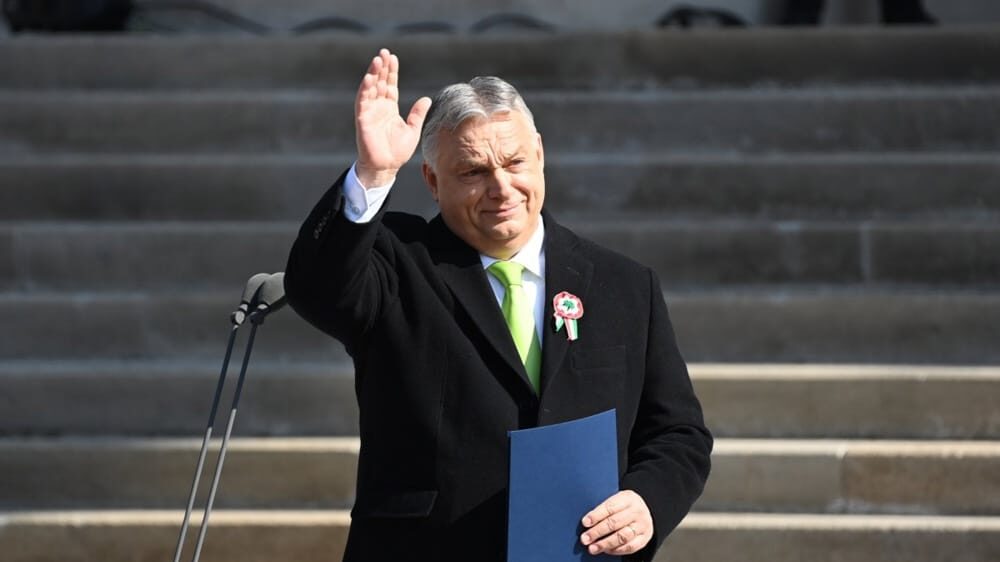
Orban has been an MP for 36 years, ever since Hungary returned to democracy in 1990, but parliamentary work has never been his favoured arena.
During his years in opposition between 2002 and 2010, he largely avoided parliamentary sessions – between 2002 and 2005, he did not deliver a single speech. Later, he instructed his party colleagues to leave the chamber when the then-prime minister, Ferenc Gyurcsany, addressed parliament.
Instead of engaging in debate or verbally attacking governing politicians, he preferred to present himself as a member of an “anti-establishment movement”, touring the country and organising his so-called “civic circles”, the local networks which helped Fidesz return to power on a landslide in 2010. He appears to be opting to follow a similar strategy this time.
“In the current situation, Orban could not really influence politics from parliament. Why should he sit around?” asks Zoltan Kiszelly, director of Political Analysis at Szazadveg, a government-close think tank. “But he is still seen by most Fidesz voters as the only guarantee the party can survive and eventually return to power.”
Kiszelly rolls out a narrative that disappointed Fidesz voters should be eager to hear: the party was already voted out of power in 2002 and lost the 2006 election, only to return to power in 2010 with a landslide. This could be replicated, and Orban is young enough at 63 to lead the fight. “Fidesz still has influential mayors, maintains a national presence and has dedicated activists – it does not need to be rebuilt from scratch,” Kiszelly insists.
Political analyst Lakner is sceptical, however. “The civic circles which Fidesz built in the 2000s no longer exist,” he says, explaining that, over time, the party came to rely on power structures rather than grassroots networks, which were gradually sidelined.
“On top of that, the party faces a very serious demographic problem,” Lakner points out. Surveys in the run-up to the April election showed that Fidesz enjoyed only 16 per cent support among voters under 30, while its strength lay primarily among those over 65 – not a solid foundation for a political party in transition.
Thus, the challenge may no longer be about regaining power but simply surviving. In Hungary’s next parliament, Fidesz will form the second-largest parliamentary group with 44 MPs (plus eight from the allied Christian-Democrats), which is roughly a third of Tisza’s total.
Yet it could get worse for Fidesz. The most recent poll, conducted a few days after the election wipeout, showed Orban’s party in free fall, with support dropping to around 21 per cent, down from 38 per cent on election night. This marks the steepest post-election decline in modern Hungarian political history. While Orban still refers to his 2.3 million voters, Kiszelly warns that this number could shrink rapidly to around a million, reducing Fidesz to a small or mid-sized party.
Some even wonder whether Fidesz has a future at all. Stuck between a centre-right Tisza and the far-right Mi Hazank, ideologically there is little room for Fidesz. “The whole Hungarian party system is in flux,” says Lakner.
While he does not expect Fidesz to disappear entirely, Lakner believes its voter base could continue to shrink significantly.
Kreko predicts that Fidesz, one of the last surviving parties from the post-communist transition in Central Europe, could suffer the same fate as its regional peers: being first sidelined, then fully eliminated.