
Reserve Bank of Australia raises rates for third consecutive meeting, lifting them to early-2025 levelsFollow our Australia news live blog for latest updatesGet our breaking news email, free app or daily news podcastUse our loan calculator to see how rate hikes could affect you The Reserve Bank has delivered a
 Patrick Commins and Luca Ittimani



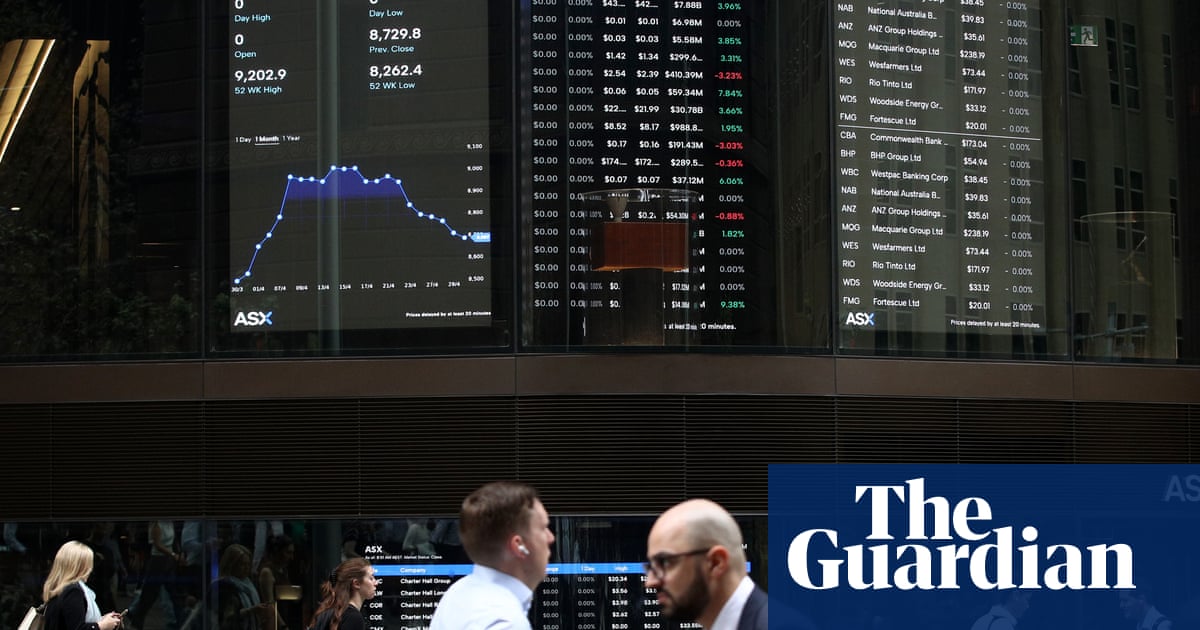
The Reserve Bank has delivered a third straight interest rate hike to contain growing inflationary pressures linked to higher fuel prices, even as it warned the Iranian war would deliver a major blow to the economy.
The widely expected decision to lift the cash rate to 4.35% from 4.1% comes as the central bank revealed a gloomy new set of forecasts that showed intensifying cost-of-living pressures alongside weaker growth.
The fallout from the US-Israel war on Iran will slash half a percentage point off economic growth in 2026 against the pre-conflict forecasts in February, as annual growth halves to 1.3% this year.
The stagflationary effect of the oil supply shock comes through a higher peak in inflation, as consumer price growth reaches 4.8% in the year to the June quarter, versus a prewar estimate of 4.2%.
Inflation is likely to stay high – even if the Iran war ends soon – because a broad range of local businesses are likely to increase prices, the RBA board warned.
“There are early signs that many firms experiencing cost pressures are looking to increase prices of their goods and services,” the board said in a statement.
The board had already hiked rates twice in 2026, but on Tuesday said finance was still “readily available to both households and businesses”.
“In light of these considerations, the board assessed that inflation is likely to remain above target for some time,” it said.
Just one board member voted to leave rates on hold, with the other eight voting for the increase.
A week out from what the treasurer, Jim Chalmers, is simultaneously calling his most ambitious and responsible budget yet, the RBA’s decision will deliver a blow to the more than 3 million mortgaged households.
The RBA’s outlook suggested Australians would suffer another year of falling living standards, as prices rise faster than pay packets.
Under the RBA’s relatively optimistic “baseline” scenario, which assumes a relatively rapid end to the Middle East conflict, the hit to growth will not translate into substantially higher unemployment in the near term, with the jobless rate expected to be at a relatively low 4.3% by the end of this year.
The RBA also explored two “adverse” scenarios involving a more extended conflict that leaves oil prices higher for longer.
Under the more extreme version, unemployment was forecast to push above 5% as the economy slows more sharply.
Even under this more pessimistic scenario, however, the country escapes recession, according to the forecasts, although the RBA said it did not attempt to model what would happen were Australia to run short of fuel.