The political aftershocks from Sunday’s election in Budapest comes at a volatile time amid a collapsing ceasefire between the United States and Iran as Tehran re-imposes a chokehold on the Strait of Hormuz. Meanwhile, back in Brussels, the 2028-2034 budget is on the table.
 Nikolaj Nielsen




THIS WEEK offers a weekly snapshot of the key developments in Brussels and across Europe over the next seven days, published every Monday morning.
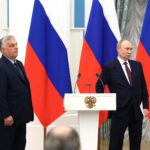
The aftermath of Hungary’s elections on Sunday (12 April) marks a turning point in the country’s political landscape, long shaped by prime minister Viktor Orbán’s pro-Kremlin rule.
Orbán, Europe’s most prominent far-right, nationalist-conservative leader, and frequent obstacle to EU unity on Ukraine, has had his 16-year hold on power come to an end after conceding defeat.
The European Council on Foreign Relations, a think tank, will aim to unpack the results on Monday.
The political fall-out in Budapest comes at a volatile time amid a collapsing ceasefire between the United States and Iran as Tehran imposes a chokehold on the Strait of Hormuz and Israel continues to bombard Beirut and Lebanon.
European Commission president Ursula von der Leyen has called on her 26 commissioners to convene on Monday (13 April) for talks on the Middle East conflict and its wider repercussions for Europe.
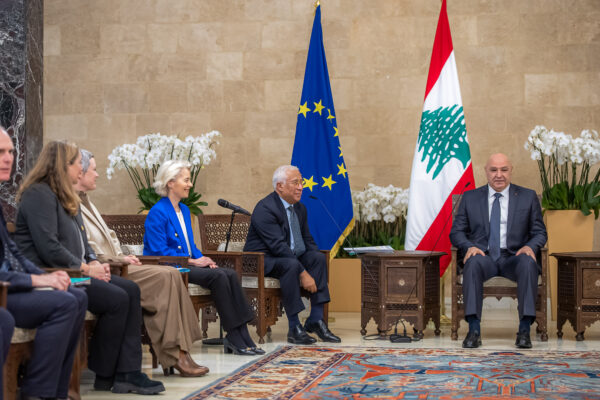
This includes everything from energy to transport, migration to internal security, and all the policy areas that are impacted by the conflict.
It also means debate on EU-China relations, initially scheduled for Monday, is now postponed to a later date.
On Tuesday, representatives from EU member-state governments will meet to further discuss the EU-US critical minerals strategy.
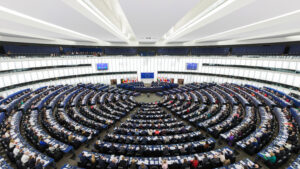
Committees at the European Parliament are also convening. The development committee on Tuesday will discuss Lebanon, which is reeling from an Israel onslaught to cripple the Iranian-backed Hezbollah. Lebanese officials say more than 1,700 people have been killed by the Israeli attacks.
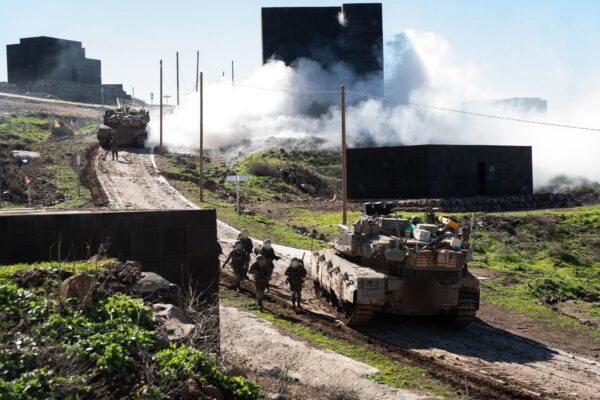
Another pertinent meeting is Wednesday’s discussion on Iran’s opposition, in the foreign affairs committee, with speakers including exiled Sakharov and Nobel Peace Prize laureate Shirin Ebadi, who is spearheading a transitional justice committee to hold the regime accountable for their crimes.
EU’s 2028-34 budget?
Meanwhile, budget hawks on Wednesday will be watching a critical vote in the budget committee on an interim report on EU’s long-term budget, also known as the multi-annual financial framework (MFF), which covers 2028-2034.
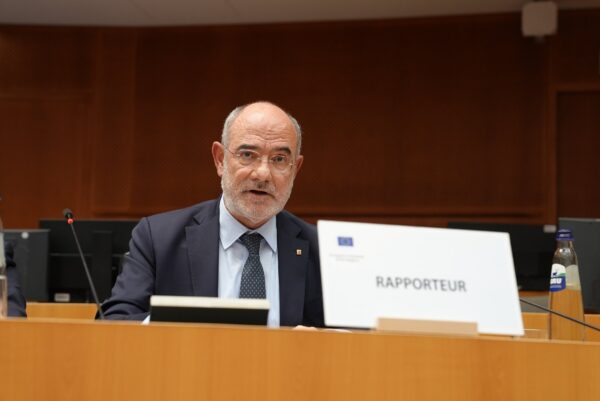
Should it go well, the vote will set the stage for the parliament’s official negotiating mandate later this month.
“One of the main scopes of this report is to set the parliament’s position on the figures,” says Siegfried Mureșan, a centre-right MEP from the European People’s Party, who is spearheading negotiations.
Both Mureșan and Portuguese S&D MEP Carla Tavares are pushing to slap taxes on US tech giants in the hopes of generating revenue for the EU budget and at a time of collapsing relations with Washington.
Temu grilled
Thursday will see Chinese online-market Temu grilled by MEPs in the internal market and consumer protection committee.
The Chinese giant is under investigation in France for selling child-like sex dolls. It also came under scrutiny from the European Commission.
During the same day, the industry, research and energy committee will discuss how the EU’s electricity and gas market integrates with Albania, Bosnia and Herzegovina, Georgia, Kosovo, Moldova, Montenegro, North Macedonia, Serbia and Ukraine.