

The current European debate – led by the UK, France, and Germany – suggests a timeframe of several months for maintaining a naval presence once a stable agreement is in place. This appears unrealistic for three reasons. While any projection remains speculative, the coalition’s naval presence is likely to remain
 Christian Bueger



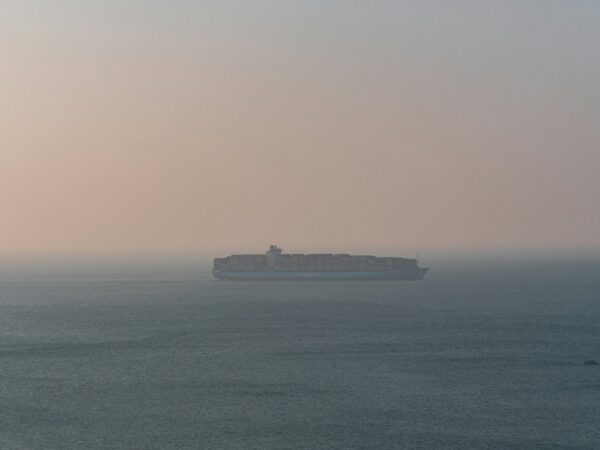
Few waterways matter more to the global economy than the Strait of Hormuz — and few are as vulnerable to disruption. Getting shipping flowing again through the Strait of Hormuz is a top priority.
Earlier this month, on 17 April, the UK and France convened a head-of-state meeting to discuss a multinational coalition aimed at restoring shipping through the Strait. The level of representation alone signals how seriously the situation is being taken.
Planning is underway, and the coalition is taking shape.
Intense discussions over the past week have taken place in four working groups focusing on military coordination, sanctions, humanitarian efforts, and cooperation with the shipping industry.
Yet planners should adopt a more comprehensive, long-term outlook.
Political leaders have stressed that the coalition will only act once a more stable agreement between Iran and the United States is in place and hostilities have ended. Yet even in such a scenario, the shipping industry will still require reassurance from a sustained naval presence.
Sea mines laid in the strait will need to be cleared, and navies will aim to deter future acts of provocation, including potential attacks on shipping, or in the cyber domain.
Without risk reduction, shipping will not return.
Until the coalition can start, the UN’s Fertilizer initiative is the most promising route to bring back a limited amount of shipping and build confidence.
However, this humanitarian effort requires that all belligerents agree, which remains unlikely.
Is a UN mandate required?
For many nations, such as Germany or Japan, military engagement requires a UN Security Council mandate.
Efforts in the council to agree on a dedicated resolution for the Strait of Hormuz have so far failed, with China and Russia vetoing a draft due to concerns over further escalation.
However, UN Security Council Resolution 2817 provides some limited backing for current efforts. It notes “the right of member states, in accordance with international law, to defend their vessels from attacks and provocations, including those that undermine navigational rights and freedoms.”
A more explicit UN call on states to engage would assist efforts, and the Council should be urged to resume negotiations.
An alternative pathway is a UN General Assembly resolution.
Who should be involved in the planning?
The broader the coalition, the higher its legitimacy. Significant resources will be required, and many navies are already overstretched due to regional tensions in Europe and Asia. It is also important that all UN agencies with relevant mandates participate, alongside shipping associations.
In addition to the current set-up, greater attention should be given to environmental consequences — such as oil spills caused by the war — and legal questions, including interpretations of the crucial concepts of ‘innocent’ and ‘transit’ passage. Dedicated working groups should be established for these areas.
Turning the current planning processes more explicitly into an international contact group, as proposed by the German chancellor, would provide a clearer framework and allow other actors to contribute.
Washington and Tehran?
Several participating nations, such as the UK, coordinate closely with Washington, yet the US remains outside the current coalition.
This is sensible, as including belligerent states at this stage would undermine the impartiality needed for implementation.
Given its military capabilities, the US is nevertheless likely to become involved at a later stage.
To establish a cooperative mechanism capable of overcoming current and future gridlock in the strait, close communication with Iranian leadership will be necessary.
However, it is unlikely that Iran will be directly involved.
Timescale for the coalition?
The current debate suggests a timeframe of several months for maintaining a naval presence once a stable agreement is in place. This appears unrealistic for three reasons.
First, past experience with naval coalitions shows that they tend to last longer than originally intended.
Second, even after the formal end of hostilities, provocative maritime actions are likely to continue. These may occur in the ‘grey zone’, where incidents are difficult to attribute.
Even before the war began, drone attacks on ships occurred and vessels were seized on questionable legal grounds.
Third, while an established regional platform such as the Combined Maritime Forces could potentially take over from the new coalition, this presents challenges.
This 42-nation partnership has provided maritime security in the region for decades. However, it is led by the United States and is therefore unlikely to offer the level of impartiality required to be acceptable to Iran.
Future prospects for free navigation?
While any projection remains speculative, the coalition’s naval presence is likely to remain in place for at least two to five years.
While costly, this creates an opportunity to negotiate a long-term solution that reduces legal uncertainty and strengthens maritime safety.
A dedicated legal treaty for the Strait of Hormuz is a viable option. Such a treaty could regulate safety and navigation while clarifying the Strait’s legal status and reducing the risk of future disputes.
Historical agreements regulating straits, such as the Copenhagen Convention and the Montreux Convention could serve as templates.
Another option is to draw lessons from another strategic waterway, and rely on the procedures of the Cooperative Mechanism for the Straits of Malacca and Singapore established under UNCLOS.
The real test is not whether shipping can return, but whether the international community can build a framework that keeps the strait open in the long term.