
The paths of a street-vendor from Kandahar, an elderly couple from Bulgaria, and a Greek tech worker and a tattooist converge on an Aegean holiday island with a troubled past.
 Sinisa Jakov Marusic



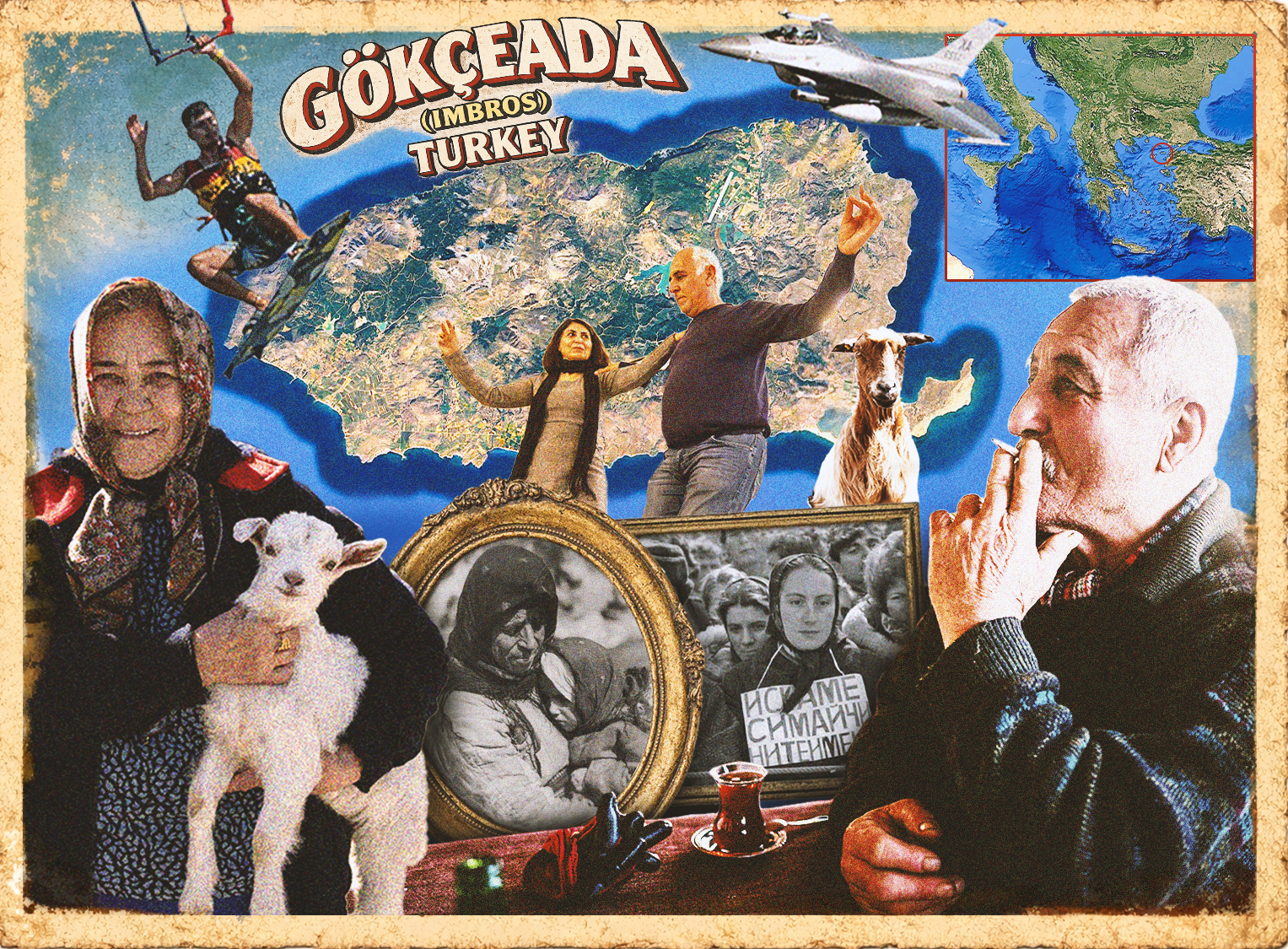
The sky is stippled with colour: dozens of kites, lifting the surfers over the waves. On the beach, the holidaymakers are cheering every stunt. There are families, children playing, women wearing hijab or modest swimwear, others in more revealing outfits, and teams of die-hard kitesurfers, preparing their equipment. Every so often, a fighter jet rips through the skies, a reminder of the Turkish military base just down the road, watching over the mouth of the Dardanelles. Out on the water, a kitesurfer launches himself high into the air, twists and slices back into the sea. The crowd applauds.
Mahmoud Mahmoudi had never seen the sea until he left Afghanistan. He’s somewhere between 27 and 30, he’s not quite sure. He comes from the city of Kandahar, where he grew up in the shadow of the NATO intervention. He was an orphan, adopted by his uncle. As the uncle did not have a job, Mahmoud had to cover expenses. He went to school at night, and worked by day as a street-vendor, flogging whatever came to hand – USB sticks with pirated music, cheap cosmetics, small goods from China. “Problems at home and a war outside,” is how he summarises his upbringing.
He had a simple plan: save money, finish school, try to reach Europe, Germany ideally. He was sure that the journey was not as hard as everyone claimed. “A person needs some kind of reason to live,” he says. The beach is a kitesurfer’s paradise, sandy, rugged and windswept. Camper vans line the water’s edge, the number plates from all over the region. Tourism is new here. The island – its name is pronounced “gyok-cheh-yaada” – was a sealed military zone until the early 2000s.