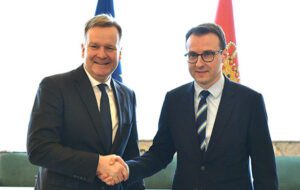

In this week’s digest of Hungarian politics after the election: foreign minister Péter Szijjártó breaks his silence to give a three-hour TV interview, where he claims he doesn’t know how his oldest friend got €718,000 from the foreign ministry, or his own wife €15,000 of jewellery. Meanwhile, suspicions over €20m
 Veronika Munk



Our weekly digest of Hungarian politics continues as we report on developments after the historic April election and on the formation of the Tisza government. This week we cover the following topics:
After 10 days, outgoing foreign minister Péter Szijjártó has resurfaced. The newly-victorious Tisza team is racing down the road of regime change at a crazy speed, with three or four major changes every day. Viktor Orbán would like the current president to stay. There will be far more women in the Hungarian parliament than before – although still too few. The Fidesz law conflating LGBTQI citizens with paedophiles breaches EU law. The man convicted of paedophilia whose case set change in motion in Hungary has been released.
Follow Hungary’s road after the 2026 election — subscribe to The Hungary Briefing on Substack and get every edition, and other Hungary-related articles straight to your inbox.
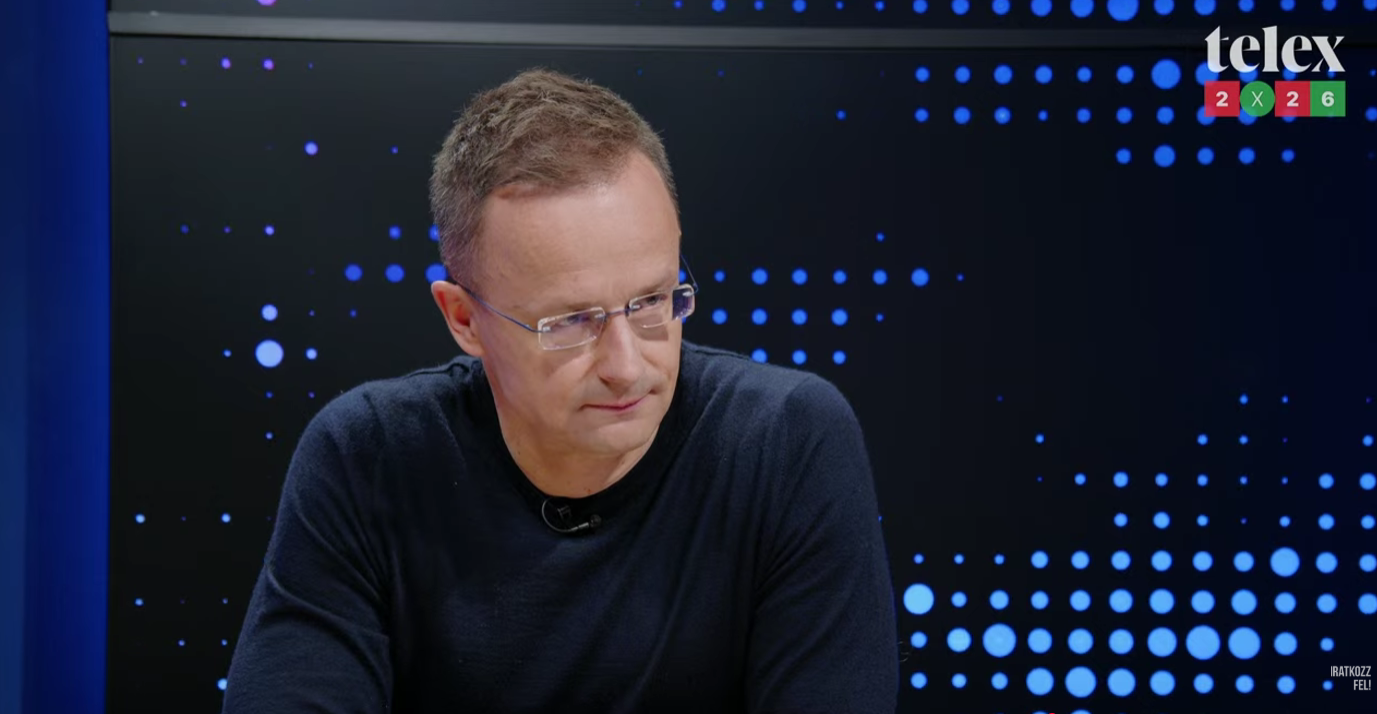
Foreign minister, Péter Szijjártó, has finally spoken out
On Wednesday evening, the outgoing foreign minister spoke with Telex in a more than three-hour live broadcast. Since the election Péter Szijjártó completely disappeared from public view, and during the campaign, leaks and audio recordings emerged revealing he regularly briefed the Russian foreign minister on the course of European Union negotiations. During the campaign, the minister repeated the usual talking points, and now believes that serious moral injustices were committed against him.
These are the main points from the interview:
On the election defeat: According to Szijjártó, “there was very serious foreign interference in the electoral process; president Zelensky of Ukraine, the Ukrainian government, the Brussels institutions were interested in a change of government. I think that in this electoral process foreign actors interfered in a very serious way,” he said, then went on at length to argue that what he sees as the war psychosis felt in Brussels is “taking hold in Hungary” as well. In his view, the European People’s Party (EPP) is aggressively pro-war, and Tisza is a member of this group. When the reporter, Tamás Fábián, asked him whether he now fears that his sons will be conscripted and have to fight in a war, he replied that “this is not an approach completely divorced from reality.”
On the massive support for Tisza: “How good that the election is not being held now,” Szijjártó reacted to the fact that, according to the latest data from the independent pollster Medián, collected after the election, 66 percent of those who can choose a party would now support Tisza, and only 25 percent would support Fidesz.
On his relationship with the Russians: In his view, the war is bad and should be brought to an end. He says he told this to Russian foreign minister Sergey Lavrov as well. He explained Hungary’s tilt towards Russia by what he considers to be favourable energy deals. “I tried to ensure that we had such a pragmatic relationship with Russia that it would bring us benefits.” He also hinted darkly that thanks to the good relationship, areas inhabited by Hungarians were spared Russian bombing. He maintains that he considers Zelensky dangerous for Europe. He claims that at meetings of the Foreign Affairs Council, he always informed his fellow foreign ministers about what he had discussed with the Russians.
Why did Hungary not request the extradition of the Hungarian–Russian spy? A warrant is in force in Hungary for former Jobbik politician Béla Kovács, after a final court decision found that he had engaged in espionage against the institutions of the European Union. Asked whether he had raised the issue with Lavrov, he replied that he had not, because he did not deal with it and it was not on his agenda. In hindsight, however, he acknowledged that, in light of the court judgment, he could have brought up the matter, but admitted that he had not paid particular attention to it.
On living in luxury: He said he did not know that his oldest and best friend had received 280 million forints (around €718,000) in funding from the foreign ministry, and that it was pure coincidence that he was photographed on an oligarch’s yacht. There is no connection between the businessman’s enrichment and the holiday, he said. After a recent public appearance, sharp-eyed observers counted jewellery worth around six million forints (€15,400) on his wife, the reporter noted. Szijjártó said he had no idea; they do not talk about such things at home.
On Orbán: He would not consider it a good thing if the outgoing prime minister were to resign from his position in Fidesz.
On the fact that Fidesz ran an inflammatory, hate-stoking campaign, and that the prime minister called Hungarian civil society activists, journalists and opposition supporters “bugs”: “I do not recall that either I or any of us ever adopted such a threatening tone towards individuals or families as the tone that is now used towards us,” he replied when asked whether, in his view, Fidesz had succeeded in strengthening cooperation in society or had rather driven the country towards polarisation.
On the free media: He said he would not have given an interview to Telex if Fidesz had not lost. When the reporter confronted him with the fact that, in doing so, he had given up informing the more than one million Hungarians who read the site every day, despite exercising public authority, he merely said that he did not believe they would talk to him impartially, and he did not want to go to a bullfight. He added that, in his view, he was able to convey his message via social media.
On corruption: Did the enrichment of oligarchs play a role in Fidesz’s defeat? Szijjártó says he did not think about anyone’s financial situation, not even that of Lőrinc Mészáros, who is Orbán’s childhood friend, originally a gas fitter, and who became Hungary’s richest man during the Fidesz era. He said that “Hungarian people judged the government’s performance through the prism of how non-political actors took advantage of the honest work carried out by the members of the government. It personally angers me that we are not judged solely on the basis of our performance, but also on the conduct and activities of people who do not hold political mandates.”
Victorious Tisza team is racing ahead at fast pace
Only a week and a half has passed since the elections, and it is clear that the emerging Magyar government is not idle, even though there are still more than two weeks to go until the formation of the government on 9 May.
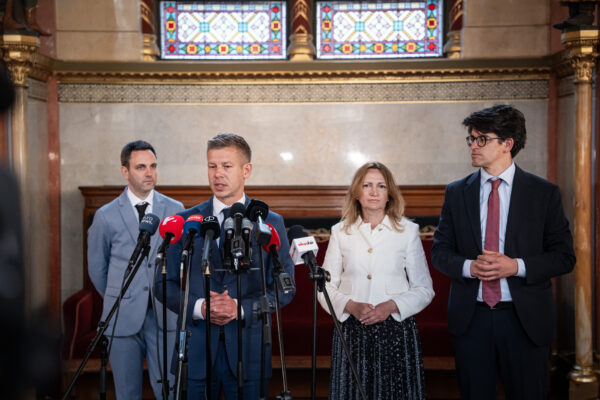
“I have convened the inaugural sitting of the National Assembly for 9 May 2026 at 10:00,” wrote president of the republic Tamás Sulyok on Facebook. This is what Magyar had previously asked him to do, and he wanted the inaugural sitting to fall at the weekend so that Tisza supporters could celebrate with a public festival in front of parliament.
Let us look at what Magyar and Tisza have been doing in the week and a half since the election: