

“A new trend involves posting job advertisements [on LinkedIn] … and then approaching selected candidates,” Estonia’s intelligence agency said, in its annual report.
 Andrew Rettman




China is recruiting EU assets via all-expenses paid trips, Estonia has warned, while Russia is using nuns, monks, and children to do its dirty work in Europe.
“The Chinese Communist Party believes its messaging is more effective when Estonian politicians, cultural figures, academics, experts and journalists speak about their personal experiences of China. To this end, the Chinese Embassy invites Estonian citizens on fully funded trips to China,” said Estonia’s domestic intelligence service, the Kapo, in its annual report on Monday (13 April).
But “it is important to bear in mind that lavish hospitality may carry expectations. China’s generous treatment can come at the expense of journalistic freedom and independence,” it added.
And the trips could also have a more sinister side, it said.
“Travel to China creates recruitment opportunities for its intelligence services,” Kapo said.
In October 2025, China’s embassy in Tallinn invited Estonian media to visit its Nanjing and Suzhou provinces, for instance.
Also last October, the Chinese Academy of Social Sciences, a Beijing-based state think-tank, “which maintains close ties with China’s intelligence services,” according to Kapo, also flew over “young Estonian experts” to take part in a China–Europe Youth Dialogue in the city of Hangzhou.
At the same time, the Ministry of State Security (MSS), the largest spy agency in the world, was also using LinkedIn to target EU assets.
“The use of professional networking platforms, such as LinkedIn, intensified [in 2025] as a means of identifying intelligence targets,” Kapo said.
“A new trend involves posting job advertisements rather than sending personalised messages, and then approaching selected candidates. Particular value is placed on experience in government service and in foreign or security policy,” it said.
“After establishing contact through LinkedIn, Chinese intelligence services [MSS] attempt to lure influential individuals to China or neighbouring countries,” it added.

The lavish hospitality and job offers come on top of Chinese embassy payments for “sponsored articles in Estonian and other Baltic media outlets”, either directly or via intermediaries, such as Estonian PR firms, to falsely paint China as a democracy or to boost its territorial claims to Taiwan, Kapo said.
And even as China has given diplomatic and technological support for Russia’s war on Ukraine, its modus operandi for recruitment of foreign assets also mirrored Russian methods.
“We consider visits to Russia by [EU] individuals involved in politics to pose a security risk, as they inevitably attract heightened attention from Russian intelligence services,” Kapo said.
“Foreign nationals who visit Russia may be targeted for recruitment by Russian intelligence officers even if they have no access to classified information in their home country,” it added.
“Russian services are also interested in various forms of non-classified information … such as observing military units and convoys, taking photographs and videos,” it said.
Nuns with guns
Meanwhile, European countries have expelled some 750 suspected Russian spies working under diplomatic cover since Russia’s full invasion of Ukraine in 2022.
But the Kapo report highlighted that the Russian Orthodox Church and its branches also posed an espionage threat in the EU.
“Cloaked in clerical robes, the Kremlin abuses the argument of religious freedom to undermine security and public order in democratic societies,” it said.
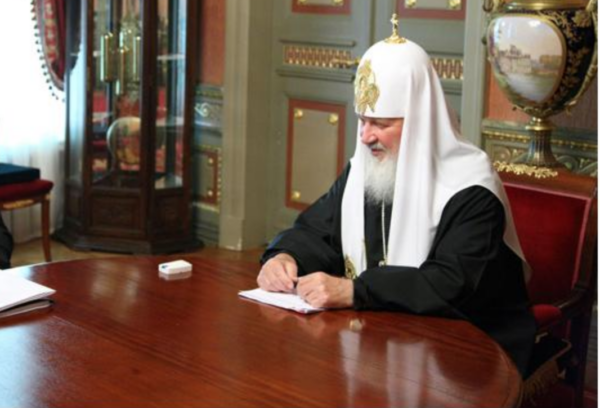
In one example in 2025, Estonia revoked the residence permits of Russian nuns from the Estonian Christian Orthodox Church’s (ECOC) Resurrection of Christ Cathedral in Narva, Estonia.
And it did so on grounds they had worked with the Exaltation of the Cross Jerusalem Stavropegial Convent near Moscow, whose “nuns collect assistance for the war effort, including fuel and camouflage nets … weapons are also supplied to occupied territories [in Ukraine]”.
In a second case in February 2026, an ECOC monk called ‘Brother Daniil’ (Dmitri Burov) left for Russia never to return after Kapo interrogated him on why he had filmed an Estonian military barracks in Võru, southern Estonia.
He “refused to answer questions … [but] Burov’s ‘pilgrimage’ to the Estonian Defence Forces’ Kuperjanov Battalion is hardly typical behaviour for a priest,” Kapo said.
The Russian church had some 350 parishes in Estonia, Germany, Italy, Latvia, and Spain put together, as well as 18 churches, chapels, and monasteries in Belgium, served by some 25 priests.
Child abuse
And if Chinese recruitment modus operandi mirrored Russia’s, then Russia’s also increasingly looked like those used by jihadist groups, such as Isis.
“In 2025, Russian intelligence services recruited, among others, minors for sabotage operations,” Kapo said.
“Children are particularly vulnerable, as they may readily respond to calls circulated on social media and agree to damage memorials or other property without understanding the consequences of their actions,” it said.
“In Russia, they are referred to as ‘one-offs’ – disposable individuals who are discarded once they have served their purpose,” Kapo noted.