






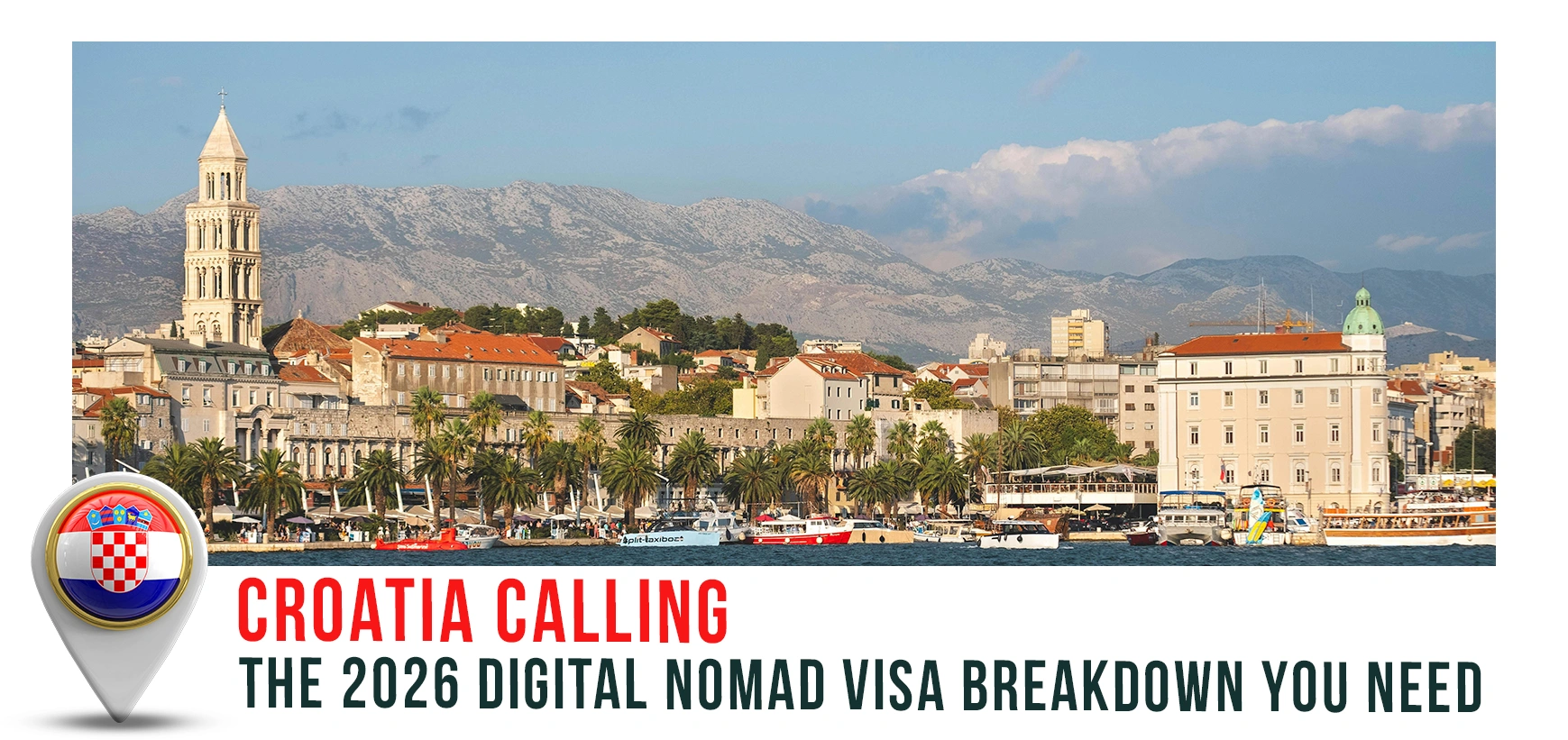
Croatia began providing remote workers with the Croatia Digital Nomad Visa, established in 2021. In the present scenario, the country provides benefits such as family participation, tax exemption, and high living welfare for nomads with effortless application processes.
The Croatia Digital Nomad Visa allow remote work in Croatia to foreign citizens. They can stay in the country for a period of about 18 months. It can also be issued for a short period of time (6 months). To acquire this visa, you need to work in a registered country other than Croatia, or for your own company. You are also supposed to be a third-country national (outside the EU/EEA).
The limitations and benefits are not restricted to these. In this blog from Insights Kolekr, you will acquire a comprehensive guide on what you need to understand to start your adventure in this country that spreads across the Adriatic Sea.
The Croatia digital nomad visa enables all non-EU/EEA remote workers, freelancers, and entrepreneurs to stay in Croatia while functioning for foreign employers or clients. So as to qualify in 2026, applicants need to live up to particular Croatia residency requirements, encompassing proof of remote work, adequate income (basically around €2,500+ per month), valid health insurance, and a virtuous criminal record. Family members can go along with the applicants; however, additional income proof would be required.
The digital nomad Croatia visa is defined as a temporary residence permit launched to attract a global talent pool, as well as remote personnel. It allows individuals to legally stay in Croatia while preserving their employment outside the country. Not similar to traditional work visas, it does not permit employment with Croatian companies.
After going through the eligibility criteria, it’s time to move further to the Croatia Digital Nomad Visa requirements in 2026.
This particular visa facilitates a stay of up to 12 months under the Croatia residence permit
The permit cannot be renewed. Post expiry, you need to leave Croatia and reapply.
An obligatory 6-month cooling-off period is applicable before you submit a new application.
Family involvement is another benefit that makes the Croatia Digital Nomad Visa attractive.
Croatia grants the right for digital nomads to move their families with them.
You need to demonstrate an additional income to cover dependents, augmenting the base requirement.
However, dependents may not work locally until acquiring work permits.
You need to file the application either online through the government portal or by visiting the Croatian embassy.
Your application fees can range between €60 and €150 based on the location of your application.
Moreover, you will need to pay additional fees for issuing a biometric card and a residence permit.
Plan around 3-8 weeks to have your application processed.
One of the biggest perks of the Croatia digital nomad visa is that holders are spared from Croatian income tax on foreign incomes.
The tax-free benefit makes Croatia one of the leading destinations compared to other European countries.
If you’re staying for an extended period of more than 183 days or develop strong economic ties, you can become a tax resident, based on individual circumstances.
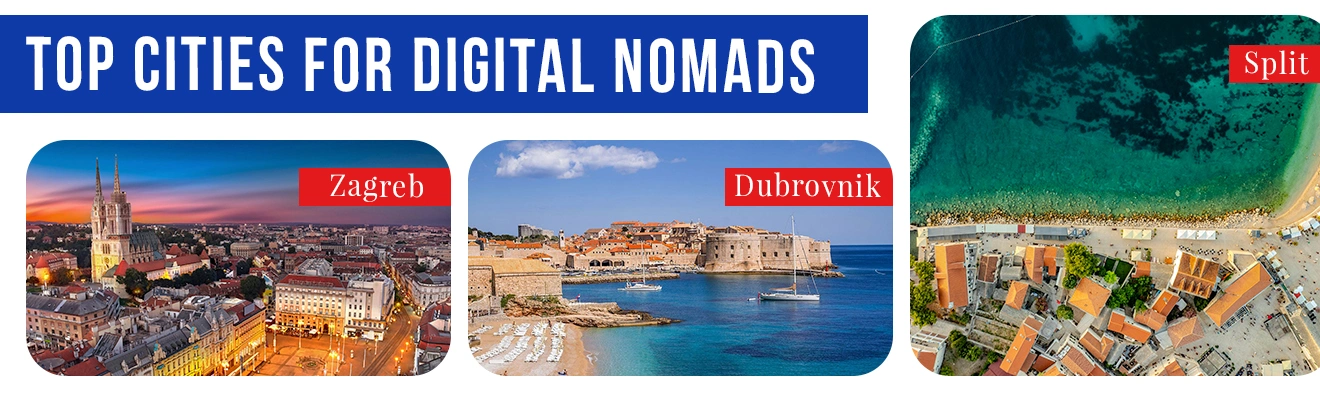
The city of Zagreb is vibrant and provides great opportunities for remote work with coworking places available.
Spilt combines the magic of coastal charm with a sturdy expat and remote worker community.
Popular for its historic charm, Dubrovnik is perfect for those looking for a panoramic work environment.
Zagreb is pretty affordable than Dubrovnik; however, Split provides a balanced lifestyle between cost and quality.
Thus, when deciding which remote work option in Croatia to pick, you have to consider the costs and preferences related to it.
While Portugal lets you stay for years and renew visas, the country is very demanding in terms of taxation.
Similarly, Spain offers the option to work locally yet requires taxes to be paid.
If you prioritize tax savings and short-term living, Croatia is an ideal option. For long-term residency, other EU capitals might be a better alternative.
Make sure all financial documents are precise, accurate, and up-to-date.
Incomplete or inaccurate applications are a common cause of concern, delays, or rejection.
Elucidate all your tax obligations to avoid any legal issues.
Croatia’s visa option is considered to be the best in Europe in 2026 among remote workers. Considering the low taxation, beautiful scenery and easy processes, it’s perfect for people working remotely temporarily. While the deficiency of renewal options might limit long-term plans.
Insights Kolekr’s guide will make relocation easier and more comfortable for you and your family.
1. What is the minimum income for the Croatia digital nomad visa?
The minimum income requirement is generally around €2,500–€3,000 per month.
2. How long can I stay in Croatia as a digital nomad?
You can stay up to a period of about 12 months under the visa.
3. Can I bring my family with me?
Of course, family members can accompany you based on additional financial proof.
4. Can I work for a Croatian company on this visa?
No, the visa only allows remote work for foreign employers or clients.
5. Is Croatia tax-free for digital nomads?
Yes, foreign income is typically free from Croatian taxation under this visa.
North Macedonia is among Europe’s best-kept secrets. Hidden within the...
April 15, 2026

In recent years, remote work in Croatia has shifted from...
February 16, 2026

Something interesting is happening across southeastern Europe. While the usual...
February 16, 2026
For decades, the dream of moving to Europe has looked...
February 16, 2026