



So many European cities get overlooked by travelers seeking the usual highlights. For a long time, Belgrade was on that incomplete list, a deserving spot among the top European destinations that somehow missed the cut. But the “Euro-trippers,” tired of the same overcrowded itineraries and looking for a direction that feels genuine, have found the gap in Belgrade.
Belgrade is low-key. In certain beautiful ways, it is undeveloped, a trait people often neglect to attribute to its past hardships. It is difficult to speak aesthetically about a geopolitical destination without mentioning history, but Belgrade manages to do just that. It feels like a setting from a novel; a bit mysterious, a bit romantic, and entirely its own.
This diversity of vibrant neighborhoods contrasts sharply with the city’s complex, multicultural past. This is just one more reason tourists and cultural seekers need to kick down the city’s gates, or risk remaining gatekeepers rather than participants. Whether you are standing by the Nebojša Tower or sitting in a downtown café, the city invites you in.
Here is why Belgrade is currently the most underappreciated city in Europe.
1. A Creative Migration Hub That Is Actually Real
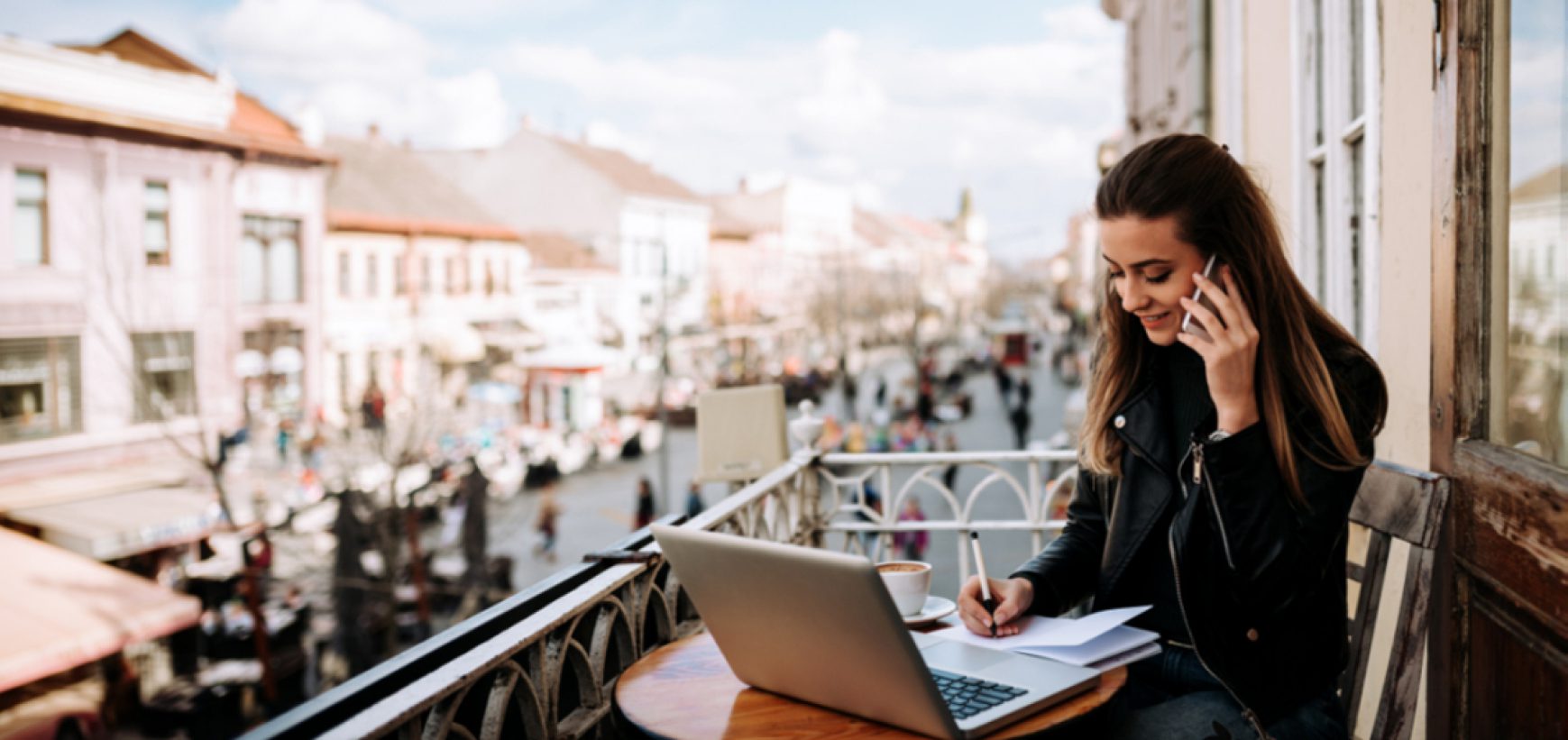
Lately, Belgrade has become a magnet for remote workers, artists, and entrepreneurs who are tired of Berlin’s expenses or Lisbon’s saturated expat scene. It ranks high among European cities for affordability, but unlike other “cheap” hubs, it offers a vibrant cultural landscape.
While many cities just absorb creative capital, Belgrade thrives on a bit of friction. There is a cultural and linguistic distance here that forces productivity. Creative output feels organically earned rather than imported. Workshops dealing with design, independent publishing firms, and experimental theater troupes thrive on bare capital but massive ambition. The city’s creative class doesn’t just perform cosmopolitanism; they negotiate it. That distinction matters if you are testing underrated European cities based on cultural substance rather than Instagram aesthetics.
2. A Geopolitical Sweet Spot
Serbia’s non-membership in the EU is often seen as a drawback. In reality, it has generated a unique geopolitical status that makes Belgrade one of Europe’s most fascinating capitals to watch. The city sits somewhere in the middle, balancing ties between Brussels and Moscow, hosting major Chinese infrastructure investment, and operating outside many standard EU regulatory frameworks.
For the traveler or analyst interested in the actual fault lines of Europe, not the marketing propaganda, Belgrade offers a front-row seat. It isn’t tourism for politics’ sake; it is the understanding that Europe’s next chapter will unfold in cities that engage with complexity, not the ones that avoid it. Belgrade uses its strategic ambiguity as an asset, deeply reflected in its intellectual and cultural life.
3. Brutalist Architecture Meets Contemporary Design
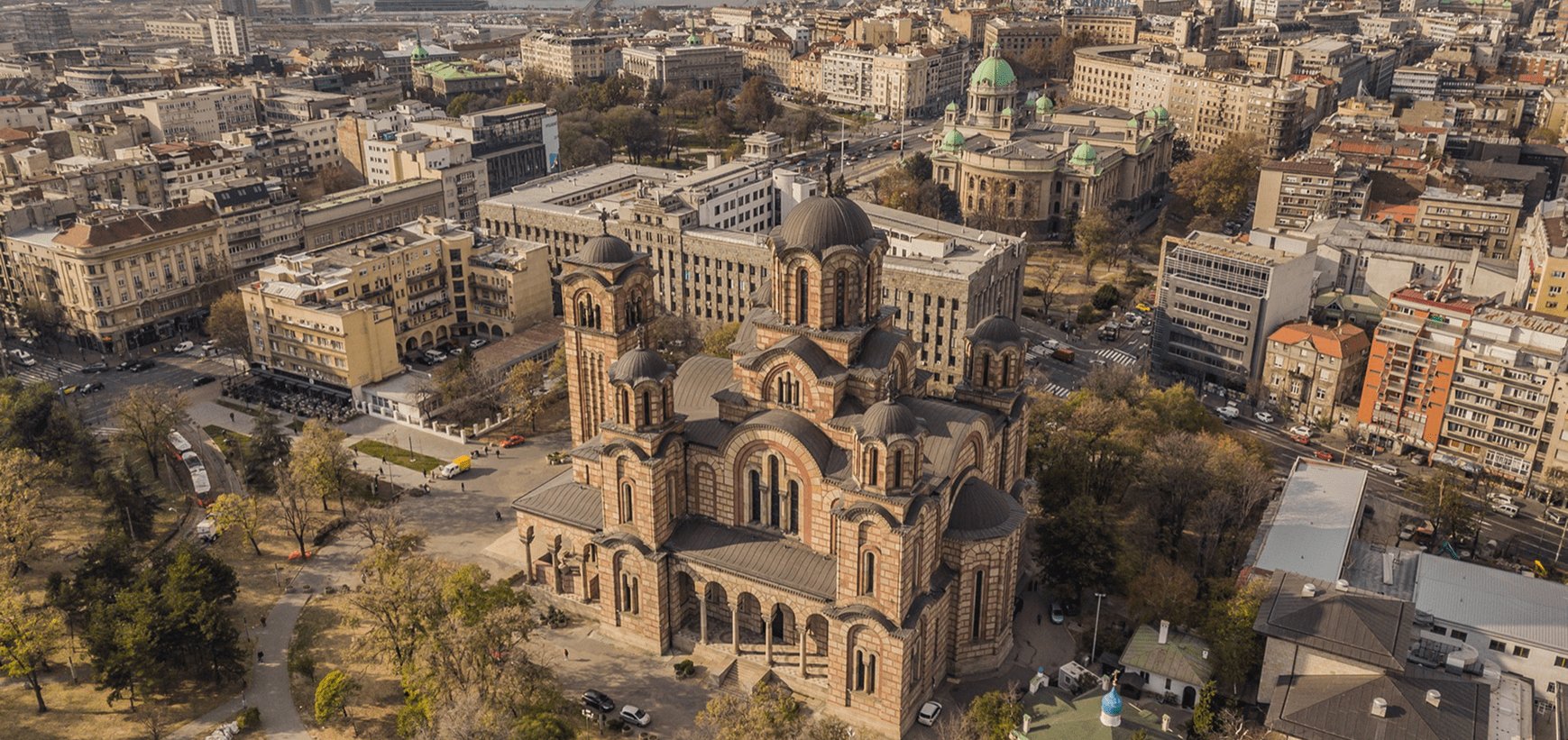
Belgrade’s physical landscape refuses to be neatly categorized. The imposing concrete of Communist brutalism, particularly in New Belgrade (Novi Beograd), sits right alongside Austro-Hungarian grandeur and a growing layer of modern design. This mix isn’t architectural chaos; it is a visible timeline of power, ideology, and cultural aspiration.
The Savamala district is the perfect example of this gradient. Once a neglected industrial waterfront, it is now home to developers, artists, and city planners who are all navigating the trajectory of the city’s future. The newly reopened Museum of Contemporary Art, a brutalist icon after years of renovation, now anchors a cultural corridor that includes interventions by major firms like Herzog & de Meuron. For city lovers, Belgrade offers a material complexity that “old town” preservation simply can’t match.
4. A Food Scene Rooted in the Balkan Crossroads
Belgrade’s culinary history is borrowed from Ottoman, Austro-Hungarian, and Mediterranean traditions. Distinctly different from modern “fusion,” the local food scene is more like a restructured collage. The kafanas (traditional taverns) serve to bond complete strangers, rather than serving up nostalgic, gourmet stereotypes.
While Skadarlija is the famous bohemian street, it can feel a bit like a tourist theater. The real character happens in districts like Dorćol and Vračar. There, Serbian bistros sit a block away from excellent Lebanese and contemporary European restaurants. It is an authentic crossroads, natural, non-artificial, and life on a knife-edge.
5. Rivers That Are Social Infrastructure
In most European cities, a river is treated as a scenic background element. Belgrade considers the Sava and Danube rivers as social infrastructure. Floating river clubs and restaurants, known as splavovi, stitch together a unique nightlife and dining ecosystem that blossoms year-round. This isn’t about novelty; it’s about how a city uses its terrain to create cultural capital.
Then there is Ada Ciganlija, a river-turned-peninsula that serves as the city’s prime recreational playground. Swimming, biking, and events happen here daily. What is most important is how Belgrade develops this naturally without over-engineering it. It is a unique approach where rivers are not just tourist attractions, but real places for locals to live.
6. A Nightlife Economy That Exports Culture
Clubs like Drugstore, 20/44, and Dot didn’t gain international recognition through marketing budgets; they got there by programming. They bring in acts that are often ahead of global electronic music trends. The city’s nightlife serves as a culture export infrastructure, with DJs and promoters building networks across Europe.
It goes far beyond hedonism. Cities that actually produce culture, as opposed to just importing it, stand outside the standard continental ecosystem. The economy of Belgrade’s nightlife directly supports music production and event management, leveraging the city’s cultural influence far beyond its size. This provides a necessary counterpoint to the city’s historical context.
7. A Class of Cultural Capital and Resilience
The 1990s, sanctions, bombing, economic collapse, are recent enough to inform society, even if the present feels framed as “distant.” The city’s resilience is never marketed; it just is. That experience of living through a crisis has coded the population with a high tolerance for ambiguity and zero tolerance for fake grievances.
This reflects how Belgrade functions: improvisation is a skillset, skepticism is applied to grand narratives, and there is a bleak humor that faces absurdity without succumbing to it. For visitors coming from cities that panic over minor disturbances, Belgrade’s operational prowess in the face of chaos offers a strange kind of clarity.
8. Serbia’s Growing Tech and Startup Ecosystem
Belgrade has become the chief tech hub of the Balkans, scaling its startup ecosystem to retain talent rather than export it. With companies like Nordeus (gaming) and Symphony (enterprise software), and a rising fintech industry, Belgrade is a serious place to put down roots.
This isn’t just about finance; it’s about effective intervention. What was once a defense against “brain drain” is now an enterprise opportunity in the raw. It is an almost untapped market, thanks to a low-capital society. For anyone watching evolving European markets, Belgrade offers a view of an ecosystem that is currently free from the geometric scale-ups of Venture Capital seen elsewhere.
9. A High Quality of Life Without the “Cheap” Label
On the ground, the cost of living is low. However, to frame Belgrade simply as a “cheap” destination misses the good stuff, specifically, the puzzlingly high quality-to-price ratio. Whether it’s the best street food or high-end cuisine, the value is incredible. Public transport is decent, housing in central neighborhoods is affordable, and cultural programming doesn’t discriminate based on ticket prices.
Belgrade distances itself from other “upcoming” destinations because it isn’t trying to be the cheapest; it might just be the best value in a cultural vs. cost comparison. This is ideal for digital nomads, researchers, and artists who manage their project fees carefully. The city doesn’t try to extract maximum finance from temporary visitors; it facilitates them.
10. Serious Cultural Institutions
When the Museum of Contemporary Art Belgrade reopened after extensive upgrading, it heralded a significant change. It is now a serious regional institution with international outreach. Mikser House represents a cultural and innovation hub where you can attend design festivals and tech workshops. This sits alongside heavy hitters like the Belgrade Dance Festival and BITEF (theater), which have carried standards of excellence deserving a place on the European circuit.
These represent more than attempts to find common ground between global capital and localism; they signal that the Balkan game of cultural ambition is happening for reasons wider than just tourism. It is a nascent form of layering that, while perhaps underfunded, will be a long-term investment in cultural capital. This sets serious cities apart from merely picturesque ones.
Conclusion
Belgrade hiding its appeal from the world doesn’t imply it isn’t trendy; it implies it is clearly deficient only to those who fail to appreciate the value already there. From geopolitics to creative infrastructure and cultural resilience, Belgrade is a must to understand the present recalibrations of Europe. If Lisbon is the “next Athens,” then Belgrade is playing by its own distinctive dynamics in an increasingly assertive Europe.
For any traveler, capital manager, or cultural trendwatcher wondering where European energy is headed, Belgrade guarantees the opportunity for important experiences, not just a fresh review. It is not underrated. It is mandatory to be well-informed.
FAQs
- Is Belgrade a safe place for tourists?
From a statistical vantage point, Belgrade is a safer bet than most European capitals, with very low violent crime rates. As with any major city, general urban precautions are warranted. Belgrade’s gritty reputation sometimes gets in the way of the real issues; the dangers are often misunderstood or exaggerated by outsiders.
- What is the best time to visit Belgrade?
Late spring, May and June, and early autumn, September and October, provide the ideal climate and a full cultural program. Summer can get quite hot, but the river clubs help compensate for that. Winter is great if you enjoy hanging out in the city’s cozy cafes and experiencing the indoor cultural scene.
- How easy is it to get around Belgrade without speaking Serbian?
English is spoken by a substantial number of the younger generation and service industry workers, and bilingual signs are becoming more common. The city is easy to walk in, and ride-hailing apps are widely present. Knowing the basics of Serbian will be appreciated, but it is unnecessary for navigation.