



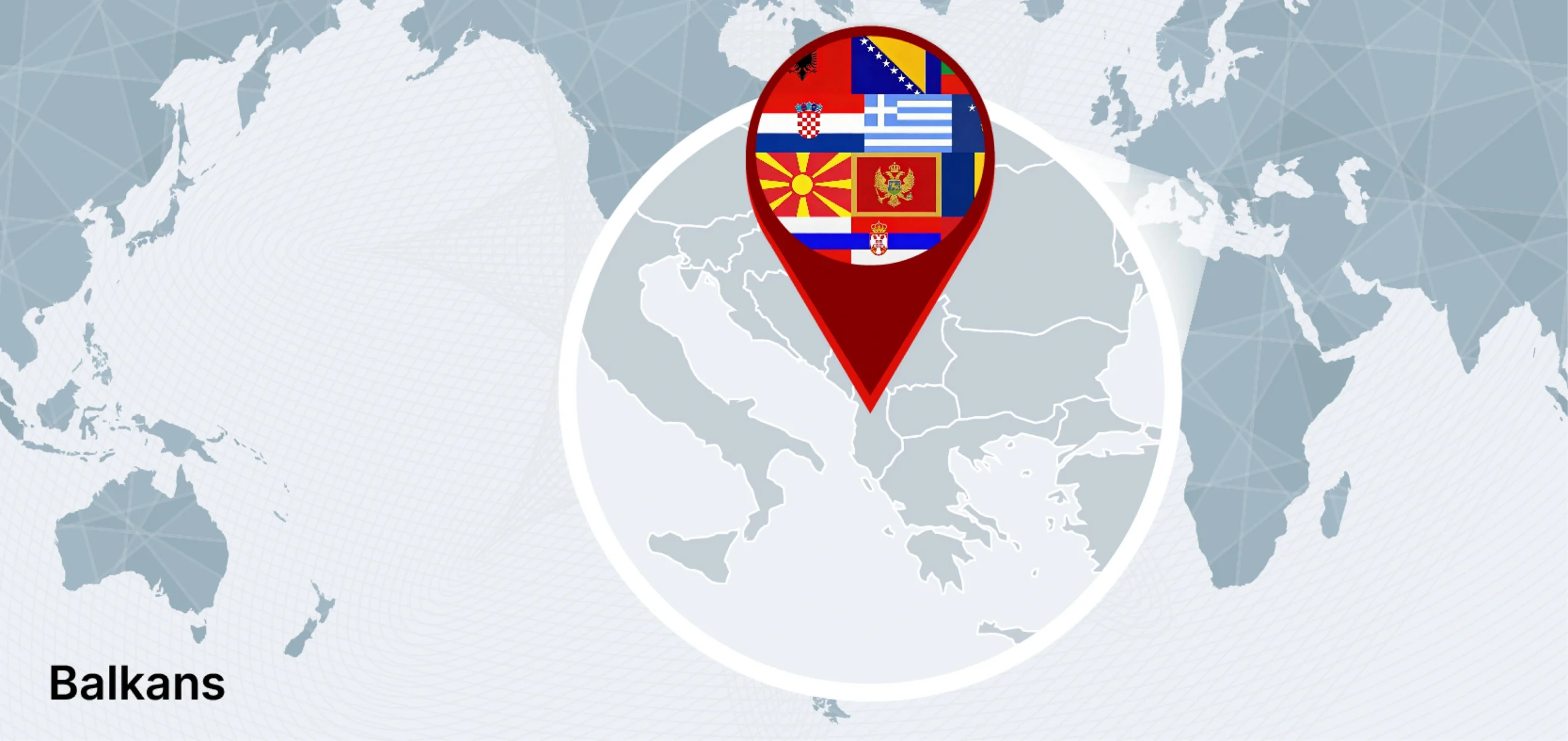
Thinking about settling down and thriving in one of the cheapest Balkan cities in 2026? It’s a smart move. The Balkans boast some of Europe’s best-kept secrets where your cash stretches further, your quality of life is better, and you can actually save money.
If you’re a digital nomad, a retiree, or just tired of bleeding cash in Western cities, moving to the Balkans is a wise financial decision. These cities offer solid Mediterranean appeal, rich history, and surprisingly modern facilities at prices that seem almost too good to be true. We’re talking about living on $850–$1,400 a month in major capitals—a sum that would barely cover your rent in London, Paris, or Amsterdam.
Life here is a mix of affordable countryside access, an alternative to the polished “culture” of Western capitals, and a blend of safety and adventure. Here is your guide to the most affordable comfort cities in the Balkans, covering costs, visas, and what daily life actually looks like.
1. Skopje, North Macedonia: The Budget Champion
Skopje takes the crown as the cheapest capital in the Balkans. Whatever money you have is appreciated here, making it the perfect testing ground if you’re getting your feet wet in the region.
- Cost of Living: You can live comfortably on about $849 a month. Rent is between $250–$350 (or $150–$200 outside the center). A full meal out costs $5–$8, and a coffee is just $1–$2.
- Visa & Residency: Many nationalities get 90 days visa-free. For longer stays, you can get temporary residence by starting a business, proving funds (approx. €6,000/year), or getting a local job.
- Daily Life: Skopje isn’t huge (500,000 people), and the expat community is still emerging. English isn’t as widespread as in Belgrade, but young people generally manage. The city is a mix of Ottoman and modern architecture, and Lake Ohrid is just a few hours away.
- The Downsides: Work for foreigners is limited, air quality can be poor in winter, and development is highly centralized in the capital.
2. Sarajevo, Bosnia and Herzegovina: Genuine Balkan Vibe
Sarajevo provides exceptional hospitality, a true cultural legacy, and incalculable value.
- Cost of Living: Expect to spend around $932 a month. Rent for a decent one-bedroom is $250–$400. Eating out is a steal at $6–$10 a meal.
- Visa & Residency: 90 days visa-free for many. Permanent residency is possible via employment or business registration, but be warned: the political division (Federation vs. Republika Srpska) can make bureaucracy a headache.
- Daily Life: The city has a distinct Ottoman legacy; walking the Old Town (Baščaršija) feels like stepping back in time. The coffee culture is huge. It’s a valley surrounded by mountains, offering easy access to skiing and hiking.
- The Downsides: Job opportunities are scarce unless you work remotely. Knowing a bit of the local language helps immensely.
3. Podgorica, Montenegro: Simple Residency, Stunning Nature
The capital might not win a beauty pageant, but the benefits are adequate, and the surrounding nature is breathtaking.
- Cost of Living: Average expenses are around $1,047 a month. In the center, rents range from $300 to $450. They use the Euro, which makes financial planning easier.
- Visa & Residency: This is one of the easiest paths in the Balkans. Buy any real estate (no minimum investment) and you can get temporary residence that renews automatically.
- Daily Life: The city itself is small (150,000 people), but the whole country is your playground. The Adriatic Sea is 30 minutes away. The expat community is small but growing.
- The Downsides: Infrastructure isn’t fully built, and medical services are basic—major issues may necessitate travel outside.
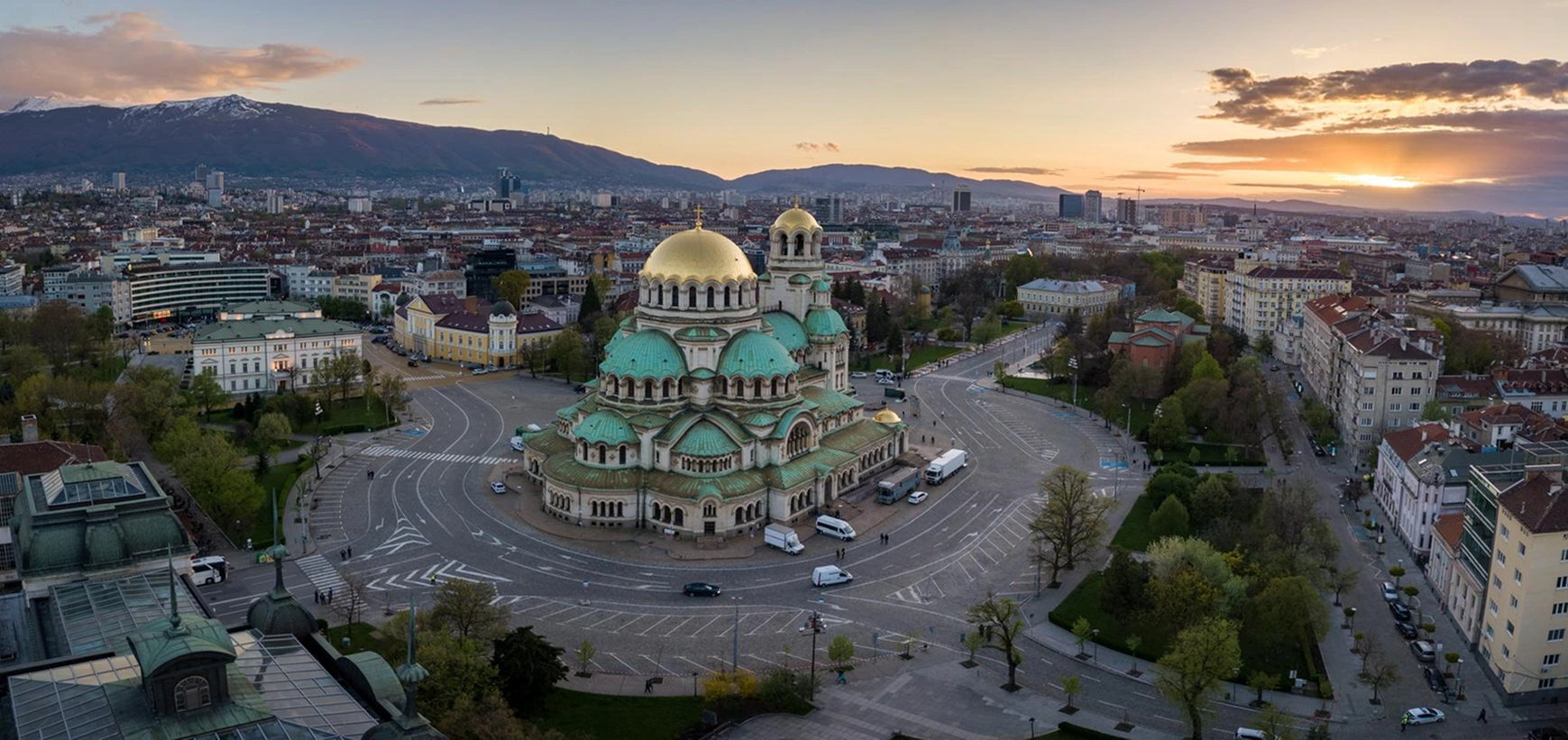
4. Sofia, Bulgaria: The Misunderstood Treasure
Sofia offers a bounty of value for very little cost.
- Cost of Living: It’s the cheapest EU country on this list. You get Western standards at Eastern European prices.
- Visa & Residency: EU citizens have the right to live and work immediately. Non-EU citizens can stay via business, employment, or investment. After 5 years, you can apply for permanent residence.
- Quality of Life: Sofia ranked 11th globally for digital life in 2025. The internet is near-perfect, making it a digital nomad dream. You have Vitosha Mountain in your lap and a solid expat network.
- The Downsides: Bulgarian bureaucracy can be hell on earth, and air quality in winter can be a concern. However, the EU stability and tech infrastructure make it a top choice.
5. Belgrade, Serbia: Dynamic Energy and Value
Belgrade hosts the major energy pool among affordable Balkan cities.
- Cost of Living: Average total cost is about $1,335 a month. Rent ranges from $400–$700 in good locations. Public transport was recently made free, setting the city ahead.
- Visa & Residency: Serbia is very friendly. 90 days visa-free for many (US, UK, etc.). You can get temporary residence by forming a company (no minimum investment) or buying property.
- Daily Life: It’s a big city (2 million people) with vibrant nightlife, great food, and the most active expat community in the Balkans. English is common among youngsters.
- The Downsides: It’s pricier than Skopje or Sarajevo, but the quality of life and conveniences are worth the extra cash.
6. Bucharest, Romania: The Tech Hub
Romania leverages its EU membership to offer Eastern European costs with a vigorous tech sector.
- Cost of Living: Average monthly cost is $1,116. Rent is $400–$700 in the center. Bucharest is about 13% cheaper than Sofia with similar amenities.
- Visa & Residency: EU citizens are granted rights on the spot. Non-EEA citizens can get residence via employment or entrepreneurship.
- Daily Life: As an IT hub, many international firms have offices here. It ranks 60th for digital infrastructure. The city mixes communist architecture with modern development—some call it chaotic, others charming.
- The Downsides: The immigration process is still bureaucratic. The expat presence is growing but smaller than in Belgrade.
7. Plovdiv, Bulgaria: Culture on the Cheap
Bulgaria’s second city offers Sofia’s advantages with a more relaxed atmosphere and lower prices.
- Cost of Living: Plovdiv is 28% cheaper than Sofia, averaging $900–$1,000 a month. Rent runs $250–$400 in good areas.
- Visa & Residency: The same EU rules apply as in Sofia.
- Daily Life: It’s considered Bulgaria’s cultural capital, with a preserved old town and Roman ruins. The pace is easier than Sofia. It attracts retirees and EU expats looking for quiet.
- The Downsides: There are fewer English-speaking amenities compared to the capital.
8. Novi Sad, Serbia: Quality of Life at a Better Price
Serbia’s second-largest city offers a high standard of living with prices significantly lower than Belgrade.
- Cost of Living: Total costs are $900–$1,200 a month. Rent is $350–$500 in the center.
- Visa & Residency: Same rules as Serbia (friendly pathways via business or property).
- Daily Life: It offers small-town coziness with modernity. Famous for the EXIT Festival and the Danube river, it has a pleasant rhythm compared to Belgrade’s chaos. It’s neat, safe, and has a close-knit expat community.
- The Downsides: Government offices are fewer, so processing might be slightly slower, but it’s manageable.
9. Tirana, Albania: Value Despite the Rise
Tirana is having a moment. Prices have crept up recently, sure, but it remains incredibly cheap and absolutely bursting with character.
- Cost of Living: You’re looking at about $1,294 a month. That makes it the most expensive non-EU city on this list, but let’s be real, it’s still a steal. Rent for a decent spot runs between $350 and $500.
- Visa & Residency: Albania plays by its own rules, and they are surprisingly open. If you’re American, you get a full year visa-free. It’s hard to beat that kind of access.
- Daily Life: The city is transforming fast. There’s construction everywhere, new buildings going up next to colorful old ones, and a café culture that is really taking off. It’s drawing in digital nomads and young professionals who want to be part of the energy.
- The Downsides: The infrastructure is still playing catch-up. Internet speeds can be sluggish (ranked 84th globally), which might be a dealbreaker if you’re a heavy remote worker. Also, while healthcare is getting better, for anything serious, you might find yourself traveling to a neighboring country for treatment.
10. Thessaloniki, Greece: Stability Meets Flair
If you absolutely need that EU stability but can’t live without a Mediterranean vibe, Thessaloniki is your answer.
- Cost of Living: You’ll pay a premium here compared to the rest of the list. Budget around €1,400–€1,600 (approx. $1,500–$2,000) a month. Rent in a nice area will set you back €450–€700.
- Visa & Residency: If you’re an EU citizen, you’re set. Non-EU citizens can get residency through employment, proving a decent income (€24k+/year), or the Golden Visa program if you’re ready to drop €250k+ on property.
- Daily Life: This place has soul. Incredible food, deep Byzantine history, and you’re just a quick hop from both beaches and mountains. It’s a massive student city, which keeps the energy high and the vibe young.
- The Downsides: You have to contend with Greek bureaucracy, which is famously complex and slow. It is the most expensive option on this list, but frankly, you’re paying for the peace of mind that comes with full EU membership and a premium lifestyle.
The Bottom Line
So, where does that leave you?
We’ve looked at everything from the rock-bottom prices in Skopje to the Mediterranean premium in Thessaloniki. The common thread here is value. In every single one of these cities, your money goes further—not just on rent, but on life itself. You’re buying better coffee, longer lunches, and a much slower pace of living than you’d find in London, Berlin, or Paris.
Of course, it’s not all perfect. You might have to trade lightning-fast internet for a cheaper apartment, or navigate a bit of bureaucracy in exchange for incredible history. That’s just the deal when you hunt for value.
But if you’re willing to look past the usual destinations, the Balkans offer a lifestyle that is surprisingly rich. Whether you’re a digital nomad chasing a budget, a retiree looking for adventure, or just someone tired of the grind, there is a spot on this list for you. You don’t have to be a millionaire to live well in Europe anymore you just have to be smart about where you plant your feet.