



Moving to a new country is a big deal. It is not just about packing boxes or learning a new language. The scariest part is often the paperwork. You might worry about hidden traps, rules that change overnight, or officials who ask for “extra” fees just to stamp your passport. When you are investing your money or moving your business, you need certainty. You need to know that the residency rules Balkan country regulations have in place won’t change the moment you arrive.
The good news is that the Balkans have changed a lot in the last decade. Gone are the chaotic days of the 90s. Today, many countries in the region are competing for foreign talent and capital. To do that, they have cleaned up their acts. They have written clear laws and created transparent pathways for people who want to stay.
In this article, we will look at the top 10 countries where you won’t have to guess the outcome. These are the nations with the most stable residency laws Balkans-wide. We will explain exactly what makes them predictable and why they are safe bets for your future.
How We Ranked the Best Residency Rules Balkan Countries
We did not just pick these names out of a hat. We looked for countries where the government tells you exactly what to do. We looked for places where the “residency laws Balkans” uses are straightforward, not a maze of confusing forms.
Here are the top 10 countries where the rules make sense.
1. Croatia
Croatia has fully joined the EU and the Schengen Zone. This is the gold standard for stability.
- Why it is stable: As a member of the Schengen Area, Croatia must follow strict European rules. You cannot just be denied residency without a valid reason.
- The Path: The Digital Nomad Visa is very popular. It allows you to stay for a year without paying local income tax. The rules are clearly posted on the government website, and the process is efficient.
- Predictability: You know exactly what documents you need. If you have them, you get the visa. It is that simple.
2. Slovenia
Slovenia is often called the “Switzerland of the Balkans.” It is small, wealthy, and incredibly organized.
- Why it is stable: Corruption is very low here. The bureaucracy works like a well-oiled machine. If you follow the residency laws Balkans experts recommend for Slovenia, you will face no surprises.
- The Path: For business owners, the rules are clear. If you register a company and meet the minimum capital requirements, residency follows.
- Predictability: The administrative units are very helpful. They provide checklists, so you aren’t guessing what to bring.
3. Bulgaria
Bulgaria has been in the EU for a long time. They’ve had plenty of years to get their immigration system working smoothly.
- Why it’s stable: The rules are straightforward. You can get residency by opening a company. It isn’t a tricky loophole; it is actually written into the law.
- The Path: You set up a limited liability company (called an OOD). If you own it and manage it, you earn the right to live in Bulgaria.
- Predictability: You can handle the tax and residency steps online. You can track your application on your computer, so you don’t have to worry that your file got lost under someone’s desk.
4. Romania
Romania is a major tech hub, and they are very welcoming to foreign workers.
- Why it’s stable: They created actual laws just for digital nomads and skilled workers. They wrote these rules to be attractive and easy to use.
- The Path: The “Digital Nomad Visa” lets you stay for a year, and you can renew it. The money requirements are spelled out clearly (for example, you need to make €3,000 a month).
- Predictability: The immigration office in Bucharest sees these types of applications every day. They have a routine, so you usually know exactly how long it will take.
5. Greece
Greece has a famous “Golden Visa” program. It is one of the most established investment residency programs in the world.
- Why it is stable: While the investment amounts have recently increased, the law itself is solid. It has been around for years, and thousands of people have used it successfully.
- The Path: You buy real estate (usually starting at €250,000 or €500,000 depending on the area), and you get a 5-year residence permit.
- Predictability: The connection is clear: Money for property equals a visa. There are no subjective criteria about “cultural fit” or “language skills.”
6. Serbia
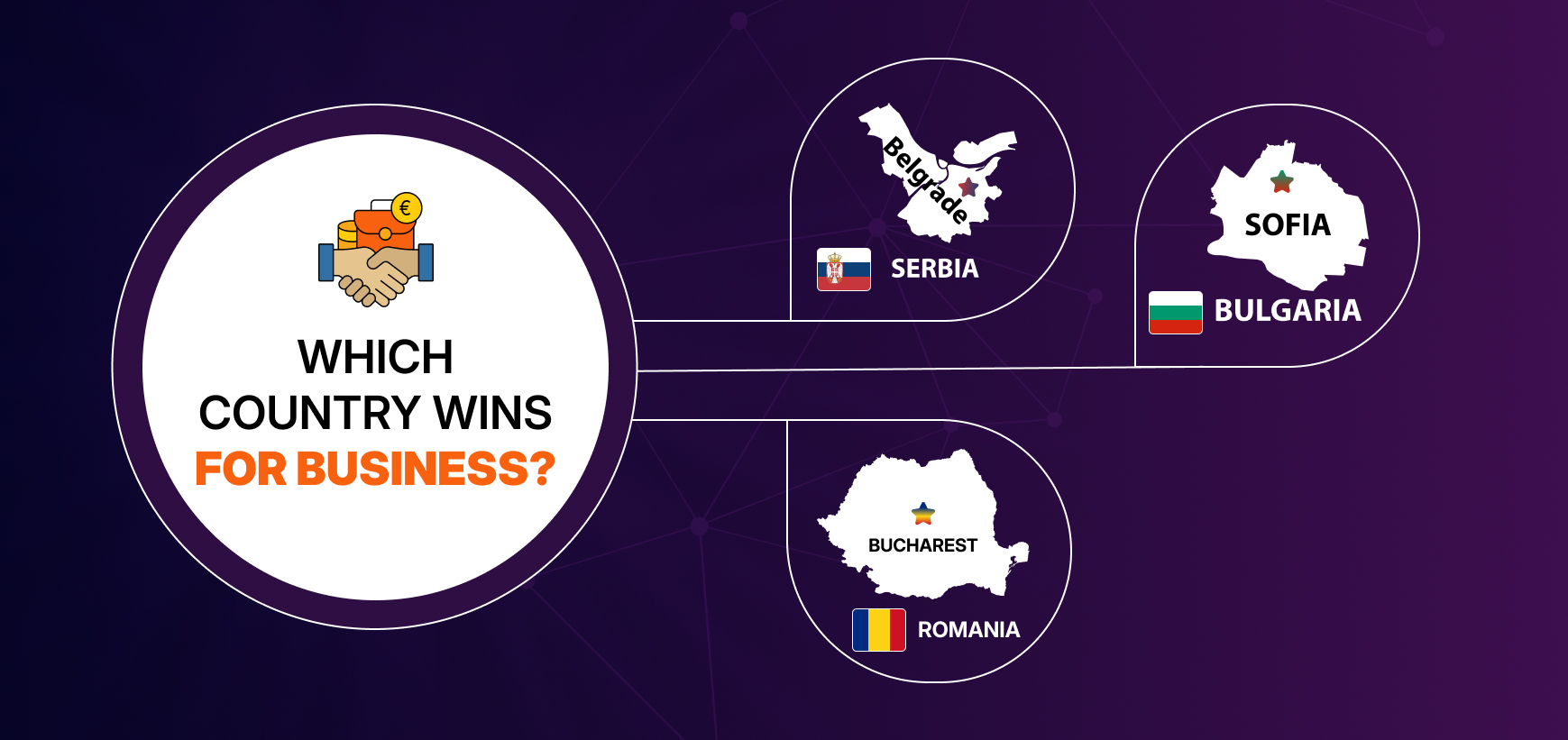
Serbia is not in the EU yet, but it is arguably the most open country in the region for foreigners.
- Why it is stable: Serbia is actively courting foreigners. They have introduced a specific “Digital Nomad” permit and made business residency very straightforward.
- The Path: You can incorporate a company in one day. As a director, you can apply for a residence permit. The Ministry of Interior is very supportive of these applications.
- Predictability: The government publishes guides in English. They want you to understand the rules, so they make them accessible.
7. Montenegro
Montenegro is on the path to EU membership. This means they are harmonizing their laws with European standards.
- Why it is stable: The “Temporary Residence by Real Estate” route is very popular and well-defined. The law states exactly what value of property you need to buy to qualify.
- The Path: Buy property, get a residence permit. It is a formula that has worked for years.
- Predictability: While bureaucracy can be slow, the outcome is rarely in doubt if you have the property title.
8. North Macedonia
This small country is trying hard to attract business. To do that, they have cut red tape.
- Why it is stable: North Macedonia has created “One-Stop Shops” for businesses. This means you handle residency, taxes, and registration in one place.
- The Path: If you invest in a Technological Industrial Development Zone (TIDZ), the rules for residency and tax breaks are written directly into the contract with the state.
- Predictability: These are government-backed contracts. The terms are guaranteed for years, giving you long-term security.
9. Albania
Albania has worked hard to shake off its old image. Recent laws have made immigration much easier.
- Why it is stable: The “Law on Foreigners” was updated to simplify procedures. It clearly defines who can get residency (investors, workers, and property owners).
- The Path: Property ownership is a strong ground for a residence permit. The law says that if you own property, you have the right to stay.
- Predictability: The system is becoming digitized. You can book appointments online, which cuts down on the chaos of waiting in line.
10. Bosnia and Herzegovina (Republika Srpska)
Bosnia is complex because it has two entities. However, the Republika Srpska (the Serb entity) has very clear, business-friendly rules.
- Why it is stable: In Republika Srpska, the connection between forming an LLC and getting a residence permit is well-trodden ground.
- The Path: Invest in a company, apply for a permit. The authorities in Banja Luka (the capital of the entity) are used to this process.
- Predictability: While the other entity (the Federation) can be slower and more complex, the rules in Republika Srpska are straightforward and consistently applied.
The “Hidden” Benefits of Stability
Why should you care if the rules are stable? It is not just about convenience. It affects your wallet and your peace of mind.
- Banking: Banks love stable customers. If you have a clear residency status, getting a loan or a mortgage is much easier.
- Selling Up: If you decide to leave, selling your business or property is easier if the legal ownership is clear and undisputed.
- Renewal: In unstable countries, renewing a permit can be a nightmare every year. In these countries, if you meet the criteria, renewal is a formality.
The EU Advantage vs. The “Wild West”
It is worth noting the difference between EU members (Croatia, Slovenia, Bulgaria, Romania, and Greece) and non-members (Serbia, Albania, etc.).
- EU Members: The ultimate stability. If a local official denies your application unfairly, you can often appeal to higher courts or even European courts.
- Non-EU Members: They offer more flexibility and lower costs (like lower taxes). However, you rely more on the goodwill of the current government. Countries like Serbia and Albania are currently very friendly, but always check the latest political news before you move.
Conclusion
Moving to the Balkans is a great adventure, but it is a serious life decision. You do not want to build your life on a foundation of shifting sand. You want to know that the residency rules Balkan countries offer in any Balkans country will still be there in five or ten years.
By choosing countries like Croatia, Slovenia, or Serbia, you are choosing certainty. You are choosing a place where the residency requirements Balkans lists are clear, the costs are known, and the welcome is genuine. Do your homework, pick a country with a stable track record, and enjoy the peace of mind that comes with doing things the right way.
Frequently Asked Questions
1. Which Balkan country is the easiest to get residency in?
Generally, Serbia and Bulgaria are considered the easiest for business owners because the “company formation = residency” route is very direct. For non-business owners, Albania and North Macedonia have very accessible property investment thresholds.
2. Are residency laws in the Balkans changing often?
They can change, but generally, they are becoming more liberal, not stricter. However, investment thresholds (like in Greece) can go up. It is always smart to check the latest laws or talk to a local lawyer before you apply.
3. Does “stable rules” mean I will definitely get approved?
No. “Stable” means the rules are clear. It does not guarantee approval if you do not meet the criteria (like having enough money or a clean criminal record). But it does mean that if you do meet the criteria, the government shouldn’t arbitrarily deny you.
4. Is it better to choose an EU country for residency?
For long-term stability and freedom of movement (Schengen), yes. If your main goal is access to the rest of Europe, stick to Croatia, Slovenia, Bulgaria, or Romania.
5. Do I need a lawyer to apply?
In some countries (like Bosnia or Montenegro), navigating the bureaucracy can be tough alone. In others (like Serbia or Bulgaria), many people do it themselves if they are comfortable with paperwork. However, a local lawyer can almost always speed up the process.